The release of previously classified Jeffrey Epstein documents has ignited an unprecedented global political crisis, with convicted sex trafficker Ghislaine Maxwell now offering testimony to Congress in exchange for presidential clemency while high-profile figures across multiple continents face mounting pressure over their documented connections to the late financier.
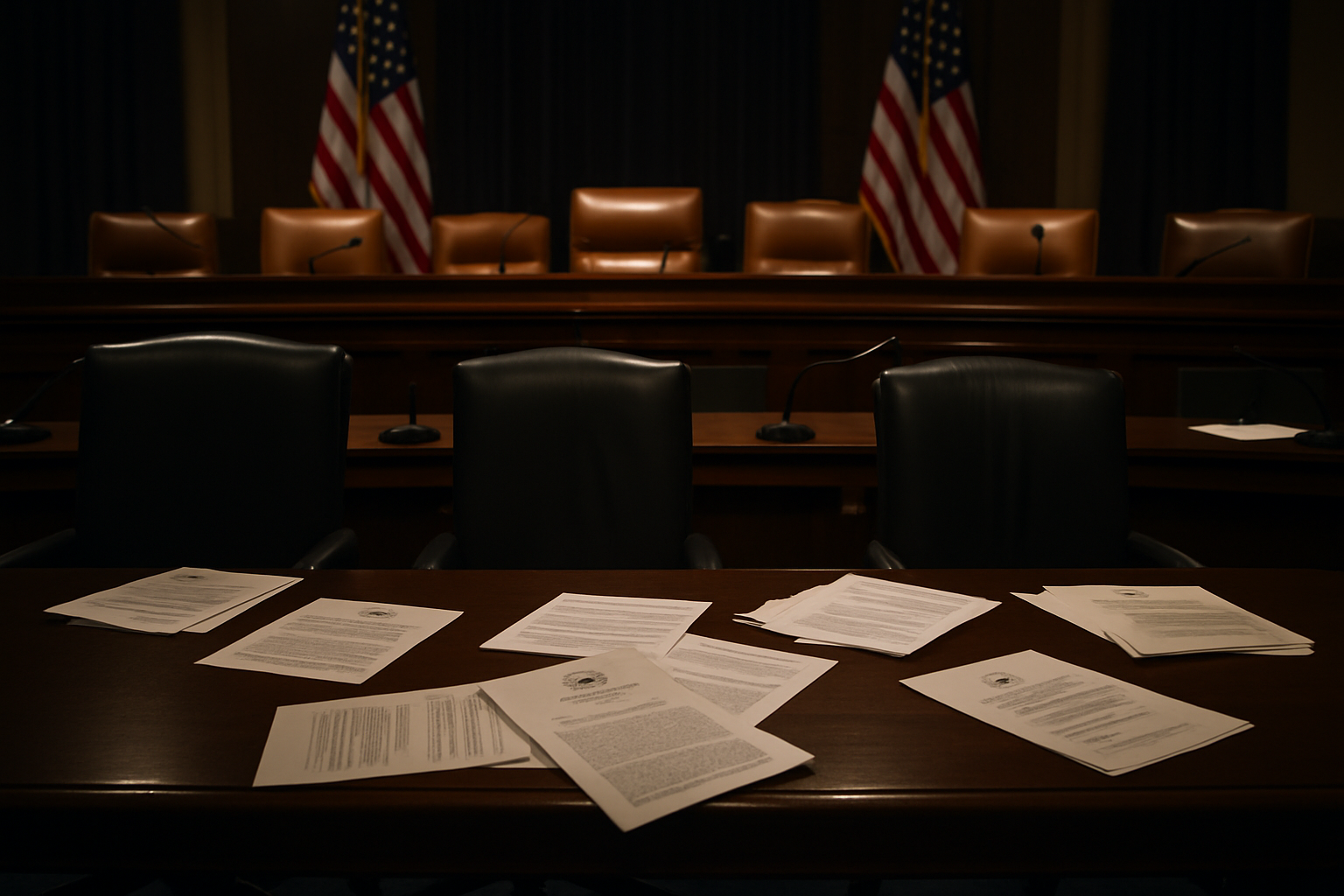
The explosive developments center around Maxwell's dramatic offer made through her attorney during a congressional deposition on Monday, February 10, 2026. Appearing via video link from a Texas federal prison where she is serving a 20-year sentence, Maxwell invoked her Fifth Amendment rights while her legal representative informed the House Oversight Committee that his client would "answer questions if President Trump grants her clemency."
The clemency proposal has created a constitutional and political firestorm, with Maxwell's lawyer asserting that she possesses unique knowledge that could "exculpate" both President Trump and former President Bill Clinton from certain allegations contained within the massive document release. However, Democrats on the committee have condemned the offer as an attempt to manipulate the justice system.
Unprecedented Document Release Exposes Global Network
The current crisis stems from the Department of Justice's release of over 3 million pages of previously classified documents, representing the largest and most comprehensive disclosure of materials related to Epstein's criminal network. The files, which include thousands of emails, financial records, and flight logs, have implicated numerous high-profile figures across politics, business, entertainment, and royalty.
According to multiple congressional sources, Republican Representative Thomas Massie and Democrat Ro Khanna were granted access to unredacted versions of the documents during a closed-door review session on Monday. Massie told reporters that what he observed was "disturbing," revealing the names of "at least six men who have been redacted, and who are likely implicated since they are found in the documents."
The lawmakers identified these individuals as including one American citizen, one foreign national, three or four persons of unknown nationality, and significantly, one person described as "quite high up in a foreign government." Both congressmen indicated they would petition the Justice Department to publicly disclose the identities of all six individuals.
International Fallout Intensifies
The document release has triggered criminal investigations and political upheavals across multiple countries. In Norway, former Ambassador Mona Juul resigned over her documented connections to Epstein, while Crown Princess Mette-Marit faces potential criminal proceedings after being mentioned over 1,000 times in the files. The Norwegian anti-corruption agency Økokrim is now considering formal charges in what experts are calling the largest royal scandal in modern history.
France has opened a criminal investigation into former Culture Minister Jack Lang and his daughter Caroline for "aggravated tax fraud and money laundering" following revelations of a €50,000 offshore transfer connected to Epstein. Lang, who appears 673 times in the documents, has resigned from his position as president of the Arab World Institute.
The United Kingdom faces its own constitutional crisis as Metropolitan Police have searched properties belonging to Peter Mandelson, investigating allegations that he leaked government information to Epstein during the 2008 financial crisis. Prime Minister Keir Starmer has been forced to apologize publicly, admitting he was "lied to" by Mandelson before appointing him as ambassador to the United States.
Baltic States Investigate Trafficking Networks
Coordinated investigations across the Baltic states have uncovered evidence of extensive modeling agency recruitment operations. Latvia has launched a human trafficking investigation into the "Natalie" modeling agency, with President Egils Levits declaring it a national priority. Estonia and Lithuania are coordinating their own probes, with evidence suggesting systematic recruitment of young women for exploitation in the United States.
Poland's Justice Minister Waldemar Żurek confirmed that evidence shows "traces that recruitment of women, possibly minors, took place in Poland," while Bulgarian authorities are examining connections between Epstein associates and local modeling agencies.
Entertainment Industry Upheaval
The entertainment sector has not escaped the fallout, with pop superstar Chappell Roan becoming the highest-profile artist to sever ties with talent agent Casey Wasserman after his name appeared in the Epstein files. Wasserman, who leads Los Angeles 2028 Olympics preparations, faced criticism over flirtatious email exchanges with Maxwell dating from 2003.
In a statement posted to Instagram, Roan declared: "As of today, I am no longer represented by Wasserman, the talent agency led by Casey Wasserman. Artists deserve representation that aligns with their values and supports their safety and dignity."
Intelligence Community Scrutiny
Perhaps most controversially, the documents have reignited speculation about Epstein's potential intelligence connections. FBI documents from 2020 claim Epstein was "trained as spy" during former Israeli Prime Minister Ehud Barak's tenure, though these allegations remain unverified. The files also reveal Epstein's systematic attempts to reach Vladimir Putin through various intermediaries, including offers to former UN Ambassador Vitaly Churkin's son.
Swiss media reports suggest Epstein surrounded himself with young Eastern European women and expressed interest in meeting Putin, though investigators caution against drawing definitive conclusions about formal intelligence relationships based on the available evidence.
Victim Protection Crisis
The document release has been marred by a catastrophic failure to protect victim identities. The Justice Department was forced to remove thousands of documents after accidentally exposing approximately 100 survivor identities, including 31 minor victims. The breach included nude photographs, bank account numbers, and Social Security numbers despite court-ordered redactions.
Deputy Attorney General Todd Blanche attributed the exposure to "technical or human error" while confirming that no new federal prosecutions are planned despite the "disturbing" nature of the material. Federal judges are now hearing emergency petitions over the massive confidentiality breach, which threatens to undermine future victim cooperation with law enforcement.
Disinformation Challenges
The document release has been complicated by coordinated disinformation campaigns. French authorities have detected Russian-linked operations falsely attempting to implicate President Macron in Epstein connections. Additionally, artificial intelligence tools can now fabricate convincing images of world leaders with Epstein in mere seconds, creating verification challenges for legitimate revelations.
Swedish media has documented how AI-manipulated content is being used to spread false conspiracy theories, while some authentic documents contain demonstrably false information, such as "body double" conspiracy theories about political figures.
Democratic Accountability Test
Legal experts and political scientists describe the current crisis as a fundamental test of democratic institutions' ability to hold powerful figures accountable across international borders. The scope of the network revealed in the documents spans multiple continents and includes individuals at the highest levels of government, business, and cultural institutions.
"This represents the largest international elite criminal network exposure in recent memory," said one European law enforcement official who requested anonymity. "It's testing our democratic institutions' capacity for accountability versus continued elite impunity."
Enhanced cooperation is emerging across European jurisdictions, with unprecedented coordination in information sharing and comprehensive network investigation. However, significant challenges remain, including diplomatic immunity protections, institutional shields, and complex jurisdictional boundaries.
Political Ramifications
The Maxwell clemency offer has created a constitutional dilemma for the Trump administration. While presidential pardon powers are broad, using them in exchange for testimony that could benefit the president politically would raise serious questions about obstruction of justice and abuse of power.
House Oversight Committee Ranking Member Jamie Raskin criticized the arrangement, stating that "names in Epstein documents are being obscured for mysterious and unexplainable reasons" while victims' identities were carelessly exposed. The committee continues to demand full transparency from the Justice Department.
Meanwhile, the Bill and Hillary Clinton testimony agreement reached in early February now faces new scrutiny in light of Maxwell's clemency offer. The couple had initially resisted congressional subpoenas before agreeing to appear under oath with full public transcripts.
Global Implications
The crisis has far-reaching implications for international relations and global governance. Multiple constitutional monarchies are reassessing their relationships with individuals named in the documents, while cultural institutions worldwide are conducting comprehensive reviews of their partnerships and associations.
Norway's Sex og Samfunn became the first major institution to terminate all partnerships with Crown Princess Mette-Marit, setting a precedent for institutional responses to the scandal. Similar actions are being considered by organizations in other affected countries.
The investigation represents a critical examination of how democratic societies handle transnational elite criminal networks. Success in achieving meaningful accountability could establish important precedents for international justice cooperation, while failure might reinforce perceptions that powerful individuals remain above the law regardless of their connections or resources.
Looking Forward
As investigations continue across multiple jurisdictions, the coming weeks will prove crucial in determining whether this unprecedented exposure of elite criminal networks leads to systemic reforms and meaningful accountability, or whether institutional protections and political calculations will ultimately shield the powerful from consequences.
The Maxwell clemency offer remains pending as congressional leaders debate the appropriate response. With ongoing criminal investigations in at least six countries and mounting pressure for transparency, the Epstein documents scandal appears likely to reshape international discussions about power, privilege, and justice for years to come.
The ultimate test will be whether democratic institutions can adapt their accountability mechanisms to address the complex realities of 21st-century transnational elite networks, or whether traditional limitations of jurisdiction, diplomatic immunity, and institutional protection will continue to provide safe harbor for those implicated in serious criminal conduct.