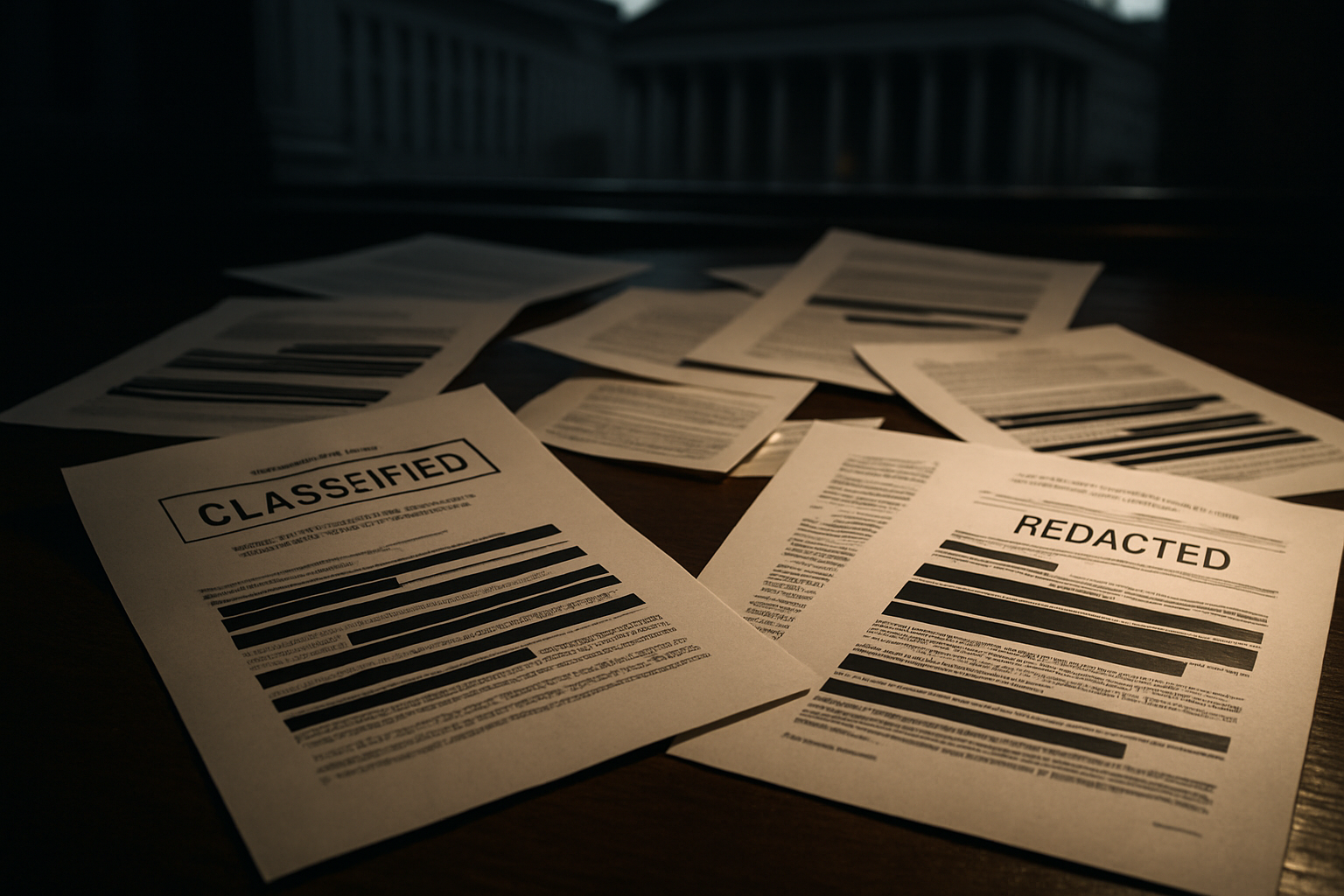
The Jeffrey Epstein document releases have escalated into an unprecedented international political crisis, with the Council of Europe stripping diplomatic immunity from its former Secretary-General and U.S. congressmen revealing six previously redacted names, as investigations expand across multiple continents targeting high-profile figures connected to the deceased financier.
Council of Europe Takes Historic Action
In a dramatic development, the Council of Europe unanimously voted to strip diplomatic immunity from former Secretary-General Thorbjørn Jagland following a request from Norwegian police. This marks the first time in the institution's history that such action has been taken against a former top official.
The decision came after media revelations linking Jagland to Jeffrey Epstein, with Norwegian authorities launching a corruption investigation into what they describe as communications about "extraordinary girls." The Council of Europe stated the decision followed "media disclosures since November 2025" that connected Jagland to the convicted sex offender.
"At the request of the Norwegian authorities, the statutory decision-making body of the Council of Europe decided to lift the immunity from legal proceedings that had been granted to Mr. Thorbjørn Jagland in his capacity as former Secretary-General."
— Council of Europe Official Statement
Congressional Disclosure Names Six Redacted Figures
In Washington, significant progress was made in uncovering the extent of Epstein's network as Congressman Ro Khanna (Democrat) and Thomas Massie (Republican) disclosed six men whose names had been redacted in the Epstein files. After accessing unredacted documents at the Department of Justice, both congressmen petitioned for public disclosure of all six identities.
The revealed names include prominent figures such as billionaire Leslie Wexner and Emirati businessman Sultan Ahmed bin Sulayem, along with four others across different nationalities. Al Jazeera reported that one person is described as "quite high up in a foreign government," highlighting the international scope of the network.
Meanwhile, Attorney General Pam Bondi defended the Justice Department's handling of the files before a House committee, stating the department had "painstakingly reviewed reams of documents on a compressed timeline." However, lawmakers from both parties have expressed frustration with the extensive redactions despite federal law requiring release of nearly all files.
European Government Fallout Intensifies
The crisis has triggered government upheaval across Europe, with multiple high-ranking officials facing criminal investigations and resignations:
Norway: Crown Princess Mette-Marit, mentioned over 1,000 times in the documents, faces potential criminal proceedings from Økokrim (Norway's economic crimes unit). The Norwegian parliament unanimously approved a rare external inquiry into the foreign ministry's Epstein connections. In an unprecedented move, the organization Sex og Samfunn terminated all partnerships with the Crown Princess - the first institutional rejection of royal family involvement in modern Norwegian history.
France: Foreign Minister Jean-Noël Barrot notified the justice system about diplomat Fabrice Aidan's "dozens of direct and familiar emails" with Epstein. The revelation has prompted both administrative and judicial investigations into the diplomat's conduct.
United Kingdom: The crisis continues to engulf the Labour government, with prosecutors confirming they are "in close contact" with police investigating Prince Andrew's links to Epstein. Thames Valley police are reviewing allegations that Epstein provided Andrew with a woman at Royal Lodge in 2010, while also examining claims that the former prince shared confidential government reports with the financier.
Baltic Human Trafficking Networks Exposed
One of the most disturbing revelations involves systematic recruitment networks across the Baltic states. Latvia has opened a human trafficking investigation into the "Natalie" modeling agency, with President Egils Levits declaring it a national priority and urging victims to come forward.
The investigation has revealed coordinated operations across multiple countries:
- Lithuania: Documents reference "many women from Lithuania" with authorities investigating recruitment activities
- Estonia: An "agent" allegedly operated across all three Baltic countries
- Poland: Justice Minister Waldemar Żurek confirmed evidence of "recruitment of women, possibly minors" on Polish soil
These findings suggest a sophisticated transnational network that systematically targeted young Eastern European women for exploitation in the United States.
Trump Administration Under Pressure
The revelations have also created headaches for the Trump administration. Commerce Secretary Howard Lutnick admitted to having lunch on Epstein's private island in 2012, describing it as a "family vacation" despite previously claiming his relationship with Epstein had ended years earlier. Both Democratic and Republican lawmakers are calling for Lutnick's resignation.
Adding to the administration's troubles, FBI documents revealed that Trump told a Palm Beach police chief in the mid-2000s that "everyone knew" about Epstein's misconduct, contradicting the former president's repeated denials of knowledge about the financier's activities.
Maxwell Clemency Gambit
In a strategic move that has raised constitutional concerns, Ghislaine Maxwell appeared via video link from federal prison offering congressional testimony in exchange for presidential clemency from Trump. Maxwell invoked the Fifth Amendment but her legal team indicated she would "answer questions if President Trump grants her clemency."
Her lawyers claim Maxwell can "exculpate" both Trump and Bill Clinton from certain allegations, creating what legal experts describe as a constitutional dilemma over the use of presidential pardons for politically beneficial testimony.
Ongoing DOJ Failures
Despite the massive scope of evidence, Deputy Attorney General Todd Blanche confirmed no new federal prosecutions are planned, citing "technical/human errors" in document handling. The Justice Department has faced severe criticism for catastrophic victim protection failures, accidentally exposing approximately 100 survivor identities, including 31 minors.
Federal judges are hearing emergency petitions over the confidentiality breach, which has threatened future victim cooperation with law enforcement. Critics describe the release as "disastrous," re-victimizing abuse survivors who were promised anonymity.
Global Network Scope
The documents reveal an unprecedented international elite network spanning multiple continents, reaching from Epstein's properties in New York, Florida, and the Virgin Islands to European capitals, Asia, and Africa. The evidence shows systematic cultivation of relationships with political, business, and entertainment figures through a sophisticated operation requiring extensive planning, surveillance, and inside knowledge.
Additional revelations include:
- Systematic attempts by Epstein to arrange meetings with Vladimir Putin through intermediaries
- Business exploration in North Korea through Pyongyang contacts
- Extensive connections in the tech industry, with photos showing Epstein dining with Mark Zuckerberg, Elon Musk, and Peter Thiel
- Financial arrangements spanning multiple jurisdictions with complex offshore structures
Disinformation Challenges
The investigation has been complicated by sophisticated disinformation campaigns. French authorities detected Russian-linked operations falsely creating Epstein connections to world leaders, while AI tools can now generate convincing fake images of Epstein with public figures "in seconds," according to technical experts.
Intelligence officials noted that some FBI tipsters alleging Epstein-Israeli intelligence connections were revealed to be Holocaust deniers and fraudsters, despite their claims receiving widespread online circulation.
Democratic Accountability Test
Legal experts describe the crisis as the "largest international elite criminal network exposure in recent memory," representing a critical test of democratic institutions' ability to hold powerful figures accountable across borders.
Enhanced European law enforcement cooperation is emerging with unprecedented coordination, information sharing, and comprehensive network investigations. However, significant challenges remain, including diplomatic immunity protections, jurisdictional complexity, and institutional resistance to prosecution.
"This represents a fundamental challenge to democratic institutions globally, forcing a reckoning with the intersection of power, privilege, and criminal behavior at the highest levels of society."
— European Law Enforcement Official
Institutional Consequences
Cultural organizations worldwide are conducting comprehensive relationship reviews with named figures. The Norwegian royal partnership termination has set a precedent for global institutions reassessing their associations with individuals mentioned in the documents.
The crisis is forcing fundamental questions about due diligence procedures, institutional integrity, and the balance between supporting individuals and protecting organizational credibility.
Ongoing Implications
With active investigations across six countries and enhanced international cooperation mechanisms, the Epstein files represent a precedent-setting moment for 21st-century international justice cooperation. The ultimate test will be whether these revelations produce meaningful accountability and systemic reforms, or whether elite networks continue to operate with impunity despite massive public exposure.
The crisis continues to unfold with congressional hearings intensifying, more document declassification pending, and prosecutors across multiple jurisdictions working to build cases that could fundamentally alter how democratic institutions respond to transnational elite criminal networks.
As investigations expand and new revelations emerge, the Jeffrey Epstein files crisis represents not just a reckoning with past crimes, but a defining moment for the rule of law and democratic accountability in an interconnected world where powerful networks can span continents and influence the highest levels of government and society.