The latest release of Jeffrey Epstein documents has triggered a cascading international political crisis, with former Israeli Prime Minister Ehud Barak publicly expressing regret for his association with the convicted sex offender while U.S. Attorney General Pam Bondi faces fierce Congressional criticism over the Justice Department's handling of the document release process.
The crisis intensified Wednesday when Barak, speaking in his first extensive interview since the latest document dump, acknowledged that staying at an apartment owned by Epstein "wasn't illegal" but admitted he should have exercised "more thorough judgment." The former prime minister also expressed regret for comments hoping "tall and slim" Russian women would migrate to Israel, calling them an "unsuccessful choice of words."
Congressional Hearing Exposes DOJ Tensions
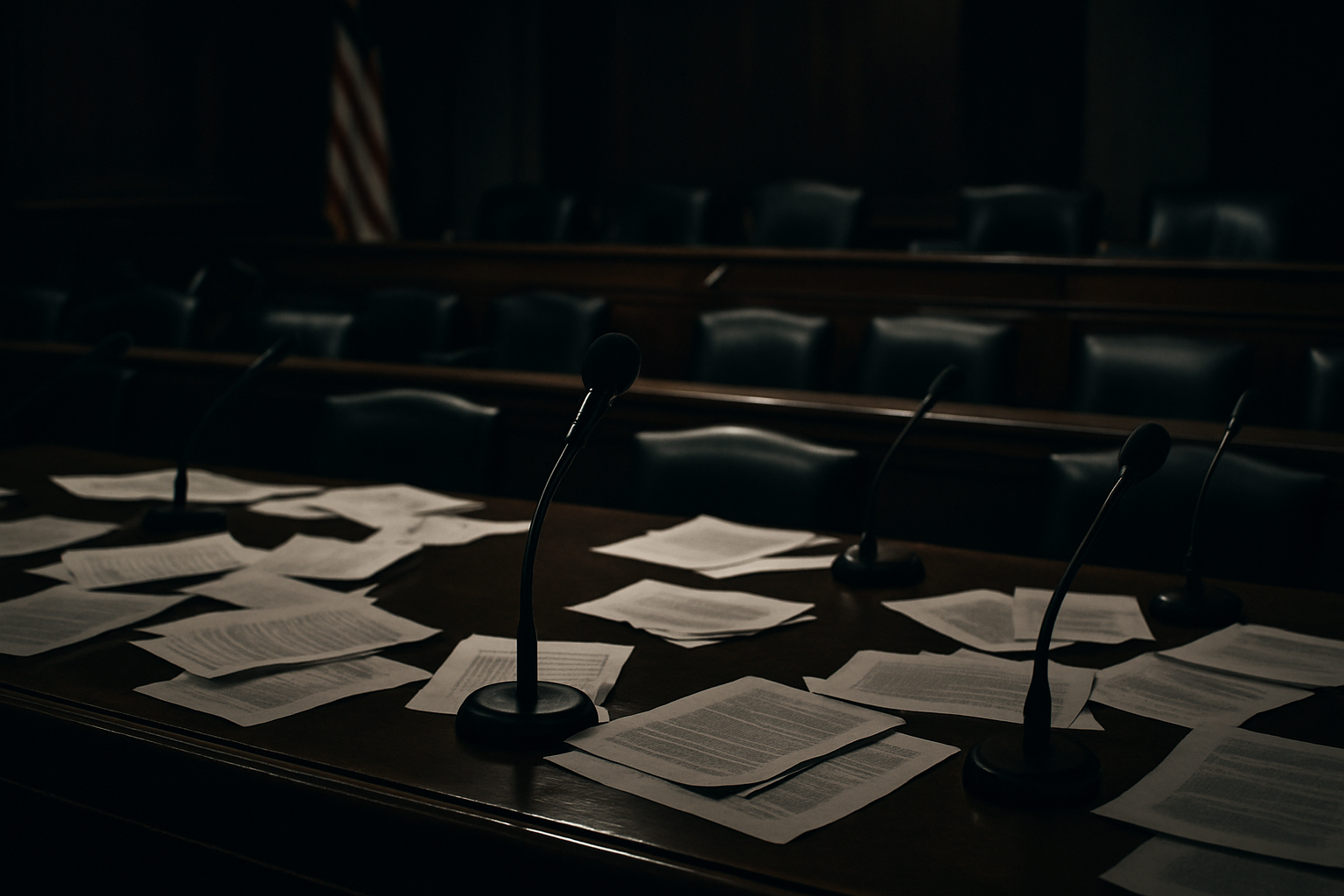
In Washington, Attorney General Pam Bondi testified before the House Judiciary Committee Wednesday, defending the Justice Department's handling of the massive document release amid accusations of a "cover-up" and claims the DOJ has become an "instrument of revenge" for the Trump administration.
"We painstakingly reviewed reams of documents on a compressed timeline and did our best to protect victims,"
— Pam Bondi, U.S. Attorney General
Republican Congressman Thomas Massie, who alongside Democrat Ro Khanna accessed unredacted files, revealed that "at least six men were redacted who are likely implicated," including billionaire Leslie Wexner and Emirati businessman Sultan Ahmed bin Sulayem. Both congressmen are petitioning the DOJ to publicly disclose all six identities.
The heated congressional session was attended by multiple Epstein survivors, adding emotional weight to criticisms of extensive redactions that critics say protect powerful figures while victim identities were accidentally exposed.
European Governments in Crisis
The political fallout has struck particularly hard in Europe, where multiple governments are grappling with revelations about their officials' connections to Epstein:
Norway: Royal Family Under Siege
Crown Princess Mette-Marit faces potential criminal proceedings from Norway's Økokrim anti-corruption unit after her name appeared over 1,000 times in the documents. The unprecedented situation has led to the termination of royal partnerships with Sex og Samfunn, marking the first major institutional rejection of the Norwegian royal family in modern history.
Former Prime Minister Thorbjørn Jagland has been stripped of diplomatic immunity by the Council of Europe - the first time in the institution's history such action has been taken - following corruption allegations related to his "extraordinary girls" communications with Epstein.
France: Political Resignations Mount
Jack Lang officially resigned as president of the Arab World Institute following a criminal investigation for "aggravated tax fraud and money laundering" involving a €50,000 offshore transfer connected to Epstein. Lang appeared 673 times in the documents, despite previously calling the accusations "baseless."
French diplomat Fabrice Aidan is under prosecutor referral for allegedly passing UN documents to Epstein, adding to the mounting pressure on French officials.
United Kingdom: Government Survival Crisis
Prime Minister Keir Starmer is fighting for political survival after admitting he was "lied to" by Peter Mandelson before appointing him as U.S. ambassador despite his Epstein connections. Metropolitan Police have searched Mandelson's properties in Camden and Wiltshire, investigating misconduct in public office allegations.
The crisis deepened when Starmer's chief of staff Morgan McSweeney resigned, taking "full responsibility" for the Mandelson appointment advice in what he described as "the only honourable course."
Baltic States Trafficking Network Exposed
One of the most disturbing revelations involves systematic recruitment networks across the Baltic states. Latvia has opened a human trafficking investigation into the "Natalie" modeling agency, with President Egils Levits declaring it a national priority.
Poland's Justice Minister confirmed evidence of "recruitment of women, possibly minors" on Polish soil, while Lithuania is investigating correspondence about "many women from Lithuania." Estonian authorities are examining an "agent" who allegedly operated across all three Baltic countries.
Corporate Consequences Escalate
The business world is also feeling the impact. Dubai-based DP World faces severe pressure as the UK's development finance agency and Canada's second-largest pension fund have suspended new investments over CEO Sultan Ahmed bin Sulayem's Epstein connections revealed in the documents.
The suspension represents a major escalation in business consequences, demonstrating how the scandal continues to affect global operations years after Epstein's death in 2019.
Victim Protection Catastrophe
Perhaps most troubling has been the Justice Department's handling of victim protection. Deputy Attorney General Todd Blanche confirmed that DOJ accidentally exposed approximately 100 survivor identities, including 31 minors, through what he called "technical and human error."
The massive confidentiality breach has federal judges hearing emergency petitions and threatens future victim cooperation with law enforcement. Despite the "disturbing" material revealed in the documents, Blanche confirmed no new federal prosecutions are planned.
Disinformation and Technology Challenges
The document releases have been complicated by disinformation campaigns. French authorities detected Russian-linked operations creating false connections between President Macron and Epstein. Additionally, AI tools can now generate convincing fake images of world leaders with Epstein "in seconds," complicating efforts to verify legitimate revelations.
International Justice Cooperation Test
Law enforcement officials describe this as "the largest international elite criminal network exposure in recent memory," with active investigations now spanning six countries. The crisis represents a critical test of democratic institutions' ability to hold powerful figures accountable across borders.
"This represents a fundamental challenge to democratic institutions globally, forcing a reckoning with the intersection of power, privilege, and criminal behavior at the highest levels of society."
— European Law Enforcement Official
Ghislaine Maxwell's Clemency Gambit
Adding another layer to the unfolding drama, Ghislaine Maxwell has offered to provide congressional testimony in exchange for presidential clemency from Trump. Maxwell, currently serving her sentence in a Texas federal prison, claims through her attorney that she can "exculpate" both Trump and Bill Clinton from certain allegations.
The clemency offer creates a constitutional dilemma over the use of presidential pardons for politically beneficial testimony, raising potential obstruction of justice questions.
The Scope of the Network
The documents reveal the unprecedented scope of Epstein's network, spanning from New York, Florida, and the Virgin Islands to European capitals, Asia, and Africa. Evidence suggests systematic cultivation of relationships across politics, business, entertainment, and technology sectors, requiring extensive planning, surveillance capabilities, and inside knowledge across multiple jurisdictions.
The investigation has revealed connections to tech industry leaders, with a 2015 dinner photo showing Epstein with Mark Zuckerberg, Elon Musk, and Peter Thiel - connections that Epstein himself described as "crazy" in his own emails.
Democratic Accountability at Stake
The crisis raises fundamental questions about whether democratic institutions can effectively address transnational elite criminal networks. Challenges include diplomatic immunity, institutional protection, jurisdictional coordination, and the complex intersection of law enforcement, international relations, and domestic politics.
Cultural organizations worldwide are conducting comprehensive relationship reviews, with some severing ties with named figures. The Norwegian royal partnership termination sets a precedent that other institutions may follow.
Ongoing Investigations and Future Implications
With investigations active across multiple continents and enhanced international cooperation emerging, this represents a potential turning point for international justice cooperation in the 21st century. The ultimate test will be whether these investigations lead to meaningful accountability and systemic reforms, or whether elite impunity continues despite massive public exposure.
The crisis has already fundamentally altered the international political landscape, forcing a global reckoning with how power and privilege intersect with criminal behavior at the highest levels of society. As more documents are expected to be released and investigations continue, the full scope of this international network and its impact on global politics is still emerging.
The coming weeks will be crucial in determining whether this exposure leads to substantial accountability measures or becomes another example of how powerful networks can weather even the most damaging revelations through institutional protection and jurisdictional complexity.