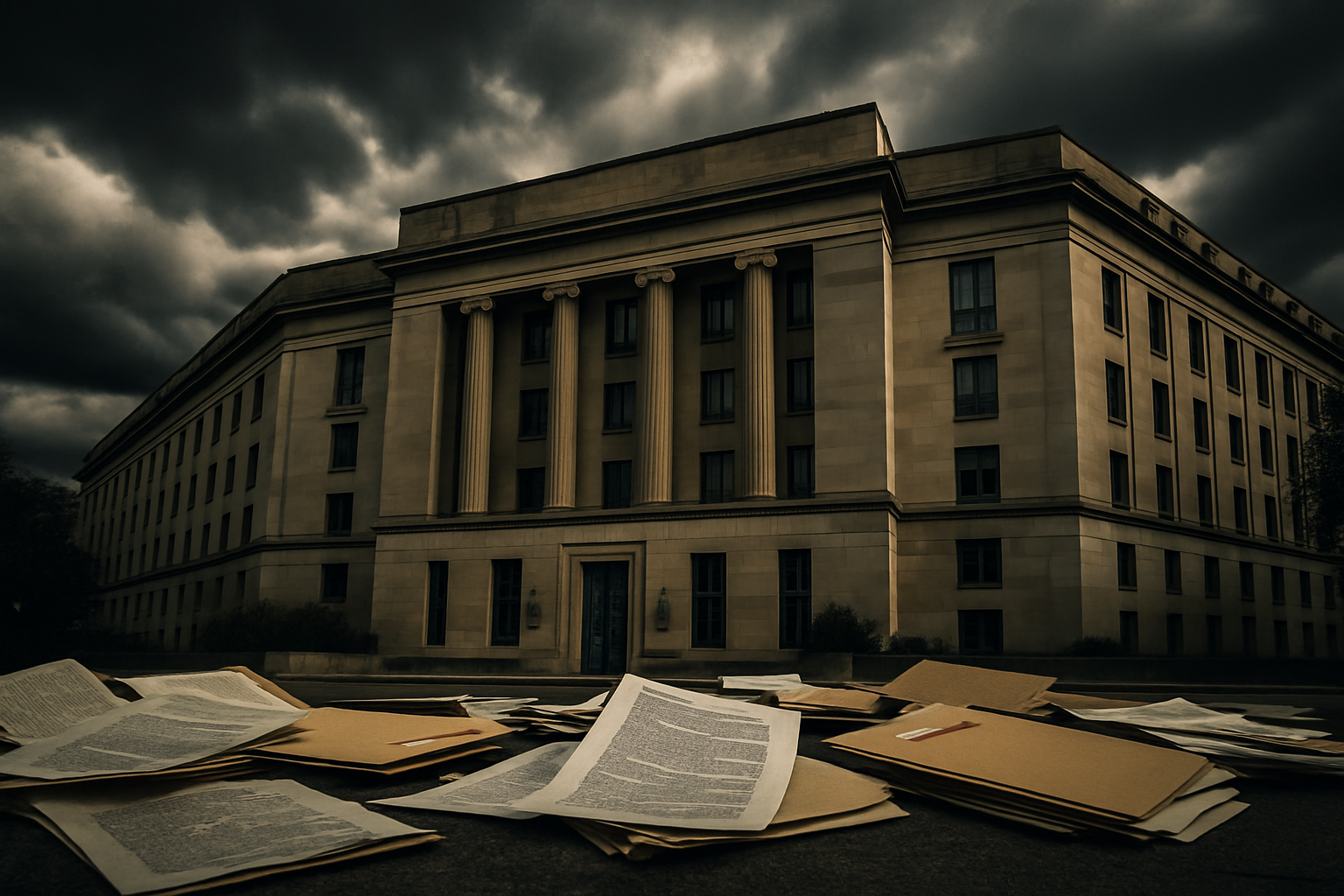
New revelations from Jeffrey Epstein files have exposed an unprecedented global network of connections spanning corporate executives, political figures, and entertainment personalities, while former Secretary of State Hillary Clinton has accused President Trump of orchestrating a deliberate cover-up of evidence.
Speaking in Berlin during a BBC interview, Clinton demanded immediate transparency, stating "Get the files out. They are slow-walking it." She suggested that only approximately 2% of an estimated 6 million Epstein documents have been publicly released, raising serious questions about the scope of information still being withheld.
Corporate Resignations and Business Fallout
The latest document releases have triggered a wave of high-profile resignations across major corporations. Thomas Pritzker, heir to the Hyatt hotel empire, announced his immediate resignation from the company's board after years-long contacts with Epstein were revealed. The 75-year-old executive expressed regret for what he called "terrible judgment" in maintaining relationships with the convicted sex offender even after his 2008 conviction.
In the sports world, Casey Wasserman, chairman of the 2028 Los Angeles Olympics organizing committee, faces mounting pressure following revelations of correspondence in the Epstein files. Soccer legend Abby Wambach severed her 20-year relationship with Wasserman's agency, stating "I know what I know and follow my intuition and values."
The corporate accountability crisis has also reached Wall Street, where Goldman Sachs' top lawyer Kathy Ruemmler resigned after emails revealed her referring to Epstein as "big brother" and minimizing his crimes. This represents the highest-profile Wall Street resignation in the ongoing scandal.
International Investigation Network Expands
Law enforcement agencies across six countries are now coordinating what European authorities describe as "the largest international elite criminal network exposure in recent memory." The investigations span from the Baltic states to the Pacific Islands, revealing the truly global scope of Epstein's operations.
In Latvia, President Egils Levits has declared the human trafficking investigation of the "Natalie" modeling agency a national priority. Documents suggest systematic recruitment of young women from Eastern Europe for exploitation in the United States. Poland's Justice Minister has confirmed evidence of recruitment activities involving "women, possibly minors," while Lithuania and Estonia are coordinating their own investigations into similar networks.
The Pacific dimension of the scandal has emerged through analysis identifying references to Tahiti and other Pacific Islands in emails involving people "actively seeking young females." This revelation has prompted additional scrutiny from authorities in the region.
Political Dimensions and Cover-Up Allegations
Clinton's accusations against the Trump administration have added a significant political dimension to the ongoing investigations. She characterized Republican inquiries into her and Bill Clinton's connections as deliberate distraction tactics designed to divert attention from Trump's own Epstein associations.
"Mention does not mean having committed crimes," Clinton emphasized, while demanding full transparency in document releases. Her comments come as both she and former President Bill Clinton are scheduled to testify before Congressional committees about their interactions with Epstein.
The political stakes have been raised further by revelations that Trump told a Palm Beach police chief in 2006 that "everyone knew" about Epstein's misconduct, contradicting his previous denials of knowledge about the financier's criminal behavior.
Congressional Pressure Mounts
Bipartisan frustration is growing in Congress over the pace of document releases and the extent of redactions in published materials. Some lawmakers who have accessed unredacted files are advocating for broader disclosure, arguing that the public has a right to know the full scope of Epstein's network.
Multiple high-profile witnesses are scheduled to testify under oath in the coming weeks, as congressional investigators work to piece together the complete picture of how Epstein maintained his influence and access to powerful figures across multiple countries and industries.
"This is not just about one man's criminal behavior - this is about a system that enabled and protected predatory conduct at the highest levels of society."
— Congressional Source
DOJ Limitations and Victim Protection Failures
Despite the massive scope of evidence revealed in the documents, Deputy Attorney General Todd Blanche has confirmed that no new federal prosecutions are planned. The Justice Department has attributed this decision to "technical and human errors" in handling the evidence, though critics argue this represents a fundamental failure to pursue justice.
Perhaps most troubling, the DOJ has faced criticism for accidentally exposing the identities of approximately 100 survivors, including 31 minors, through redaction failures. Federal judges are now hearing emergency petitions over these confidentiality breaches, which threaten to undermine victim cooperation with ongoing investigations.
Global Network Operations Revealed
The documents paint a picture of sophisticated international operations that extended far beyond Epstein's properties in New York, Florida, and the Virgin Islands. Evidence suggests systematic cultivation of relationships with political figures, business leaders, and cultural institutions across multiple continents.
Swedish analysis has revealed Epstein's apparent hatred toward Angela Merkel, while correspondence with Steve Bannon discusses strategies to "bring down Pope Francis." These revelations demonstrate that the network's ambitions extended to major political and religious institutions worldwide.
The entertainment industry has also faced scrutiny, with documents allegedly detailing how Epstein "used" celebrities to facilitate access to victims. This has prompted a broader examination of how legitimate cultural and business institutions may have been exploited as cover for criminal activities.
Enhanced International Cooperation
The global nature of the scandal has necessitated unprecedented cooperation between law enforcement agencies across different continents. Enhanced information sharing and joint operations are setting new precedents for how democratic institutions address transnational criminal networks.
Cultural organizations worldwide are conducting comprehensive relationship reviews, with some severing ties with individuals named in the documents. This institutional reckoning represents a significant shift toward accountability regardless of an individual's status or connections.
Democratic Institutions Under Test
The Epstein files scandal represents what experts characterize as a fundamental test of democratic institutions' ability to hold powerful figures accountable across borders. The challenge extends beyond traditional law enforcement to questions of diplomatic immunity, institutional protection, and jurisdictional complexity.
The varying national responses demonstrate the complex intersection of law enforcement, international relations, and domestic politics. Some countries have launched comprehensive investigations, while others have taken more measured approaches, highlighting the difficulties in addressing elite criminal networks that operate across multiple jurisdictions.
Systemic Reforms and Future Implications
The ongoing crisis is forcing governments, corporations, and cultural institutions worldwide to implement new vetting procedures and accountability mechanisms. These systemic changes may prove to be the most lasting legacy of the document releases.
Diplomatic appointment processes are being reviewed, corporate executives face enhanced background checks, and cultural institutions are implementing more rigorous due diligence procedures. The question remains whether these reforms will be sufficient to prevent similar networks from operating with impunity in the future.
As more document releases are expected and investigations continue across multiple continents, the Epstein files scandal continues to reshape our understanding of how power, privilege, and criminal behavior intersect at the highest levels of global society. The ultimate test will be whether these revelations lead to meaningful accountability and systemic reforms, or whether powerful individuals continue to operate above the law despite unprecedented public exposure.
The international community's response to this crisis will likely determine the precedents for 21st-century democratic governance and the rule of law in addressing sophisticated transnational criminal networks that threaten institutional integrity worldwide.