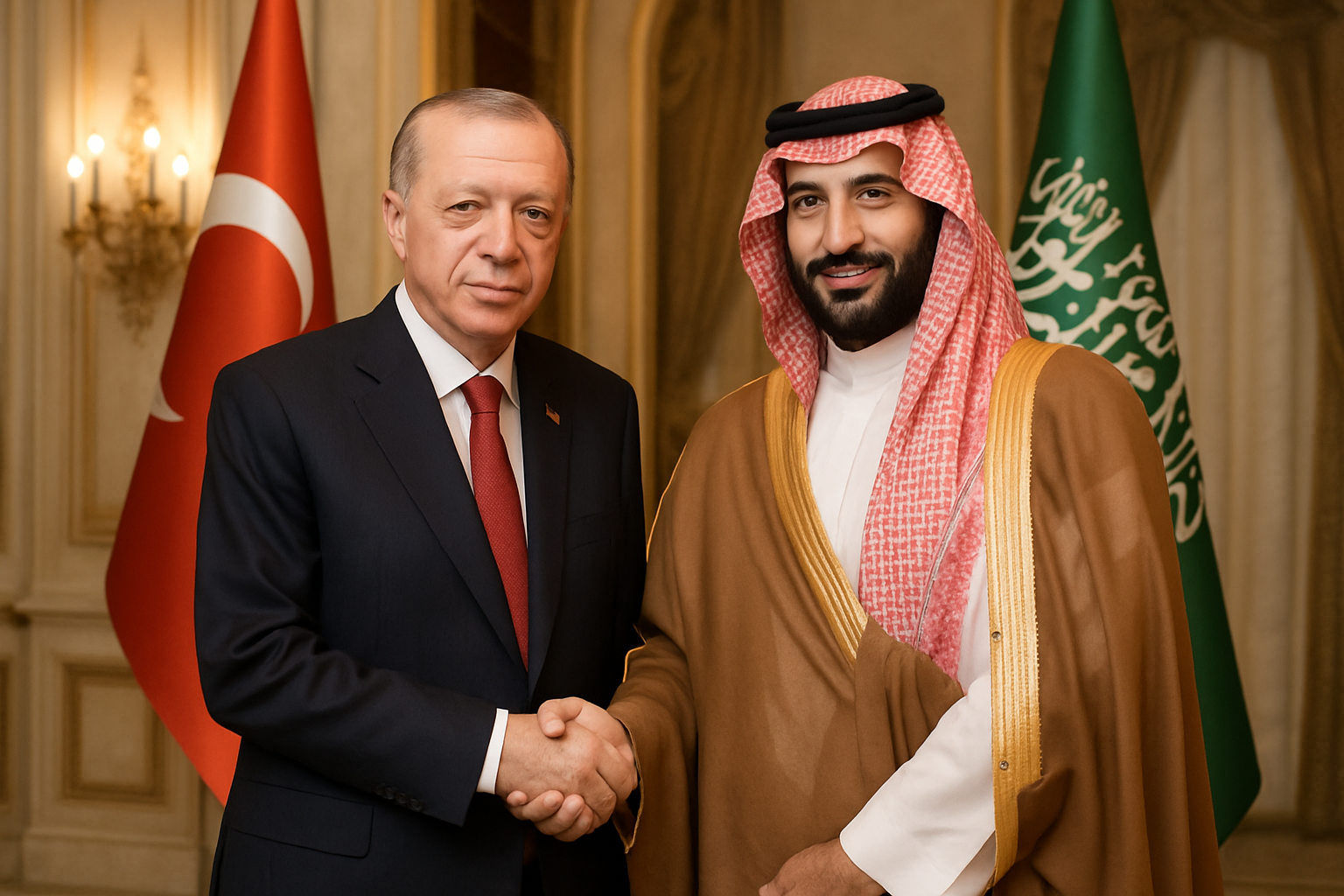
Turkish President Recep Tayyip Erdogan embarked on a crucial regional diplomatic tour this week, beginning with high-level talks in Saudi Arabia and scheduled to continue with visits to Egypt, as Turkey seeks to strengthen its position in Middle Eastern geopolitics while Greece simultaneously pursues enhanced defense partnerships with Western allies.
Erdogan's Saudi Arabia Engagement
President Erdogan arrived in Riyadh on Tuesday for an official state visit, accompanied by First Lady Emine Erdogan and a senior delegation including Foreign Minister Hakan Fidan, Finance Minister Mehmet Simsek, and Defense Minister Yasar Guler. The visit represents the first stop in Erdogan's broader regional diplomatic initiative aimed at deepening Turkey's relationships across the Middle East.
During his meeting with Saudi Crown Prince Mohammed bin Salman at the Al Yamama Palace, the two leaders engaged in closed-door discussions focusing on bilateral cooperation and regional developments. According to Turkish Communications Director Burhanettin Duran, the talks covered "additional steps to deepen Turkish-Saudi relations, as well as regional and international issues."
The diplomatic engagement yielded concrete results, with Saudi Arabia and Turkey signing a landmark renewable energy agreement. Saudi Energy Minister Prince Abdulaziz bin Salman and Turkish Energy Minister Alparslan Bayraktar formalized the deal, which commits to developing solar power projects with a total installed capacity of up to 5,000 megawatts in Turkey across two phases.
"This agreement aims to expand bilateral cooperation in renewable energy and green technologies, supporting the development and implementation of high-quality projects that contribute to diversifying the energy mix."
— Saudi Energy Ministry Statement
Turkey-Egypt Strategic Coordination
Following his Saudi Arabia visit, Erdogan is scheduled to travel to Cairo on Wednesday at the invitation of Egyptian President Abdel Fattah Al-Sisi. According to Turkey's ambassador to Cairo, Salih Mutlu Şen, the two leaders will co-chair the second meeting of the Turkish-Egyptian High-Level Strategic Cooperation Council.
The Cairo discussions are expected to address key bilateral agenda items and include comprehensive exchanges on regional developments, with particular emphasis on the Palestinian issue and broader Middle Eastern stability. This engagement reflects Turkey's efforts to position itself as a key mediator and influential voice in regional affairs.
Greece Strengthens Western Defense Ties
While Turkey pursues diplomatic engagement across the Middle East, Greece is simultaneously strengthening its defense cooperation with Western partners. Greek Defense Minister Nikos Dendias recently met with his American counterpart to present Greek positions on regional security issues and discuss the ongoing reform and strengthening of Greek Armed Forces.
The Greek-US defense cooperation discussions represent part of Athens' broader strategy to enhance its security posture through established NATO and Western partnerships, contrasting with Turkey's more diversified diplomatic approach that includes engagement with both Western allies and Middle Eastern partners.
Regional Diplomatic Context
Erdogan's regional tour occurs within a complex Middle Eastern diplomatic landscape marked by multiple ongoing negotiations and strategic realignments. The timing coincides with broader regional diplomatic initiatives, including the upcoming Iran-US nuclear talks scheduled for Friday in Istanbul, where Turkey is serving as the primary venue for these crucial negotiations.
Turkey's role as host for the Iran-US talks, combined with Erdogan's active diplomatic engagement across the region, underscores Ankara's ambitions to serve as a key facilitator in Middle Eastern diplomacy. The simultaneous pursuit of enhanced relationships with Saudi Arabia and Egypt positions Turkey as a bridge between different regional power centers.
Economic and Strategic Implications
The Turkish-Saudi renewable energy agreement represents more than bilateral cooperation—it reflects Turkey's strategy of diversifying its energy partnerships and reducing dependency on traditional suppliers. The 5,000-megawatt solar project commitment aligns with both countries' goals of transitioning toward renewable energy sources and reducing carbon emissions.
As part of Erdogan's visit, a Turkish-Saudi business forum was organized by Turkey's Ministry of Trade and the Foreign Economic Relations Board (DEIK), indicating the economic dimensions of the diplomatic engagement extend beyond government-to-government cooperation to include private sector partnerships.
Broader Regional Dynamics
The diplomatic activities reflect broader shifts in Middle Eastern geopolitics, with traditional rivalries giving way to pragmatic cooperation on shared interests. Turkey's engagement with both Saudi Arabia and Egypt—countries that have experienced tensions with Ankara in recent years—demonstrates the evolving nature of regional relationships.
Meanwhile, Greece's focus on strengthening Western defense partnerships represents a different approach to regional security, emphasizing established alliance structures rather than the more flexible diplomatic positioning pursued by Turkey.
Looking Forward
Erdogan's regional tour and Greece's defense cooperation initiatives represent two different approaches to navigating the complex Middle Eastern security environment. Turkey's strategy emphasizes diplomatic flexibility and engagement across multiple partnerships, while Greece focuses on deepening established Western alliance relationships.
The success of these respective approaches will likely be measured by each country's ability to advance their national interests while contributing to regional stability. As both countries pursue their diplomatic objectives, the broader Middle Eastern landscape continues to evolve through a combination of bilateral partnerships, multilateral negotiations, and strategic realignments that reflect the region's changing geopolitical dynamics.