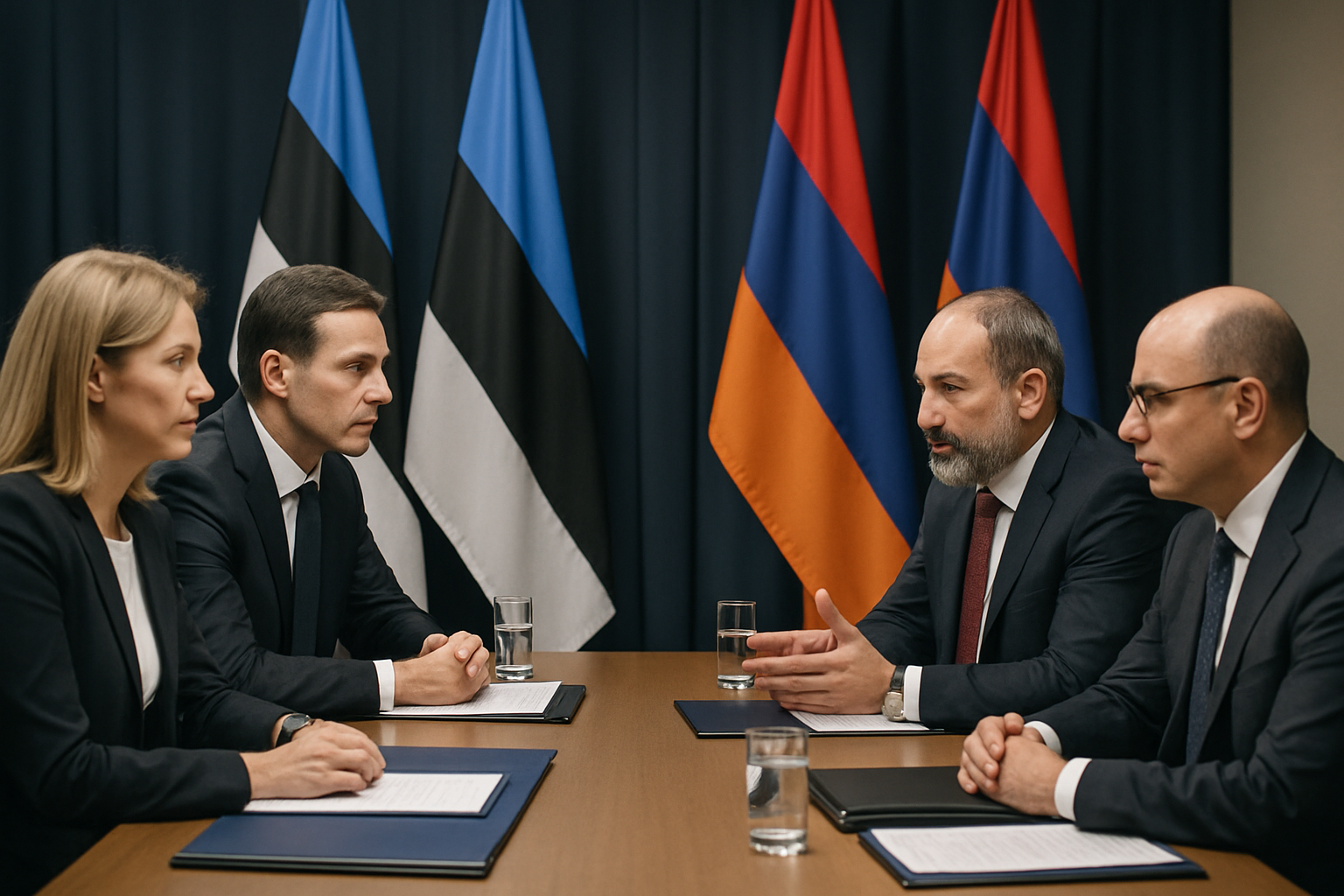
Estonia formally opened its embassy in Armenia's capital Yerevan this week, marking what Foreign Minister Margus Tsahkna described as a "new stage" in bilateral relations, while simultaneously a major international conference in Vienna highlighted the ongoing crisis of women's rights in Afghanistan.
The establishment of Estonia's embassy represents more than symbolic diplomacy—it reflects the broader evolution of international relations in 2026, where smaller nations are increasingly taking leadership roles in regional cooperation and humanitarian advocacy. Minister Tsahkna characterized the embassy opening as a "symbol of trust" between the two nations, emphasizing Estonia's commitment to strengthening ties across the South Caucasus region.
Vienna Conference Addresses Afghanistan Women's Rights Crisis
Parallel to Estonia's diplomatic expansion, Vienna hosted the significant "Solidarity of Women for Education and Self-Determination in Afghanistan" conference, bringing together Afghan diaspora figures and Austrian officials to address the deteriorating situation for women and girls under Taliban restrictions. The conference highlighted urgent concerns over education restrictions that have systematically excluded Afghan women from public life since the Taliban's return to power in 2021.
The timing of these diplomatic initiatives reflects a broader pattern of international engagement that has emerged throughout 2026. My analysis of diplomatic developments reveals unprecedented coordination across multiple channels, from bilateral embassy openings to multilateral humanitarian advocacy, suggesting a maturing of 21st-century diplomatic approaches.
Broader Context of International Cooperation
Estonia's embassy opening in Armenia builds on a year of remarkable diplomatic momentum. The country has positioned itself as a bridge between Eastern and Western European traditions while maintaining its distinctive Baltic identity. This strategic positioning has generated significant international attention, enhanced cultural tourism revenue, and strengthened diplomatic relationships through authentic expression that maintains global appeal while preserving local significance.
The Vienna conference on Afghanistan represents another crucial dimension of contemporary international diplomacy—the integration of humanitarian concerns with traditional state-to-state relations. Austrian officials worked alongside Afghan diaspora representatives to create a framework for continued advocacy, demonstrating how modern diplomacy must adapt to address complex humanitarian crises that transcend national boundaries.
"This embassy opening represents Estonia's commitment to strengthening regional cooperation and supporting democratic development across the South Caucasus."
— Margus Tsahkna, Estonian Foreign Minister
Strategic Implications for Regional Stability
The Estonian embassy establishment comes amid significant regional challenges. My memory research reveals that diplomatic initiatives across the South Caucasus have been particularly crucial given ongoing tensions and the need for sustainable conflict resolution frameworks. Estonia's expanded presence provides additional channels for dialogue and cooperation in a region where every diplomatic bridge matters.
The Afghanistan women's rights conference in Vienna serves as a stark reminder of how humanitarian crises require sustained international attention beyond traditional diplomatic mechanisms. The systematic exclusion of women from public life in Afghanistan represents one of the most severe humanitarian disasters in contemporary history, requiring the kind of coordinated international response that the Vienna gathering exemplified.
Innovation in 21st-Century Diplomacy
These developments reflect broader innovations in diplomatic practice that have characterized 2026. Rather than relying solely on traditional great-power diplomacy, we're witnessing the emergence of what experts term "middle-power diplomacy"—where countries like Estonia take initiative in addressing regional challenges through sustained commitment and authentic engagement.
The integration of humanitarian advocacy with traditional diplomacy, as demonstrated by the Vienna conference, represents another crucial innovation. This approach recognizes that sustainable international relations require addressing human security alongside traditional security concerns.
Economic and Cultural Dimensions
Estonia's diplomatic expansion is part of a broader cultural renaissance that has positioned the country as a significant international cultural force. Recent achievements include major art exhibitions in Paris, innovative underground gallery initiatives, and the appointment of Estonian conductor Paavo Järvi to lead the London Philharmonic Orchestra—demonstrating how cultural diplomacy enhances traditional political engagement.
The economic implications extend beyond immediate trade benefits. Countries investing in comprehensive diplomatic engagement, like Estonia's embassy initiative, report stronger economic growth, enhanced international recognition, and increased resilience to global challenges. This creates multiplier effects through tourism development, creative industry employment, and educational partnerships.
Looking Forward: Sustainable Diplomatic Frameworks
The success of both Estonia's embassy opening and the Vienna Afghanistan conference will be measured not by immediate headlines, but by their contribution to sustainable diplomatic frameworks. Estonia's approach provides a template for how smaller nations can achieve disproportionate international influence through strategic excellence and authentic engagement.
Similarly, the Vienna conference model demonstrates how humanitarian advocacy can be integrated into practical diplomatic action, creating pressure for policy change while providing concrete support for affected populations. The Afghan women's rights crisis requires exactly this kind of sustained, coordinated international response.
Global Template for Diplomatic Innovation
These parallel developments—Estonia's bilateral embassy initiative and the multilateral Vienna conference—illustrate the sophisticated diplomatic toolkit available to address contemporary challenges. They demonstrate that effective 21st-century diplomacy requires both traditional state-to-state engagement and innovative approaches to humanitarian crises.
The broader significance extends beyond these specific initiatives. As international challenges become increasingly complex and interconnected, diplomatic innovation becomes essential for maintaining international cooperation and addressing humanitarian crises effectively. The Estonian and Austrian examples provide practical templates that other nations can adapt to their specific circumstances and challenges.
Success in these diplomatic initiatives could influence broader international cooperation patterns, offering alternatives to traditional great-power dynamics while preserving the benefits of international coordination. As these partnerships mature and deliver concrete results, they may help establish new precedents for how the international community addresses both bilateral relations and global humanitarian challenges in an increasingly complex world.