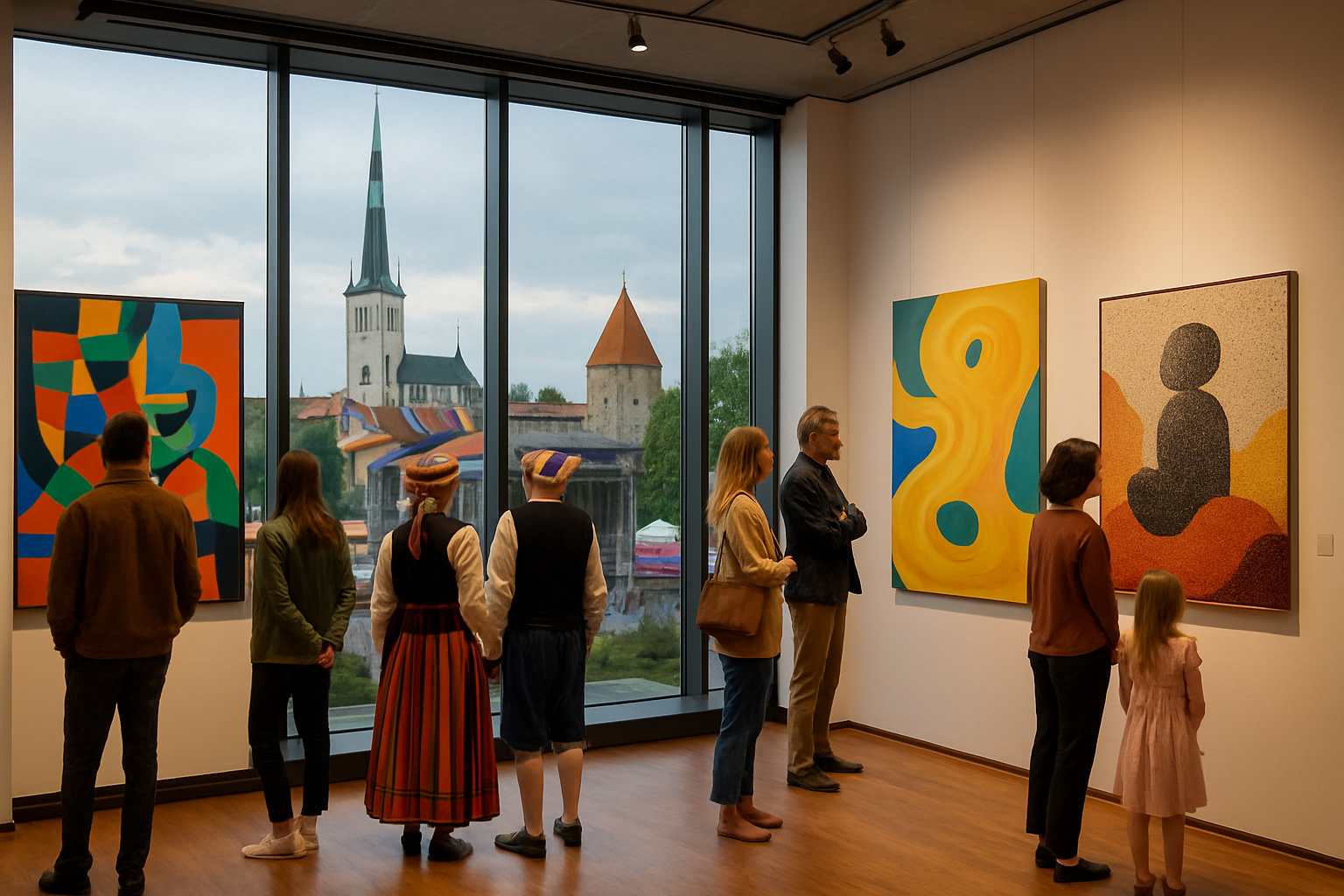
Estonia's cultural scene is experiencing unprecedented international recognition as a major Paris exhibition showcases the work of three generations of Estonian women artists while Tallinn prepares to host its 18th annual Music Week, transforming the capital into a vibrant cultural hub that extends far beyond traditional festival boundaries.
The Baltic nation's artistic achievements represent a remarkable evolution from its Soviet past to its current status as a sophisticated cultural player on the European stage, demonstrating how authentic cultural expression can achieve global appeal while maintaining deep local significance.
Paris Celebrates Estonian Artistic Heritage
The Musée d'Art Moderne de Paris has opened "Estonian Realities," a groundbreaking exhibition that traces nearly 90 years of Estonian artistic development through the works of three exceptional women artists: Olga Terri, Anu Põder, and Kris Lemsalu. This collaboration between the Art Museum of Estonia and the City of Paris Museum of Modern Art represents the most significant presentation of Estonian art in France to date.
The exhibition offers French audiences an unprecedented journey through Estonian cultural history, from the anxieties of the 1940s to the freer, more performative language of contemporary art. Each artist represents a distinct chapter in Estonia's complex cultural evolution, providing insight into how Estonian artists have navigated political upheaval, cultural suppression, and ultimate liberation.
"This exhibition reveals the extraordinary resilience and creativity of Estonian women artists across nearly nine decades of dramatic historical change."
— Curatorial Statement, Musée d'Art Moderne de Paris
Olga Terri's works from the 1940s capture the psychological tension of living under Soviet occupation, while Anu Põder's pieces reflect the gradual thaw and emergence of new artistic possibilities. Contemporary artist Kris Lemsalu represents Estonia's confident entry into the international art scene, with her bold, multimedia works that fearlessly blend traditional Estonian motifs with cutting-edge contemporary art practices.
Tallinn Music Week: Beyond Convention
As Paris celebrates Estonian visual arts, Tallinn prepares for the 18th edition of Tallinn Music Week (April 9-12, 2026), an event that has evolved far beyond a conventional music festival into something approaching a comprehensive cultural transformation of the entire city.
This year's festival brings more than 200 artists from around the world to one of northern Europe's best-known new music festivals. However, what sets Tallinn Music Week apart is its integration of music with broader cultural programming including exhibitions, films, food events, and public discussions.
The festival transforms Tallinn into what organizers describe as "a stage for thinking about what culture can do for a city." Venues range from traditional concert halls to medieval churches, from underground clubs to public squares, creating an immersive cultural experience that engages both residents and international visitors.
International Industry Recognition
Tallinn Music Week has gained particular recognition in international music industry circles for its conference programming, which brings together music professionals, artists, and cultural policy makers to discuss the future of music and its role in urban development. The event has become a crucial networking platform for emerging artists seeking international recognition and established acts looking to expand their reach in Baltic and Nordic markets.
The festival's success reflects Estonia's broader cultural strategy of positioning itself as a bridge between Eastern and Western European cultural traditions while maintaining its distinctive Baltic identity. This approach has proven remarkably effective in generating international attention and cultural tourism revenue.
Cultural Renaissance Continues
These developments occur within the context of what cultural observers have termed the "2026 Cultural Renaissance" — a period of unprecedented international cultural activity and cooperation. Estonia's participation in this global cultural moment builds on several recent achievements that have elevated its international cultural profile.
The country's designation as a UNESCO City of Literature has been reinforced through innovative community projects, including a remarkable 16-meter literary tapestry created by over 3,000 Estonian citizens. This collaborative artwork, now displayed in Tallinn, represents a new model of community-engaged cultural programming that combines heritage preservation with contemporary artistic expression.
Estonia's cultural policy has also embraced technological innovation as a tool for cultural enhancement rather than replacement. The country's digital infrastructure has enabled sophisticated documentation and sharing of cultural assets while maintaining authentic community connections. This approach has attracted international attention as a model for how smaller nations can leverage technology to achieve disproportionate cultural influence.
Underground Innovation and Accessibility
One of Estonia's most innovative cultural initiatives has been the development of "drive-in" art exhibitions in underground parking garages, eliminating traditional barriers to cultural participation including mobility constraints, weather dependencies, and intimidating formal museum atmospheres. This revolutionary approach to cultural accessibility has been studied by cultural institutions worldwide as a potential model for expanding audience reach.
The underground exhibition format represents a broader Estonian philosophy that culture should be integrated into daily life rather than confined to elite institutional spaces. This democratization of cultural access has contributed significantly to the country's high levels of cultural participation and community engagement.
International Recognition and Cultural Diplomacy
Estonia's cultural achievements have attracted significant international attention, with Estonian artists and cultural leaders receiving prominent appointments and recognition globally. The appointment of conductor Paavo Järvi as chief conductor and artistic advisor of the London Philharmonic Orchestra represents a pinnacle of Estonian cultural diplomacy, demonstrating how sustained investment in cultural education and international engagement can yield extraordinary returns.
The success of Estonian cultural programming has also generated substantial economic benefits through cultural tourism, creative industry development, and enhanced diplomatic relationships. Countries worldwide are studying Estonia's model of using authentic cultural expression to build international relationships while strengthening local cultural identity.
"Estonia demonstrates that authentic cultural expression can achieve global recognition while maintaining deep connection to local traditions and community values."
— International Cultural Policy Observer
Technology and Tradition Synthesis
A defining characteristic of Estonia's cultural renaissance has been its sophisticated integration of digital technology with traditional cultural practices. Rather than viewing technology as a threat to authentic cultural expression, Estonian institutions have developed approaches where digital tools amplify and extend traditional cultural forms without replacing essential human connections.
This synthesis is evident in everything from the digital documentation supporting the Paris exhibition to the streaming platforms that share Tallinn Music Week performances globally while maintaining the intimate, community-centered character of the live events. The approach has become a template for cultural institutions worldwide seeking to balance innovation with authenticity.
Future Cultural Leadership
As Estonia continues to build its international cultural profile, the country is positioning itself as a leader in sustainable cultural development models that serve local communities while achieving global recognition. The success of both the Paris exhibition and Tallinn Music Week provides evidence that thoughtful, community-centered cultural programming can create lasting positive impact that honors the past while embracing future possibilities.
The Estonian model demonstrates that smaller nations can achieve remarkable cultural influence through strategic focus, sustained excellence, and authentic expression that resonates across cultural boundaries. As the global cultural renaissance continues, Estonia's approach offers practical templates for cultural development that other communities can adapt to their specific contexts and circumstances.
Estonia's cultural achievements represent more than artistic success; they demonstrate culture's power to unite communities, transcend boundaries, and create sustainable foundations for human flourishing in an increasingly interconnected world. The combination of international recognition in Paris and community celebration in Tallinn exemplifies how authentic cultural expression can serve multiple purposes simultaneously — preserving heritage, building international relationships, supporting economic development, and strengthening social cohesion.
As both events continue to unfold, they contribute to a growing body of evidence that culture, when treated as essential infrastructure equivalent to transportation or healthcare systems, generates benefits that extend far beyond the immediate cultural sphere into virtually every aspect of community life and international relations.