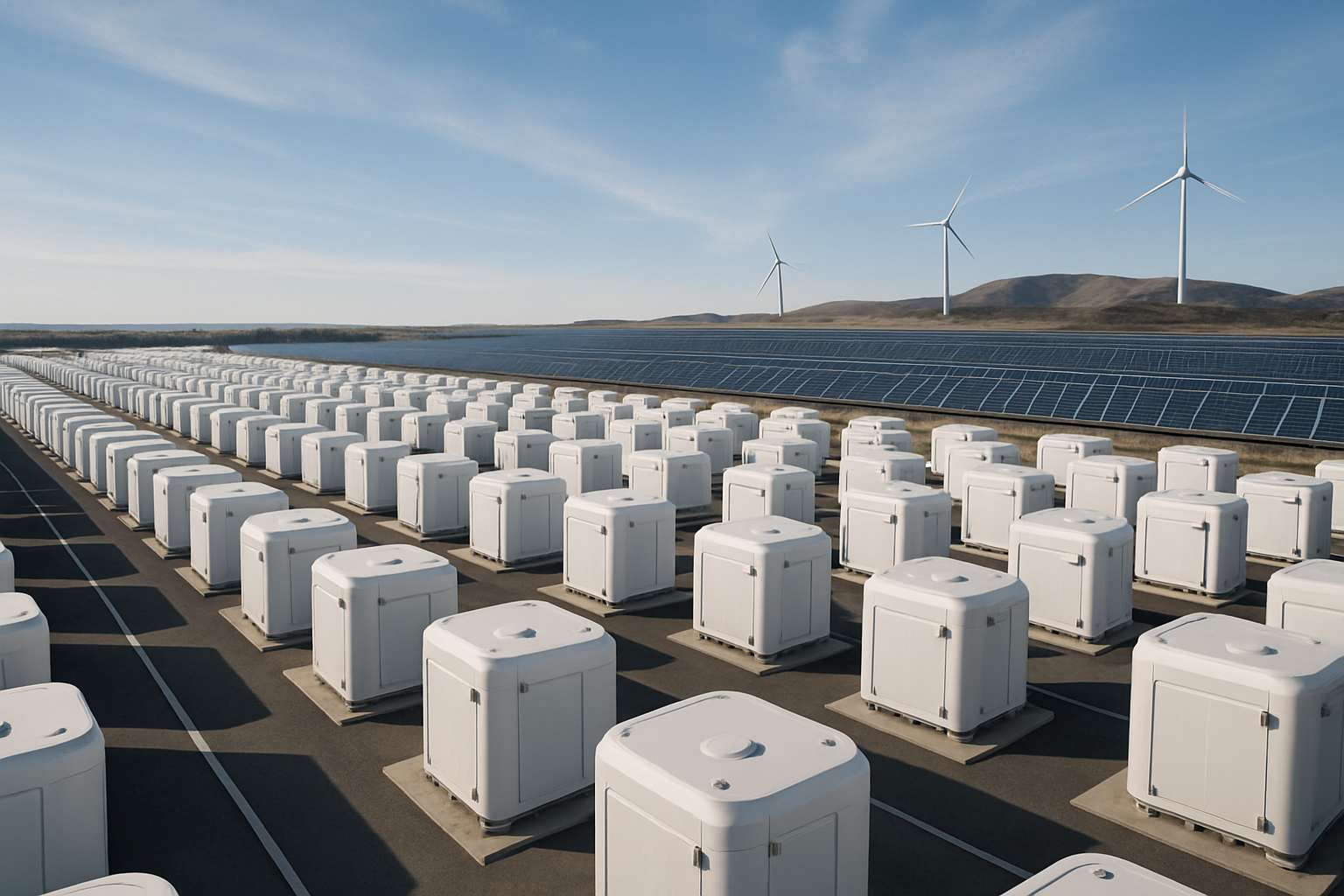
Europe achieved two major sustainable energy milestones this week as Estonia unveiled the largest battery storage park in continental Europe and Austria demonstrated remarkable renewable energy integration, highlighting the continent's accelerated push toward energy independence and climate neutrality despite ongoing geopolitical and supply chain challenges.
The groundbreaking battery facility in Kiisa, Harju County, Estonia, opened on Tuesday with the capacity to serve 90,000 households, representing a quantum leap in energy storage infrastructure for the region. The facility marks a critical step in addressing one of renewable energy's fundamental challenges: storing intermittent power from wind and solar sources for use during peak demand periods.
Estonia's Energy Storage Revolution
The Kiisa battery park represents more than just technological achievement—it symbolizes Estonia's commitment to energy sovereignty amid heightened regional security concerns. The facility's capacity to support 90,000 households provides crucial grid stability in a country that has been reassessing its energy infrastructure following geopolitical tensions in Eastern Europe.
The timing of this development is particularly significant given Estonia's ongoing challenges with severe winter weather conditions. The country is currently experiencing its coldest winter in 25 years, creating unprecedented demand for reliable energy systems. The battery storage facility offers a buffer against potential supply disruptions while supporting the integration of renewable energy sources even during extreme weather events.
This achievement builds on the broader Baltic region's push toward energy independence. Estonia's investment in battery storage technology demonstrates sophisticated planning that addresses both immediate energy security needs and long-term sustainability goals.
Austria's Renewable Energy Leadership
Simultaneously, Austria continues to showcase exceptional performance in renewable energy integration, with 88 percent of its electricity production coming from renewable sources in 2024. This remarkable achievement, announced by Grünwelt Energie, underscores Austria's effective utilization of its topographical advantages, particularly hydroelectric power generation.
Austria's success in renewable energy integration occurs within a complex European energy landscape where countries are balancing domestic production with strategic imports and exports. The nation's renewable energy leadership provides a model for other European countries seeking to reduce dependence on fossil fuels while maintaining grid reliability.
The Austrian experience demonstrates that geographic advantages, when combined with strategic policy frameworks, can achieve exceptional renewable energy penetration rates. This success comes as the European Union faces warnings from auditors about critical materials shortages threatening climate goals.
Addressing Supply Chain Vulnerabilities
These sustainable energy advances occur against the backdrop of significant supply chain challenges identified by EU auditors. The European Union's climate goals face serious risks due to China's control of 60 percent of global production and 90 percent of global refining capacity of critical raw materials including lithium, cobalt, and rare earth elements essential for renewable energy infrastructure.
The Estonia battery park and Austria's renewable integration represent strategic responses to these vulnerabilities. By developing domestic energy storage and maximizing indigenous renewable resources, European countries are building resilience against supply chain disruptions while advancing climate objectives.
Recent memory includes multiple warnings about strategic autonomy concerns, with EU officials emphasizing the need for diversification of critical material supplies. The current energy infrastructure developments represent practical steps toward reducing these dependencies while maintaining momentum in the energy transition.
Broader European Energy Context
These developments unfold within a dynamic European energy market experiencing significant volatility. Natural gas prices recently surged 24 percent across Europe, while ongoing geopolitical tensions continue to impact energy security calculations throughout the region.
The Estonian and Austrian achievements demonstrate that sustainable energy transitions can proceed effectively even amid market uncertainties and supply chain challenges. Both countries are leveraging different strengths—Estonia's strategic investment in storage technology and Austria's hydroelectric resources—to advance common European energy objectives.
The timing coincides with broader European integration discussions, as recent Eurobarometer surveys show 89 percent of Europeans demanding greater EU unity, with energy security among the primary concerns driving calls for collective action.
Global Energy Transition Patterns
The Estonian battery park and Austrian renewable achievements fit within a broader global pattern of sustainable energy acceleration. Recent developments include major renewable energy agreements in the Gulf region, Caribbean submarine cable projects for cross-border renewable energy sharing, and comprehensive infrastructure investments across multiple continents.
However, these advances occur amid complex challenges including ongoing controversies over renewable energy projects affecting sensitive ecosystems, as seen in recent Philippine wind farm disputes. The European approach demonstrates careful balance between environmental protection and energy transition objectives.
The Estonian facility's scale—capable of serving 90,000 households—represents the kind of massive infrastructure investment required to meet 2030 and 2050 climate targets across Europe. Combined with Austria's 88 percent renewable electricity achievement, these developments showcase viable pathways toward carbon neutrality.
Economic and Strategic Implications
The economic implications of these energy developments extend beyond immediate infrastructure benefits. Estonia's battery storage investment creates opportunities for technology exports and positions the country as a regional leader in energy storage solutions. Austria's renewable energy success supports economic stability through reduced energy import dependencies.
Both achievements occur during a period of European economic adjustment, with eurozone inflation declining to 1.7 percent in January 2026, providing favorable conditions for major infrastructure investments. Austria specifically benefits from government interventions that have helped moderate electricity costs, creating positive feedback loops for renewable energy adoption.
The strategic dimensions include enhanced energy security for both nations and improved capacity to support neighboring countries during energy crises. Estonia's battery storage can contribute to regional grid stability, while Austria's renewable surplus can support European energy markets during peak demand periods.
Future Outlook and Challenges
Looking ahead, these achievements set important precedents for European sustainable energy development. The success of Estonia's battery park could accelerate similar projects across the Baltic region and beyond, while Austria's renewable integration model provides blueprints for other countries with comparable geographic resources.
However, significant challenges remain. The ongoing critical materials shortage highlighted by EU auditors requires coordinated European responses including strategic stockpiling, alternative supplier agreements, and enhanced recycling investments. Current geopolitical tensions underscore the urgency of energy independence initiatives.
Technical challenges include scaling storage technologies to meet growing demand, integrating intermittent renewable sources across increasingly complex grid systems, and maintaining reliability during extreme weather events like the current European winter crisis.
The Estonian and Austrian developments demonstrate that despite these challenges, European countries can achieve remarkable progress in sustainable energy transitions through strategic planning, targeted investments, and effective utilization of natural advantages. These successes provide momentum for broader European climate objectives while enhancing energy security in an uncertain global environment.