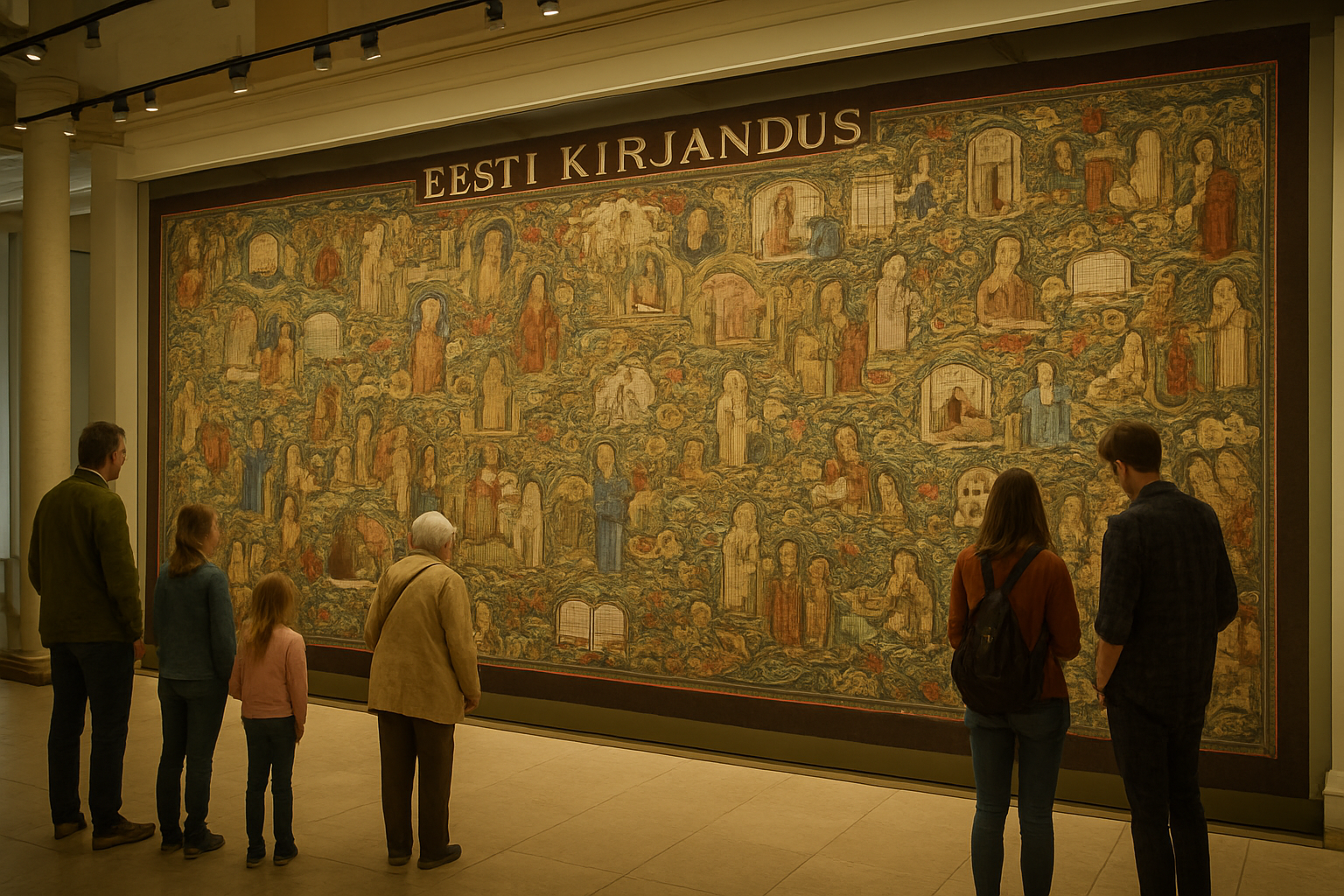
Estonia showcased a remarkable 16-meter tapestry embroidered by over 3,000 people now on display in Tallinn, telling the story of Estonian literature, while simultaneously confronting research that identifies middle-aged men as a critical bottleneck in the nation's cultural participation.
The completion of this massive collaborative artwork represents a triumph of community engagement and cultural preservation, bringing together thousands of contributors in what stands as one of the most ambitious collective arts projects in recent Estonian history. The tapestry, which chronicles the rich narrative of Estonian literary tradition, demonstrates the extraordinary potential for grassroots cultural mobilization when communities unite around shared heritage.
A Monument to Literary Heritage
The 16-meter textile masterpiece represents more than artistic achievement—it embodies a living testament to Estonia's literary culture, with each stitch contributing to a comprehensive narrative spanning centuries of Estonian storytelling. The scale of community participation, involving over 3,000 embroiderers, reflects a model of cultural engagement that transcends traditional boundaries between professional artists and community members.
This project aligns with Estonia's broader position as a UNESCO City of Literature, reinforcing the nation's commitment to literary arts while demonstrating innovative approaches to cultural preservation. The tapestry serves multiple functions: artistic expression, historical documentation, community building, and educational resource, representing the kind of multifaceted cultural programming that has characterized Estonia's 2026 cultural renaissance.
Cultural Participation Crisis Identified
However, concurrent research by social scientist Marju Lauristin reveals a troubling paradox in Estonia's cultural landscape. Despite widespread appreciation for reading and literary culture, Lauristin's study on Estonian reading habits identifies middle-aged men as significantly less engaged in literary culture, even as this demographic "sets the tone in society today."
"While people do read books on the whole, reading is less popular among middle-aged men who, at the same time, set the tone in society today."
— Marju Lauristin, Social Scientist
This finding illuminates a critical gap in cultural participation that extends beyond simple reading preferences to encompass broader patterns of cultural influence and social leadership. When the demographic group wielding significant societal influence demonstrates lower engagement with literature and cultural activities, it creates systemic barriers to cultural development and appreciation.
Broader Implications for Cultural Policy
Lauristin's research intersects with global trends documented in Estonia's ongoing cultural evolution. The country has emerged as a leader in balancing digital innovation with traditional cultural preservation, from its revolutionary underground art exhibitions in Tallinn parking garages to its sophisticated integration of AI in education while maintaining human-centered learning approaches.
The identification of middle-aged men as a cultural participation bottleneck carries profound implications for policy development and cultural programming. This demographic often occupies key positions in business leadership, political decision-making, and community organization—roles that directly influence cultural funding priorities, institutional support, and the social value placed on artistic expression.
International Context and Solutions
Estonia's cultural challenges reflect broader international patterns observed during the 2026 Cultural Renaissance period. Across Europe, nations have grappled with similar participation gaps while developing innovative approaches to cultural engagement that cross demographic boundaries.
Successful models from neighboring countries suggest potential solutions: community-centered programming that connects cultural activities to professional development, family engagement initiatives that create multi-generational cultural experiences, and economic frameworks that demonstrate culture's strategic value for business and social development.
The tapestry project itself offers a template for addressing participation barriers through collaborative creation that welcomes contributors regardless of artistic background or cultural experience. The scale of participation—3,000 people—demonstrates how properly structured cultural initiatives can mobilize broad community engagement while producing meaningful artistic outcomes.
Technology and Cultural Bridge-Building
Estonia's approach to cultural development increasingly emphasizes technology as an enhancement rather than replacement for human cultural connections. From digital platforms supporting traditional craft documentation to AI tools that make cultural education more accessible, the nation demonstrates how technological integration can serve authentic cultural expression rather than competing with it.
This balance becomes particularly relevant when addressing demographic participation gaps. Digital tools can create new pathways for cultural engagement that appeal to different learning styles and time constraints, potentially offering middle-aged professionals alternative means of cultural participation that align with their lifestyle patterns and preferences.
Economic and Social Strategic Implications
The economic implications of cultural participation barriers extend far beyond arts funding. Research consistently shows that countries with higher cultural engagement demonstrate stronger economic resilience, enhanced international competitiveness, and improved social cohesion. When influential demographic groups remain disconnected from cultural life, it creates systemic weaknesses that affect everything from tourism development to international diplomacy.
Estonia's position as a digital pioneer and cultural innovator provides unique advantages for addressing these challenges. The country's sophisticated approach to balancing technological advancement with cultural authenticity offers practical frameworks for developing targeted interventions that could increase cultural participation across all demographic groups while respecting diverse interests and engagement styles.
Path Forward: Integration and Innovation
The simultaneous celebration of the literary tapestry and recognition of participation barriers represents a critical moment for Estonian cultural policy. The tapestry demonstrates the extraordinary potential for community cultural engagement when properly facilitated, while Lauristin's research provides the analytical foundation needed for strategic improvements.
Success will require comprehensive approaches that address both individual preferences and structural barriers. This might include workplace cultural programming, family-centered initiatives that engage multiple generations simultaneously, and economic frameworks that clearly demonstrate culture's professional and community value.
The tapestry project proves that Estonians possess remarkable capacity for cultural collaboration and creative expression. The challenge now involves extending that engagement to encompass all demographic groups, ensuring that cultural leadership reflects the diversity of Estonian society while maintaining the authentic expression and community ownership that make cultural initiatives meaningful.
As Estonia continues its role in the global cultural renaissance of 2026, the nation's success in addressing these participation gaps will influence not only domestic cultural development but also provide international models for building inclusive cultural communities that serve all citizens while preserving authentic cultural expression and heritage.