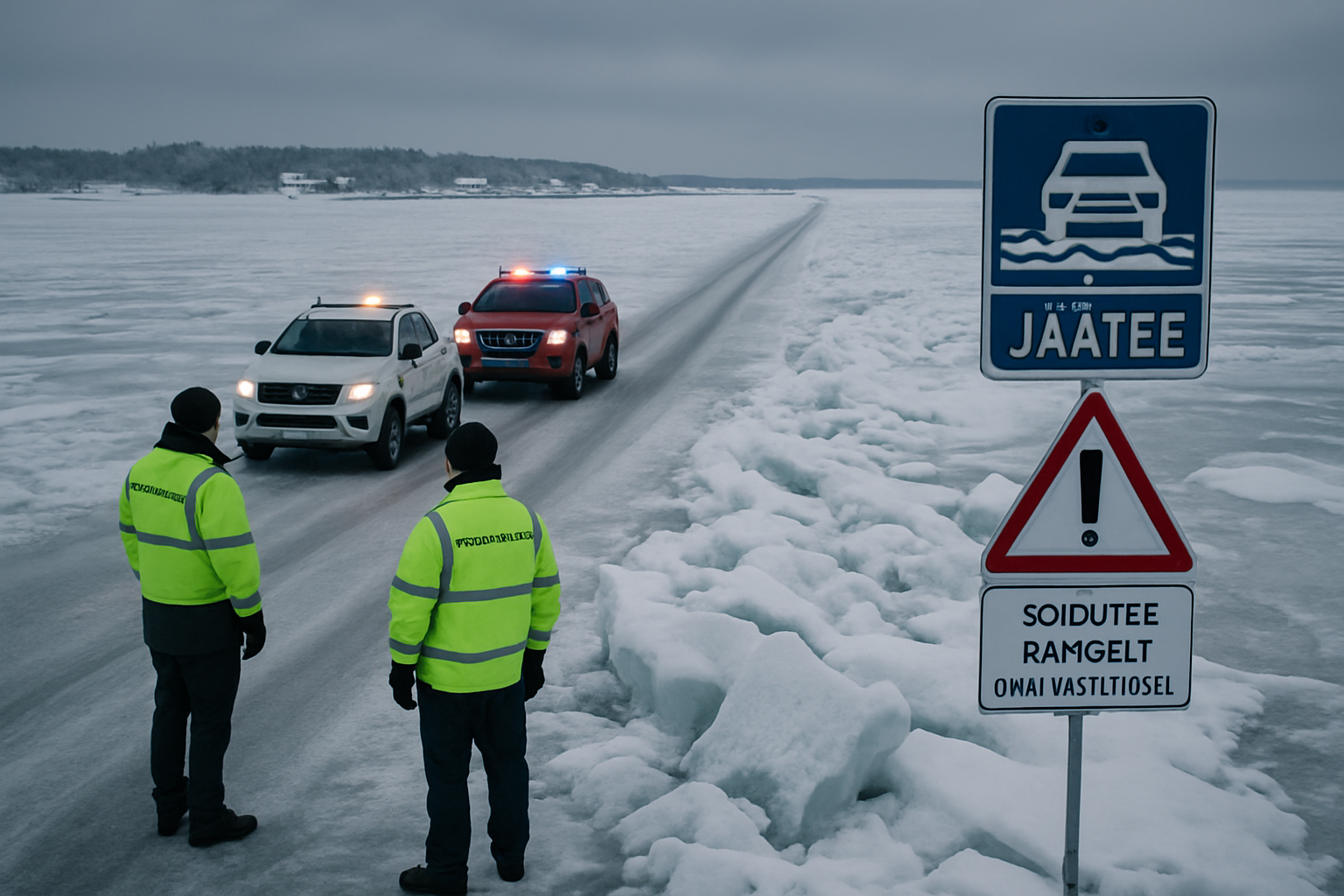
Estonian authorities have activated emergency protocols to address unprecedented winter weather conditions that are severely disrupting transportation links to the country's western islands, prompting the opening of the first official ice road between major islands in over two decades.
Minister of Regional Affairs and Agriculture Hendrik Johannes Terras (Eesti 200) called an emergency meeting for Monday to discuss the mounting crisis affecting ferry services and island accessibility. The emergency session comes as Estonia experiences its coldest winter in 25 years, part of a broader European weather crisis that has strained infrastructure across the continent.
Historic Ice Road Opens as Ferry Services Struggle
In a dramatic response to the transportation emergency, Estonia's Transport Administration officially opened a 17-kilometer ice road on Sunday connecting the country's two largest islands, Hiiumaa and Saaremaa. The ice route provides islanders with an alternative connection to the mainland as traditional ferry services struggle against thick sea ice formation in the Baltic waters.
The opening of this official ice road represents a significant milestone for Estonian winter transportation infrastructure. For decades, the country has moved away from relying on natural ice routes due to increasingly unpredictable winter conditions. However, the exceptional severity of this winter has forced authorities to resurrect this traditional form of Baltic transport connectivity.
"The ice road represents both an emergency solution and a demonstration of our ability to adapt traditional transportation methods to modern crisis management."
— Estonian Transport Administration spokesperson
Part of Continental Weather Emergency
Estonia's transportation crisis occurs within the context of Europe's most severe winter weather emergency in decades. The continent has experienced a cascade of extreme conditions, from record-breaking cold in the Nordic countries to devastating storms across southern Europe.
Recent memory shows Estonia has been particularly vulnerable during this winter crisis. The country set a new electricity consumption record at 1,723 megawatts earlier this month, highlighting the extreme energy demands created by sustained sub-zero temperatures. The current winter conditions are the most severe Estonia has experienced in a quarter-century.
Previous warnings from the Transport Administration had specifically cautioned against using unofficial ice roads to western islands due to inadequate monitoring systems. The decision to open an official, monitored ice route demonstrates the severity of the current situation and the government's commitment to maintaining essential connectivity.
Infrastructure Under Climate Stress
The Estonian crisis illustrates broader challenges facing Northern European transportation systems as climate change creates more volatile and unpredictable weather patterns. While traditional ice roads were once a reliable winter transportation method across the Baltic region, their viability has become increasingly uncertain in recent decades.
Finland, Estonia's northern neighbor, has experienced similar challenges. The Finnish authorities have not established official Archipelago Sea ice roads this winter despite severe cold conditions, as equipment has deteriorated over more than 20 years of disuse. This represents the end of a traditional Baltic winter transport method that connected island communities for centuries.
The contrast between Estonia's emergency ice road activation and Finland's inability to maintain such systems highlights the complex relationship between traditional infrastructure solutions and modern safety requirements.
Regional Emergency Response
Estonia's emergency protocols are part of a coordinated regional response to the unprecedented winter conditions. Neighboring countries have implemented their own crisis measures, with Sweden deploying emergency services to assist with transportation disruptions and Denmark activating emergency protocols that included nationwide school closures.
The European Union has recognized the severity of the situation, with Sweden and Denmark announcing a €246 million assistance package to support affected countries. The EU Civil Protection Mechanism has been placed on standby as the crisis continues to test the limits of European emergency response capabilities.
Economic and Social Impact
The transportation disruptions have created significant economic and social challenges for Estonia's island communities. These populations depend on regular ferry connections for essential supplies, medical services, and economic activities. The emergency ice road provides temporary relief, but long-term solutions require addressing the underlying vulnerability of island connectivity during extreme weather events.
Estonia's experience demonstrates the need for resilient transportation infrastructure that can adapt to increasingly volatile weather conditions. The successful deployment of emergency ice road protocols shows how traditional methods can be integrated with modern safety monitoring to maintain critical connections during crisis situations.
Looking Forward: Climate Adaptation
The Estonian emergency response provides valuable insights for other Northern European countries facing similar challenges. The ability to quickly activate alternative transportation methods while maintaining safety standards represents a model for climate adaptation in transportation planning.
As extreme weather events become more frequent and intense, the Estonian example illustrates the importance of maintaining diverse transportation options and emergency protocols. The country's investment in monitoring technology for ice roads demonstrates how traditional solutions can be modernized to meet contemporary safety requirements.
Recovery from the current crisis is expected to take several weeks, but the lessons learned from Estonia's emergency response will influence transportation planning across the Baltic region for years to come. The successful implementation of emergency ice road protocols under extreme conditions provides a template for future crisis management in Northern European maritime regions.