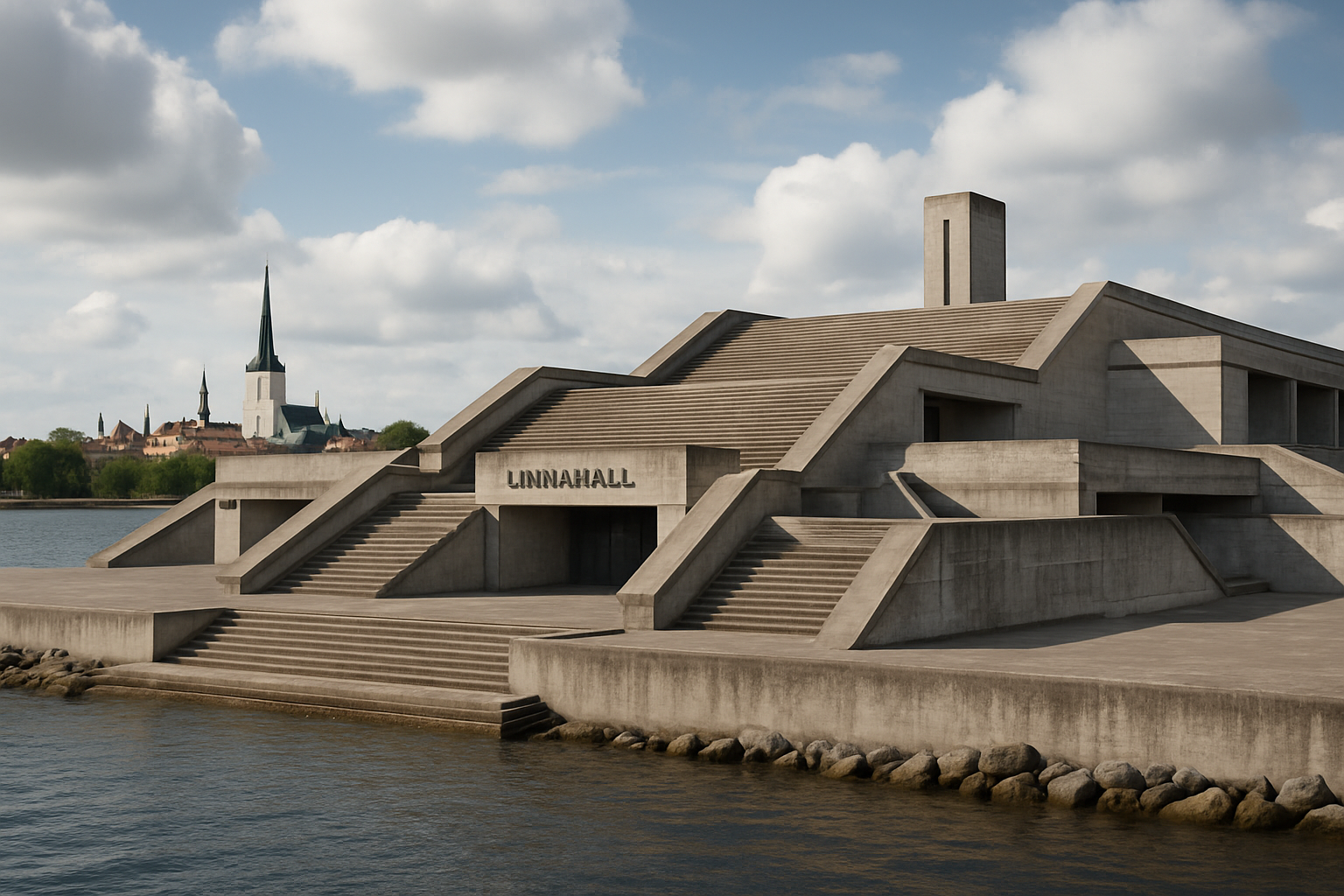
Estonia's commitment to cultural heritage preservation has taken center stage as the National Heritage Board affirmed that Tallinn's Linnahall, one of the nation's most important modernist architectural landmarks, must be preserved as a protected heritage building despite ongoing debates about its future use and maintenance costs.
The declaration comes at a crucial time when Estonia finds itself at the forefront of a broader European cultural renaissance, balancing the preservation of Soviet-era architectural heritage with the pressing demands of modern urban development. The Linnahall, a massive concrete structure overlooking Tallinn Bay, represents more than just a building—it embodies Estonia's complex relationship with its recent past and its commitment to comprehensive cultural stewardship.
A Monument to Modernist Vision
Built during the Soviet era, the Linnahall stands as one of Estonia's most significant examples of modernist architecture. Its distinctive brutalist design, characterized by bold geometric forms and monumental concrete surfaces, was conceived as a multifunctional cultural and sports complex. The structure's angular silhouette has become an iconic part of Tallinn's skyline, creating a dramatic contrast with the medieval spires of the Old Town.
The National Heritage Board's recent statement emphasizing the building's "highly valuable" status and the imperative to preserve it reflects a mature approach to cultural heritage that encompasses not just medieval castles and baroque palaces, but also the architectural legacy of the more recent past. This perspective aligns with international best practices in heritage preservation, which increasingly recognize the historical significance of 20th-century modernist architecture.
Estonia's Cultural Renaissance Leadership
The Linnahall preservation decision occurs within the context of what cultural analysts have termed the "2026 Cultural Renaissance," a period of unprecedented international coordination in heritage preservation and cultural innovation. Estonia has emerged as a leader in this movement, demonstrating sophisticated approaches to balancing tradition with technological advancement.
Recent Estonian cultural achievements include the completion of a 16-meter literary tapestry created by over 3,000 people, telling the story of Estonian literature and reinforcing the nation's UNESCO City of Literature status. This massive collaborative project demonstrates Estonia's ability to engage communities in cultural preservation while leveraging its digital expertise for broader international recognition.
The country has also been at the forefront of integrating artificial intelligence into education while maintaining human-centered approaches, hosting international delegations in Tallinn to observe innovative school adaptations. As President Alar Karis emphasized, "artificial intelligence can no longer be ignored in education," while stressing the importance of responsible implementation that preserves fundamental educational relationships.
Balancing Heritage and Development Pressures
The preservation of the Linnahall faces significant challenges typical of post-Soviet architectural heritage across Eastern Europe. The building requires substantial investment for renovation and adaptive reuse, while questions remain about its optimal function in contemporary Tallinn. The structure's massive scale and specialized original purpose as a cultural-sports complex make simple conversion difficult.
Estonia's approach to this challenge reflects broader principles that have characterized successful heritage preservation initiatives globally: community engagement with traditional knowledge bearers, technology enhancement rather than replacement of authentic cultural expressions, and sustainable economic models through cultural tourism and educational partnerships.
"The Linnahall represents not just architectural heritage, but our commitment to understanding and preserving all aspects of our cultural development, including those periods that were complex or controversial."
— Estonian Heritage Preservation Advocate
International Cooperation and Best Practices
Estonia's heritage preservation efforts have benefited from extensive international cooperation, particularly through European Union cultural programs and bilateral partnerships with Nordic countries. The nation's approach demonstrates how smaller countries can achieve disproportionate cultural influence through strategic focus on areas of particular strength and sustained commitment to excellence.
The preservation of Soviet-era architecture has become increasingly recognized as an important aspect of European cultural heritage. Countries across the former Eastern Bloc are grappling with similar questions about how to address the architectural legacy of the communist period, with Estonia's approach providing a valuable template for comprehensive cultural stewardship.
Recent developments in cultural heritage preservation have shown the importance of what experts term "hybrid methodology"—combining cutting-edge scientific analysis with traditional conservation knowledge. Estonia has been particularly successful in this integration, using advanced digital documentation techniques while respecting the authentic character and community meaning of cultural sites.
Technology and Tradition Synthesis
Estonia's digital leadership has proven crucial in its heritage preservation efforts. The country's sophisticated technological infrastructure enables comprehensive documentation, virtual accessibility, and international cooperation while maintaining physical preservation of original structures. This technology-tradition synthesis has become a hallmark of successful contemporary cultural stewardship.
The Linnahall preservation project exemplifies this approach, with plans for digital documentation, virtual reality experiences, and advanced conservation methods that will protect the structure while making it accessible to global audiences. This methodology allows Estonia to position cultural heritage as strategic infrastructure equivalent to transportation and communication systems.
Economic and Cultural Impact
Cultural heritage preservation in Estonia has demonstrated significant economic multiplier effects through tourism development, creative industry employment, and enhanced international recognition. The preservation of modernist architecture like the Linnahall contributes to Estonia's positioning as a sophisticated cultural destination that values its entire historical trajectory.
The economic benefits extend beyond traditional heritage tourism. Estonia's approach to cultural preservation has strengthened its international relationships, enhanced its reputation for innovation balanced with historical awareness, and created opportunities for academic partnerships and cultural exchanges. The nation's cultural institutions have become platforms for international cooperation and diplomatic engagement.
Addressing Contemporary Challenges
The preservation of the Linnahall and similar structures faces contemporary challenges including climate change threats, economic pressures, and the need to balance global accessibility with local authenticity. Estonia's response has emphasized adaptive management strategies that respect traditional preservation principles while embracing technological innovations essential for long-term sustainability.
Climate change poses particular challenges for concrete structures of the Soviet era, requiring innovative conservation approaches and emergency response protocols. Estonia's experience with these challenges provides valuable insights for other countries facing similar preservation needs.
The integration of heritage preservation with urban development planning has required sophisticated coordination between cultural authorities, city planners, and community stakeholders. Estonia's success in this area demonstrates the importance of treating cultural preservation as an integral aspect of comprehensive urban development rather than a constraint upon it.
Future Implications and Global Significance
Estonia's commitment to preserving the Linnahall and other Soviet-era architectural heritage establishes important precedents for 21st-century cultural stewardship. The approach successfully balances innovation with tradition, local authenticity with international cooperation, and economic viability with cultural integrity.
The preservation efforts contribute to broader patterns of cultural renaissance documented globally, where nations are recognizing culture as fundamental infrastructure for community development and international competitiveness. Estonia's success provides practical templates adaptable to diverse cultural and economic circumstances worldwide.
The ongoing preservation work demonstrates humanity's capacity for cultural resilience and creative adaptation during periods of rapid technological change and economic pressure. Estonia's approach offers evidence that thoughtful investment in cultural preservation can create lasting positive impacts that honor the past while embracing future possibilities.
As Estonia continues to lead in digital innovation while preserving its diverse architectural heritage, the Linnahall stands as a symbol of the nation's commitment to comprehensive cultural stewardship. The building's preservation represents not just the maintenance of a structure, but the affirmation of values that recognize all periods of cultural development as worthy of understanding, preservation, and integration into contemporary life.
The success of Estonia's heritage preservation initiatives provides inspiration and practical guidance for nations worldwide seeking to balance the competing demands of development and preservation, demonstrating that authentic cultural stewardship requires both respect for tradition and embrace of innovation in service of community well-being and cultural continuity.