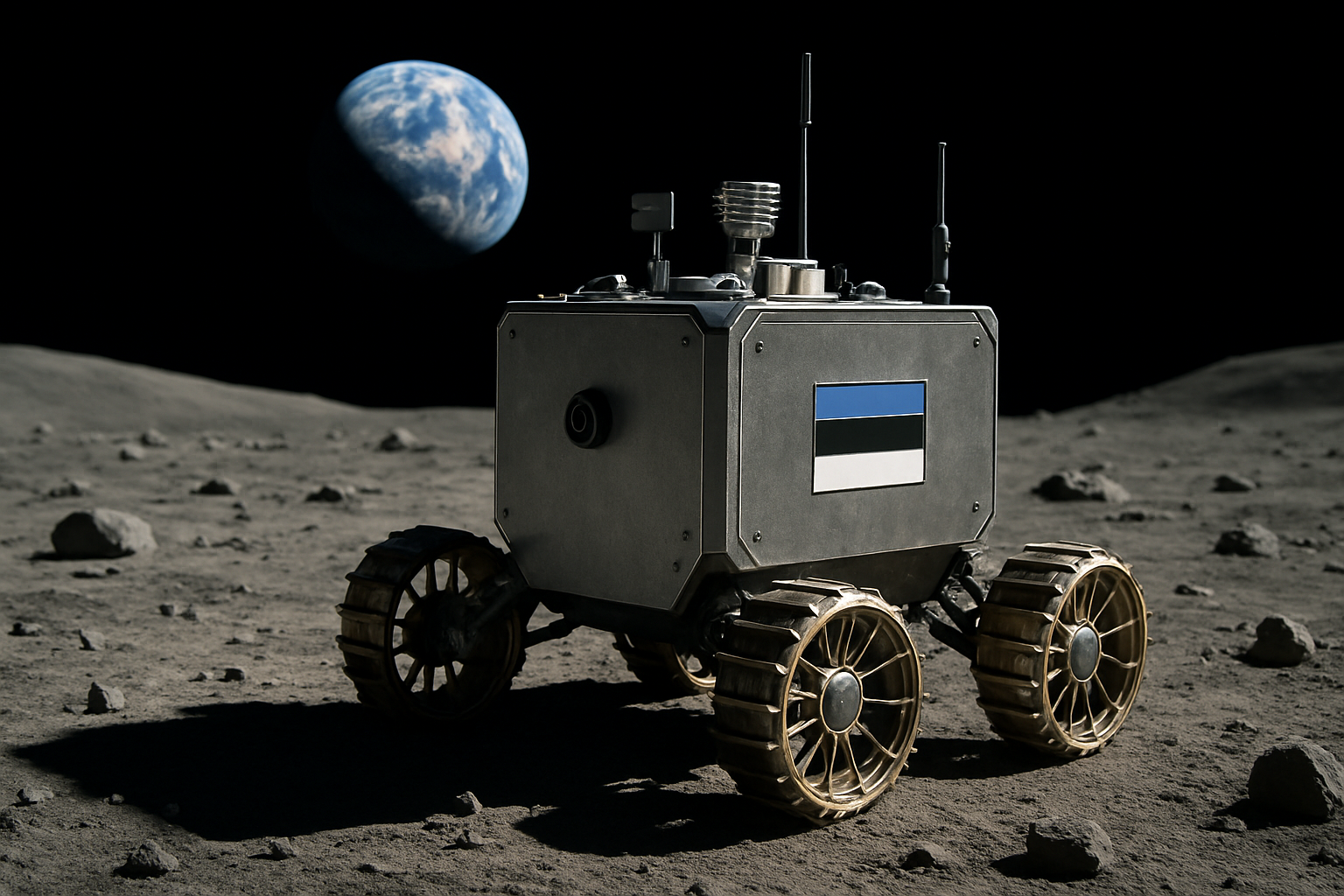
Estonian engineers are developing a revolutionary Cube Rover system designed to transform lunar logistics operations by providing flexible transportation services for scientific instruments across the Moon's surface, positioning the Baltic nation at the forefront of space technology innovation.
The groundbreaking initiative represents a significant milestone in space exploration technology, offering unprecedented mobility solutions for lunar missions during what experts describe as the "space economy golden age." The compact rover design promises to revolutionize how scientific equipment is deployed and maintained on the lunar surface.
Advanced Cubic Design for Lunar Operations
The Estonian Cube Rover features a sophisticated cubic architecture optimized for the harsh lunar environment. Engineers have focused on creating a platform that can navigate the Moon's challenging terrain while maintaining precise control over delicate scientific payloads.
The rover's innovative design incorporates advanced navigation systems, robust construction materials resistant to extreme temperature fluctuations, and specialized mobility mechanisms capable of operating in the Moon's one-sixth gravity environment. These technical specifications make the system particularly suited for extended lunar missions requiring reliable equipment transportation.
Strategic Timing in the Space Economy Golden Age
Estonia's lunar logistics initiative emerges during an unprecedented period of space exploration advancement. The global space economy is projected to exceed $1 trillion by 2030, with nations worldwide investing heavily in space infrastructure and capabilities.
Recent memory reveals the context: NASA's historic Artemis II mission successfully completed humanity's first crewed lunar flyby in 54 years in April 2026, with Canadian astronaut Jeremy Hansen becoming the first Canadian beyond Earth orbit. This achievement, along with NASA's $20 billion commitment to establish a permanent lunar surface base by 2030, has created unprecedented opportunities for international collaboration and technological innovation.
"The space exploration renaissance of 2026 has opened new frontiers for smaller nations to contribute meaningfully to humanity's cosmic expansion."
— Space Industry Analyst
Estonia's Digital Society Advantage
Estonia's reputation as a digital pioneer provides unique advantages for space technology development. The nation's 99% digital services adoption rate and comprehensive digital infrastructure create an ideal environment for developing sophisticated space systems requiring advanced computing capabilities.
The country's technological expertise spans cybersecurity, artificial intelligence, and precision engineering – all critical components for successful lunar operations. Estonian engineers leverage this digital foundation to create rover systems with enhanced autonomous capabilities and real-time communication protocols.
International Space Cooperation Framework
The Estonian Cube Rover project operates within the broader framework of international space cooperation established through the Artemis Accords. This peaceful lunar exploration framework, validated by recent missions including Jeremy Hansen's historic achievement, demonstrates how smaller nations can contribute essential capabilities to global space endeavors.
Similar initiatives across Europe showcase growing space democratization, with Denmark's Aalborg University developing autonomous lunar rovers and Luxembourg advancing space technology investments. These coordinated efforts represent a new model of distributed space capabilities rather than concentration in traditional space powers.
Technical Innovation and Space Medicine Integration
The rover's development incorporates lessons learned from extensive space research, including findings from French astronaut Sophie Adenot's record eight-month ISS mission focusing on lung tissue cultivation and Space-Associated Neuro-Ocular Syndrome (SANS) research. These medical protocols inform the design of equipment that future astronauts will depend on during extended lunar missions.
Advanced artificial intelligence systems, similar to those enabling NASA's fully AI-planned Mars rover missions, provide the Cube Rover with autonomous navigation capabilities crucial for cosmic distances where real-time Earth communication proves impossible.
Economic and Strategic Implications
Estonia's entry into lunar logistics represents broader economic transformation occurring during the space economy transition. Commercial space capabilities now advance alongside government programs, creating integrated Earth-space technological systems essential for sustained cosmic expansion.
The initiative positions Estonia strategically within the emerging space economy, offering specialized services rather than competing with larger nations in traditional rocket development. This approach demonstrates how technological sovereignty can be achieved through focused innovation in critical space infrastructure components.
Environmental Sustainability and Space Development
The project addresses growing concerns about space sustainability highlighted by recent research documenting over 30,000 tracked orbital objects threatening cascade collision effects. Estonian engineers emphasize sustainable development practices, designing rovers with extended operational lifespans and recyclable components to minimize space debris generation.
This environmental consideration aligns with broader space exploration principles emphasizing responsible development as humanity expands beyond Earth orbit for the first time in history.
Future Implications for Spacefaring Civilization
Estonia's Cube Rover initiative contributes to the foundation of what experts term "spacefaring civilization development" – humanity's transition from brief space visits to sustained cosmic expansion capabilities. The rover technology serves essential infrastructure for permanent lunar settlements and Mars exploration preparation.
The project demonstrates how advanced technology, international cooperation, and space medicine knowledge converge to establish infrastructure for multi-planetary species development. Success in lunar logistics operations directly informs protocols for future Mars expeditions where Earth evacuation remains impossible.
Path Forward for Estonian Space Leadership
As the space exploration renaissance of 2026 continues, Estonia's commitment to lunar logistics innovation positions the nation among leaders in space technology democratization. The Cube Rover represents more than transportation technology – it embodies Estonia's vision for contributing meaningfully to humanity's permanent expansion beyond Earth.
The convergence of Estonian digital expertise, international cooperation frameworks, and unprecedented space economy growth creates optimal conditions for success. The initiative establishes foundations for sustained human presence beyond Earth orbit, contributing to the infrastructure necessary for humanity's evolution into a truly spacefaring species among the stars.