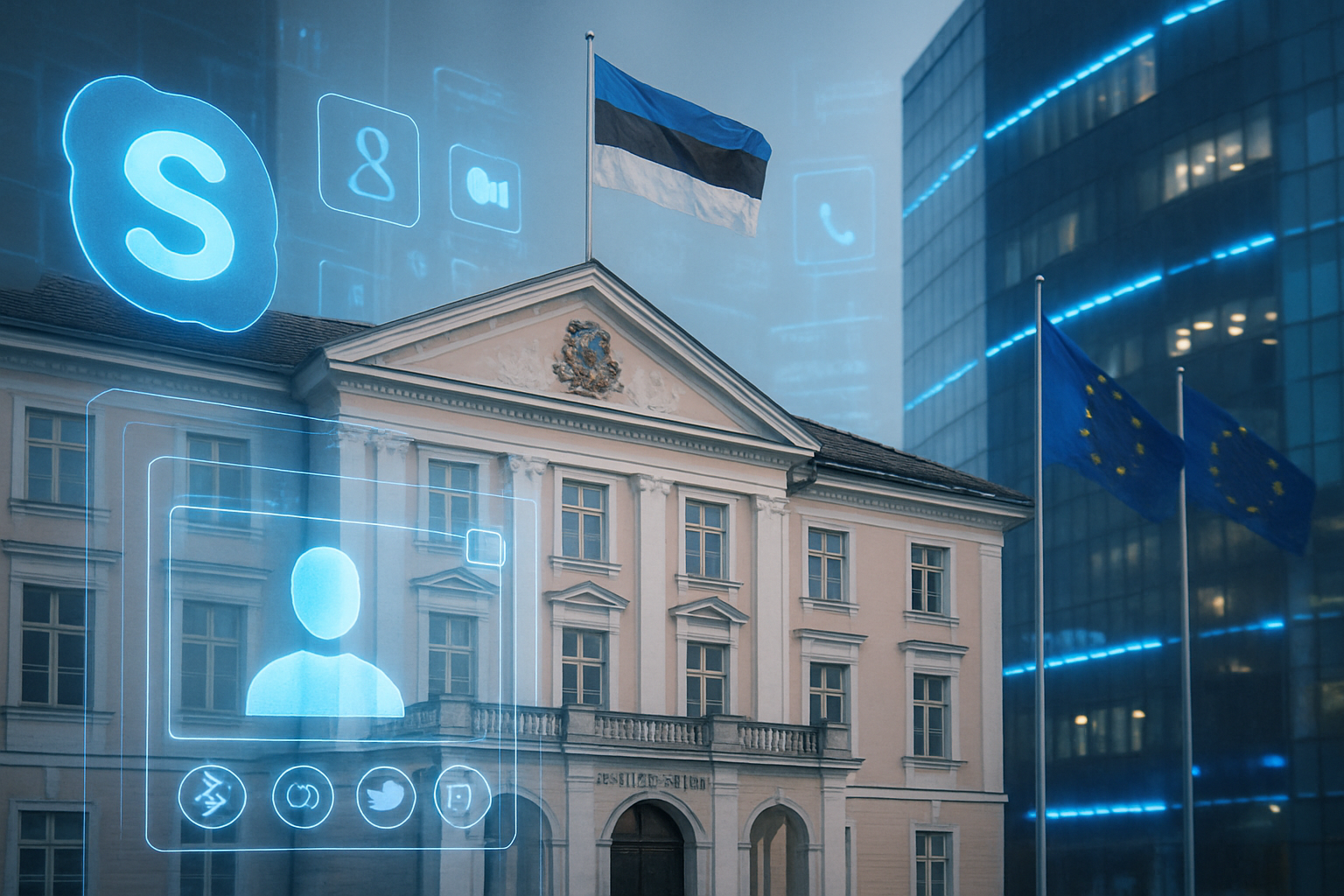
Estonia is preparing to buy Skype back from Microsoft and relaunch it as a secure European communications platform, according to sources familiar with discussions that could reshape the continent's approach to digital sovereignty.
The Estonian government, working alongside private investors and several figures from the country's early tech scene, is exploring an ambitious plan to acquire the iconic video calling service and transform it into a flagship project for Europe's digital independence. The proposal, quietly developed over recent months, would position Skype as a European alternative to existing global platforms at a time when Brussels is increasingly focused on technological sovereignty.
Digital Sovereignty Takes Center Stage
The initiative comes as Europe accelerates its campaign for digital independence from U.S. tech giants, driven by concerns over what officials term "kill switch" vulnerabilities. A Swedish report recently highlighted Europe's dangerous dependence on American cloud services including Amazon Web Services, Microsoft Azure, and Google Cloud, creating strategic vulnerabilities that could be exploited during geopolitical tensions.
Estonia's digital leadership credentials make it a natural candidate for such an undertaking. The Baltic nation already boasts 88% renewable electricity, continental Europe's largest battery storage system serving 90,000 households, and has achieved a remarkable 99.25% EU funding absorption rate. The country pioneered e-governance models that other European nations are now adapting to reduce dependence on non-European platforms.
"We are witnessing a fundamental shift in how democratic societies approach digital infrastructure. The window for coordinated action is narrowing as technological capabilities advance faster than our defensive measures."
— Senior Estonian Official, speaking on condition of anonymity
Strategic Context and Global Implications
The Skype reacquisition proposal aligns with broader European initiatives including Slovakia's €1.3 billion digital euro pilot project, comprehensive platform regulation efforts, and Germany's development of the D-Stack platform for public administration modernization. These efforts reflect a coordinated European response to technological dependence that has become a national security concern.
The timing is particularly significant given current global technology tensions. China maintains 60% of critical materials production and 90% of refining capacity, creating what officials describe as potential "kill switch" vulnerabilities for European infrastructure. Meanwhile, a global semiconductor shortage has driven memory chip prices up sixfold, affecting major suppliers Samsung, SK Hynix, and Micron, with shortages expected to continue until 2027.
This crisis has paradoxically spurred innovation in memory-efficient algorithms and sustainable deployment strategies, potentially democratizing access to advanced communication technologies while reducing dependence on traditional infrastructure.
European Platform Regulation Revolution
Estonia's Skype initiative comes amid the most comprehensive social media and platform regulation wave in internet history. Spain has implemented the world's first criminal executive liability framework, creating personal imprisonment risks for tech executives beyond traditional corporate penalties. The European Commission recently found TikTok in violation of Digital Services Act provisions for "addictive design" features, facing potential penalties of 6% of global revenue.
This regulatory momentum includes coordinated efforts across multiple European nations to implement age restrictions on social media platforms, with Australia's successful elimination of 4.7 million teen accounts serving as a proof-of-concept model. The coordinated timing of these initiatives prevents "jurisdictional shopping," where platforms relocate operations to avoid oversight.

Technical and Financial Challenges
The proposed Skype acquisition faces significant technical and financial hurdles. Microsoft has invested heavily in integrating Skype with its broader ecosystem of services, and extracting it would require substantial technical restructuring. The global memory crisis has also increased infrastructure costs dramatically, with consumer electronics prices rising 20-30% and data center cooling requirements projected to reach 4.2-6.6 billion cubic meters of water by 2027.
However, Estonia's strong track record in digital innovation provides confidence in its ability to navigate these challenges. The country's e-governance model has served as a template for other European nations, and its renewable energy leadership positions it well for the energy-intensive requirements of modern communication platforms.
Private investors familiar with Estonia's early technology scene are reportedly backing the initiative, recognizing both its strategic importance and commercial potential. The combination of government support and private investment could provide the financial foundation necessary for such an ambitious undertaking.
Alternative Governance Models
While Europe pursues regulatory enforcement strategies, other regions have adopted different approaches to platform governance. Malaysia emphasizes parental responsibility through digital safety campaigns, while Oman implements "Smart tech, safe choices" education initiatives. This philosophical divide between government intervention and individual agency in digital governance reflects broader questions about democratic accountability in the digital age.
The Estonian Skype project could bridge this divide by creating a platform designed with democratic values and European privacy standards from the ground up, rather than relying solely on external regulation of foreign-controlled platforms.
Global Competitive Landscape
The initiative reflects a shift toward multipolar technology competition, challenging Silicon Valley dominance through distributed innovation ecosystems. China's technological sovereignty efforts, India's data cities achieving third place in global AI rankings, and successful AI integration in Malaysia's Islamic schools and Canadian universities demonstrate that technology leadership is becoming geographically distributed.
France's AMI startup, backed by AI pioneer Yann LeCun, recently raised $1 billion for physical world AI systems, while Chinese companies like Xpeng accelerate autonomous driving development. This creates competitive pressure while complicating international coordination efforts.
Economic and Social Implications
A European Skype platform could have significant economic implications, particularly during the ongoing "SaaSpocalypse" that has eliminated hundreds of billions in traditional software market capitalization as AI demonstrates direct replacement capabilities. Microsoft executive Rajesh Suleyman recently predicted that AI will replace the majority of office workers within two years, creating urgency around European control over future productivity and communication tools.
The project also aligns with the emerging "Therapeutic Revolution 2026," a global paradigm shift from crisis-response to prevention-first mental healthcare. By designing communication platforms with user wellbeing as a primary consideration rather than maximizing engagement time, a European Skype could demonstrate alternative business models that prioritize human welfare over advertising revenue.
Implementation Timeline and Challenges
Sources suggest that formal negotiations could begin in the coming months, with implementation extending into 2027. The project would require unprecedented coordination across EU member states, sustained commitment across electoral cycles, and sophisticated technical integration spanning multiple European markets with varying languages, business practices, and regulatory requirements.
Cross-border coordination of 27 EU members presents significant challenges, particularly in balancing national sovereignty with collective European interests. However, the enhanced cooperation mechanisms that enabled other successful European initiatives could provide a framework for implementation.
Future of Democratic Technology Governance
The Estonian Skype initiative represents a critical test of whether democratic societies can maintain essential digital infrastructure control versus foreign system dependency. UN experts increasingly recognize communication platforms as essential infrastructure requiring democratic oversight, with European regulatory innovations potentially becoming global standards.
Success could establish templates for European technological leadership that influence global development, while failure might risk subordination to US-China technological systems. The stakes extend beyond technical capabilities to fundamental questions about democratic governance in an increasingly digital world.
"March 2026 represents a critical inflection point in democratic technology governance. Platform trajectory will influence decades of policy decisions affecting hundreds of millions of citizens."
— European Technology Policy Analyst
As Estonia moves forward with this ambitious initiative, the international community will be watching closely. The success or failure of a European-controlled Skype could determine whether democratic nations can compete effectively in the global technology landscape while preserving the values and governance structures that define their societies.
The Estonian government's exploration of Skype reacquisition represents more than a business transaction—it embodies Europe's determination to maintain technological autonomy in an era of intensifying geopolitical competition. As digital infrastructure becomes increasingly central to economic and social life, Estonia's bold vision could prove prophetic for the future of democratic technology governance worldwide.