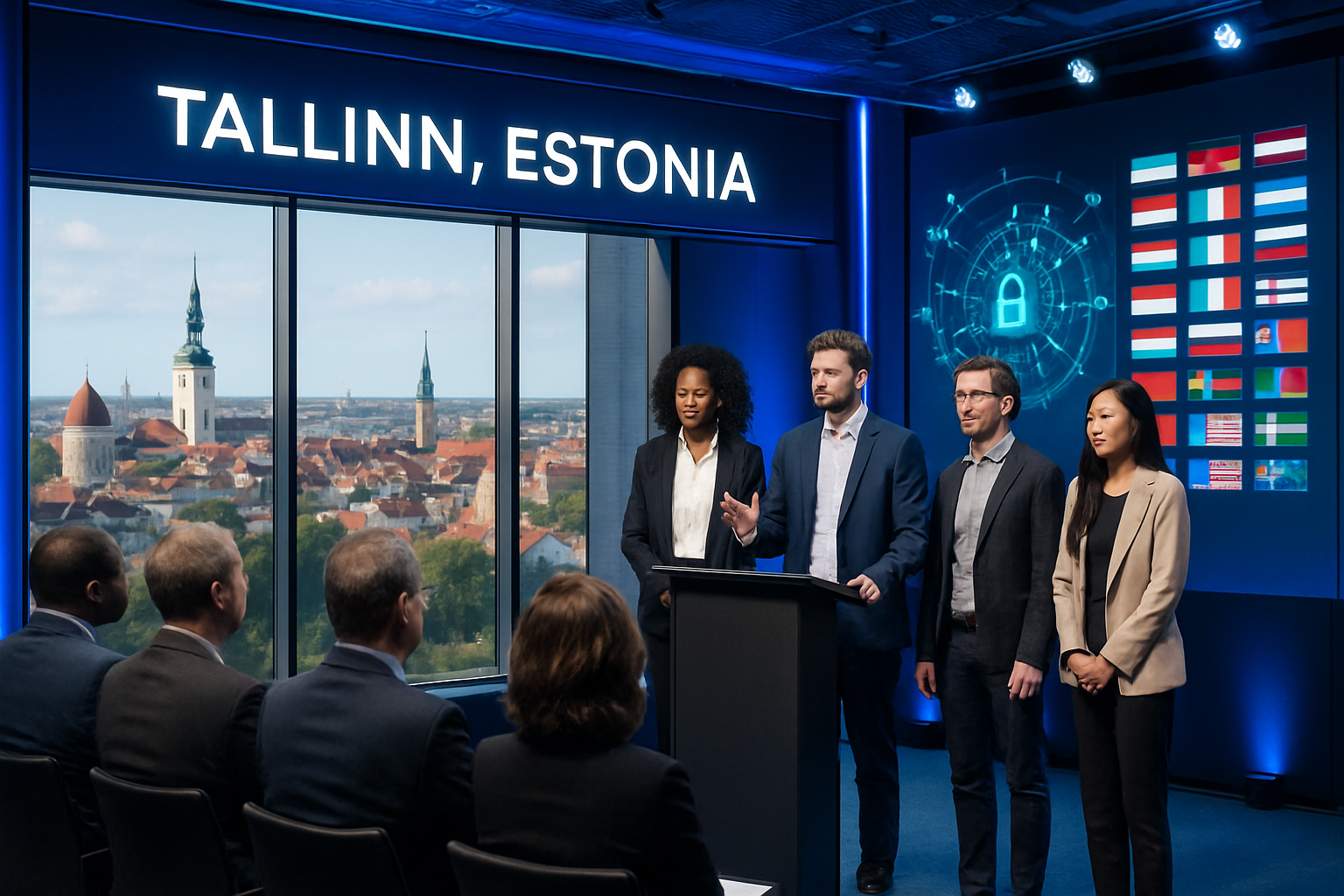
Estonia is strengthening its position as a global digital leader through two major initiatives: the launch of Latitude59's international tech startup competition offering significant investment opportunities, and the hosting of a comprehensive cyber diplomacy program that brought together experts from 33 countries to address escalating global cybersecurity challenges.
The Baltic nation's dual approach to technology leadership comes at a critical moment when international cooperation in both innovation and cybersecurity has become essential for addressing complex global challenges. Estonia's initiatives demonstrate how smaller nations can play outsized roles in shaping international digital governance and technological development.
Latitude59: Fueling the Next Generation of Tech Innovation
Latitude59, Estonia's flagship tech event, has opened applications for its highly competitive pitch competition, inviting early-stage startups from around the world to compete for substantial investment opportunities on Tallinn's main stage. The competition represents one of Europe's most significant startup funding platforms, with a track record of successful investments spanning multiple sectors.
In 2025, the competition facilitated €675,000 in total investments, with individual funding rounds ranging from €175,000 to €250,000. Among the successful recipients were Estonian green energy solutions developer MarkeDroid, Latvia's construction startup Adventum Tech, and Lithuanian defense technology company Luna Robotics, demonstrating the program's reach across the Baltic region and beyond.
The competition's success extends beyond immediate funding, serving as a launchpad for companies that have since secured additional rounds of investment and expanded internationally. Previous participants have leveraged the platform's visibility and networking opportunities to access broader European and global markets, establishing Estonia as a crucial gateway for international tech expansion.
Global Cyber Diplomacy Takes Center Stage
Simultaneously, Estonia hosted the Tallinn Cyber Diplomacy Winter School in Bangkok, Thailand, from March 2-4, focusing specifically on the Asian region. The three-day program brought together alumni of the Cyber Diplomacy Summer School and experts from 33 countries to address increasingly complex cybersecurity challenges through diplomatic and political tools.
The program's focus on Asia reflects Estonia's recognition of the region's growing importance in global cybersecurity architecture. Participants engaged in intensive discussions about responding to cyber incidents using diplomatic mechanisms, the impact of artificial intelligence on security frameworks, and strategies for strengthening national resilience in an increasingly complex cyber environment.
Key discussion areas included the development of international norms for cyberspace, the role of public-private partnerships in cyber defense, and mechanisms for rapid information sharing during security incidents. The program addressed how emerging technologies, particularly AI-powered threats, are reshaping the cybersecurity landscape and requiring new approaches to international cooperation.
Estonia's Digital Leadership in Historical Context
Estonia's current initiatives build on decades of digital innovation that have established the country as a global e-governance pioneer. The nation has consistently demonstrated how advanced digital infrastructure can enhance both economic competitiveness and national security, serving as a model for countries worldwide seeking to modernize their technological capabilities.
The country's digital society encompasses comprehensive e-government services, digital identity systems, and cybersecurity frameworks that have proven resilient against sophisticated attacks. This experience provides credibility when convening international experts to address shared cybersecurity challenges and positions Estonia as a trusted partner in global digital governance discussions.
Recent memory analysis reveals Estonia's continued involvement in international cybersecurity cooperation, including collaboration with Ukrainian counterparts despite challenging regional conditions. This demonstrates the country's commitment to maintaining international partnerships even amid complex geopolitical circumstances.
Addressing Contemporary Cybersecurity Challenges
The timing of Estonia's cyber diplomacy initiative reflects growing global concerns about sophisticated cyber threats. Recent intelligence reports indicate a 20.6% surge in cyber incidents during the fourth quarter of 2025, with attackers increasingly employing AI-enhanced methods to penetrate critical infrastructure and government systems.
Criminal networks have begun exploiting jurisdictional limitations, operating with relative impunity across borders while targeting both private sector entities and government institutions. The emergence of AI-powered criminal tactics, including automated vulnerability detection and script generation, represents a fundamental shift in the threat landscape that requires coordinated international response.
Estonia's approach to addressing these challenges through diplomatic channels reflects recognition that traditional law enforcement mechanisms alone are insufficient against digitally native organizations with state-level technological resources. The country's cyber diplomacy program provides frameworks for rapid information sharing and coordinated response mechanisms that can operate across different legal and political systems.
Innovation Ecosystem and International Investment
The Latitude59 competition operates within Estonia's broader innovation ecosystem, which has produced numerous successful technology companies and attracted significant international investment. The program's global reach, accepting applications from startups worldwide, reflects the country's commitment to fostering international collaboration while maintaining its competitive advantage in specific technology sectors.
Estonia's focus on green energy solutions, construction technology, and defense applications through its investment programs aligns with broader European Union priorities for technological sovereignty and sustainable development. The success of companies like MarkeDroid in securing substantial funding demonstrates the market viability of Estonian-supported innovations in addressing global challenges.
The competition's structure, which provides not only funding but also mentorship and network access, reflects Estonia's understanding that successful innovation requires comprehensive support systems. This approach has contributed to the country's reputation as an efficient gateway for technology companies seeking to expand into European and global markets.
Future Implications for Global Tech Cooperation
Estonia's dual focus on innovation and cybersecurity cooperation represents a strategic approach to maintaining relevance in an increasingly competitive global technology landscape. The country's ability to convene international experts while simultaneously supporting emerging companies demonstrates how smaller nations can leverage specific expertise to play influential roles in global technology governance.
The success of both initiatives will likely influence how other countries approach the balance between fostering domestic innovation and contributing to international cooperation. Estonia's model suggests that nations can enhance their competitive position by actively facilitating international collaboration rather than pursuing purely protectionist strategies.
As global challenges increasingly require coordinated responses across technological, diplomatic, and security domains, Estonia's integrated approach may serve as a template for other nations seeking to maximize their influence while contributing to collective problem-solving efforts. The country's experience demonstrates that leadership in digital governance requires both technical expertise and diplomatic capabilities.