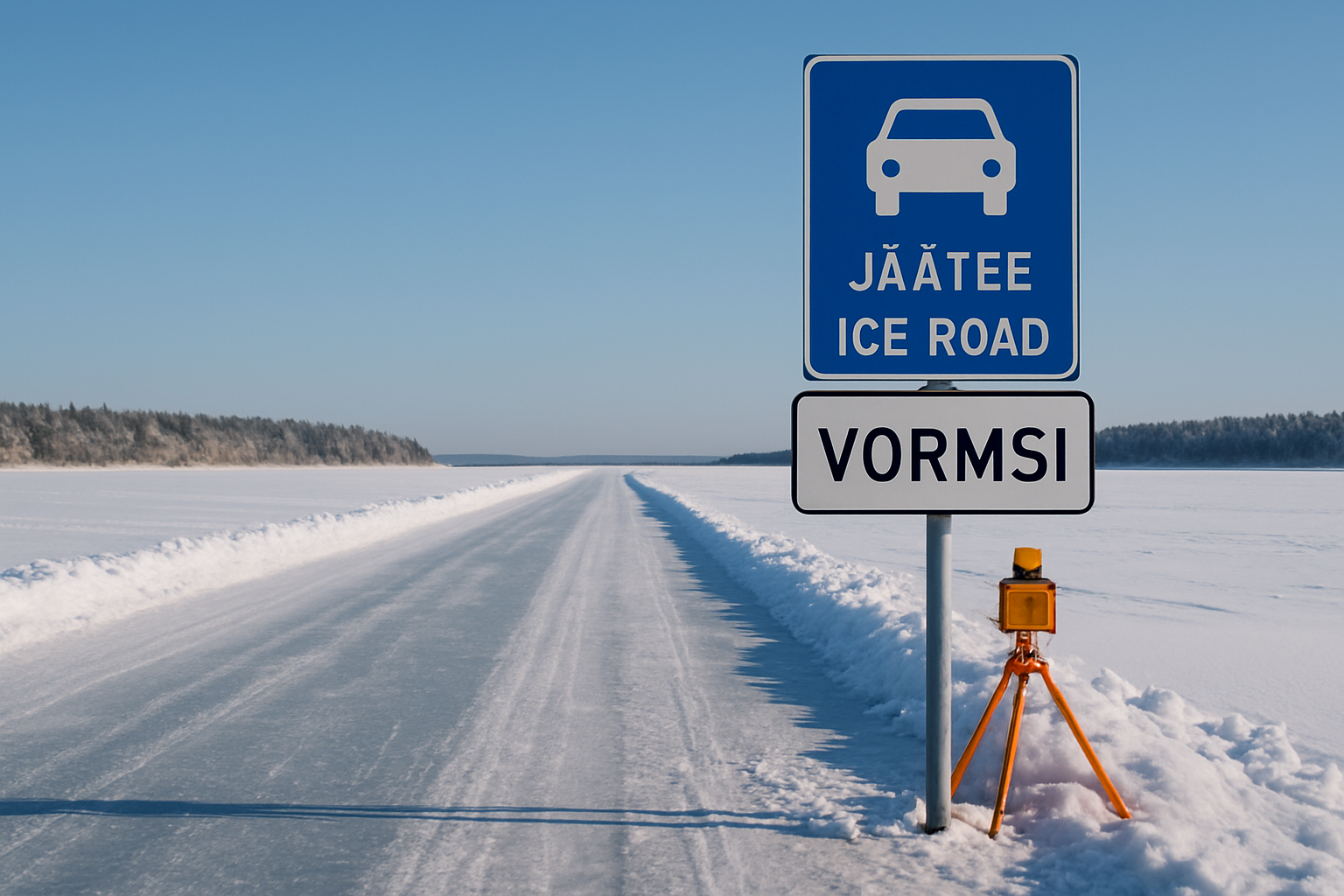
Estonia's Transport Administration opened a new ice road Friday connecting Vormsi island to the mainland, providing crucial winter transportation connectivity as the nation endures its coldest winter in 25 years amid a broader European weather crisis that has overwhelmed emergency services across the continent.
The ice road, linking Saare and Paralepa harbor on the Estonian mainland, represents the latest emergency measure in a winter that has tested the limits of traditional transportation infrastructure. According to Minister of Infrastructure Kuldar Leis, the route is "primarily intended for the people of Vormsi," underscoring the critical nature of maintaining connectivity to Estonia's islands during extreme weather conditions.
Emergency Response to Unprecedented Winter Conditions
The opening of this ice road comes as Estonia faces extraordinary challenges from what meteorologists confirm is the coldest winter experienced in a quarter-century. The nation recently set an electricity consumption record of 1,723 megawatts as heating demands surge amid temperatures that have strained both power grids and transportation networks.
This emergency connectivity solution follows a pattern of crisis responses across the Baltic region. In early February, Estonian authorities were forced to close all three official ice roads due to deteriorating weather conditions, temporarily cutting off island communities that rely on these seasonal transportation routes. The Transport Administration had previously warned against the use of unofficial ice roads to western islands due to inadequate monitoring and safety concerns.
"The decision to open official monitored ice routes demonstrates the severity of the crisis and the government's commitment to maintaining connectivity during extreme weather."
— Transport Administration Official
Historical Context of Estonian Ice Roads
Estonia's deployment of ice roads represents both traditional adaptation and modern safety protocols. The country has a long history of utilizing frozen waterways for winter transportation, but the current crisis has pushed these methods to new limits. Earlier this winter, Estonia opened a historic 17-kilometer ice road between the country's largest islands, Hiiumaa and Saaremaa - the first official ice road in decades providing a mainland alternative as ferry services struggled with sea ice conditions.
The contrast with neighboring Finland is striking. Despite experiencing similarly severe cold conditions, Finland has been unable to establish official ice roads in the Archipelago Sea due to equipment deterioration over more than 20 years of disuse. This represents what experts describe as the end of traditional Baltic winter transport capabilities in some regions, making Estonia's proactive approach all the more significant.
Broader European Transportation Crisis
Estonia's ice road initiative occurs within a devastating continental weather emergency that has affected multiple European nations simultaneously. The month of February 2026 has witnessed an unprecedented succession of Atlantic storms - named Kristin, Leonardo, Marta, Nils, and Pedro - that have claimed over 30 lives across Portugal, Spain, and France while requiring emergency deployments on an unprecedented scale.
Portugal alone has deployed 26,500 emergency personnel, including 1,975 military personnel and 30 naval vessels, in what represents the largest peacetime rescue operation in the nation's history. The European Union's Civil Protection Mechanism has been activated, with Sweden and Denmark providing a €246 million assistance package - the largest coordinated European weather response on record.
Transportation networks across Europe have faced severe disruption. Infrastructure designed for historical climate patterns is operating beyond its intended parameters, with railways suspended, highways closed, and aviation experiencing repeated delays and cancellations.
Climate Paradox and Adaptation Challenges
The current crisis presents a complex climate paradox. January 2026 was confirmed as the 18th consecutive month in which global temperatures exceeded 1.5°C above pre-industrial levels, marking it as the hottest month in recorded history. Yet this global warming trend has coincided with extreme regional winter conditions across Northern Europe and other regions worldwide.
Climate scientists explain this apparent contradiction through the phenomenon of polar vortex disruption, where Arctic warming allows frigid air masses to move southward, creating severe regional cold spells even as global temperatures trend upward. This climate volatility demonstrates how global warming can actually enable both heat records and devastating regional winter storms through complex atmospheric circulation changes.
Infrastructure Vulnerabilities Exposed
The Estonian experience highlights broader infrastructure vulnerabilities that have been exposed across Europe during this winter crisis. Power grids are experiencing widespread failures from heavy snow and ice damage to transmission lines, while communication networks face disruptions that complicate emergency coordination efforts.
Estonia's electricity consumption record during the coldest winter conditions in 25 years illustrates how extreme weather events can push essential services beyond their normal operating capacity. The nation's recent opening of continental Europe's largest battery storage facility, capable of serving 90,000 households, provides some grid stability but has proven insufficient for the most extreme demand spikes.
Transportation systems face particular vulnerabilities. Ice roads, while representing traditional adaptation strategies, have become unreliable due to unpredictable freeze-thaw cycles that make ice thickness and quality difficult to predict using historical patterns.
Economic and Social Impact
The transportation disruptions create significant economic consequences. Island communities depend heavily on ferry connections not just for residents' daily needs, but for essential supplies, medical services, and economic activities. When these conventional transportation links fail, alternatives like ice roads become critical lifelines.
The broader European crisis has resulted in estimated damages reaching billions of euros across agricultural sectors, tourism industries, and infrastructure systems. Supply chain disruptions have created cascading effects throughout regional economies, while energy costs have risen sharply due to increased heating demands and weather-related damage to power generation and distribution systems.
Emergency Response Coordination
Estonia's response demonstrates the importance of proactive emergency planning and international cooperation. The coordination of emergency responses has become increasingly complex as simultaneous disasters across multiple countries strain traditional mutual aid mechanisms. The EU's Civil Protection Mechanism, while activated to provide unprecedented assistance, faces challenges when multiple member states require help simultaneously.
The Estonian model integrates traditional winter adaptation methods with modern safety monitoring, providing a template for climate adaptation transportation planning. This approach emphasizes the importance of maintaining operational flexibility while prioritizing safety through professional monitoring and assessment.
Looking Forward: Climate Adaptation Imperatives
Emergency management experts emphasize that current response strategies, based on historical weather patterns and traditional mutual aid assumptions, must be fundamentally restructured for what they term the "permanent climate volatility era." This requires enhanced emergency response capabilities, climate-resilient infrastructure design, and new international cooperation frameworks designed to handle simultaneous global disasters.
The crisis highlights the urgent need for what experts call "transformative adaptation" - moving beyond reactive emergency response to proactive infrastructure design that anticipates rather than merely responds to extreme weather conditions. This includes developing multiple redundant transportation options, enhancing weather monitoring and prediction capabilities, and creating more resilient supply chains.
"We must choose between reactive crisis management and transformative infrastructure approaches for permanent climate volatility. The window for effective climate action is narrowing while costs continue to escalate."
— European Climate Adaptation Expert
International Implications
Estonia's ice road deployment, while addressing immediate local needs, contributes to broader discussions about climate resilience and international cooperation. The successful coordination of emergency responses across the Baltic region provides valuable lessons for other regions facing similar challenges from climate volatility.
The current European crisis serves as a preview of what scientists predict will become routine conditions in the 2030s without significant climate adaptation investment. This makes current emergency responses not just reactive measures, but testing grounds for approaches that may become standard practice in the years ahead.
The crisis also demonstrates the interconnected nature of modern transportation and energy systems. Disruptions in one area quickly cascade to affect others, requiring comprehensive approaches to resilience that address multiple infrastructure systems simultaneously.
Conclusion: A Watershed Moment
The opening of Estonia's ice road to Vormsi island represents more than an emergency transportation measure - it symbolizes the adaptation challenges facing all nations as climate patterns become increasingly volatile and unpredictable. The immediate success of this initiative provides connectivity for island residents, but its broader significance lies in demonstrating proactive approaches to climate adaptation.
As additional weather systems continue to develop and the crisis potentially persists for weeks, the lessons learned from Estonia's response - combining traditional methods with modern safety protocols and international cooperation - may prove invaluable for communities worldwide facing similar challenges.
The February 2026 weather crisis is increasingly viewed as a potential watershed moment that will influence how nations and international organizations prepare for the climate realities of the coming decades. Estonia's ice road solution, while addressing immediate local needs, contributes to a growing body of practical experience in climate adaptation that may prove essential for global resilience efforts.