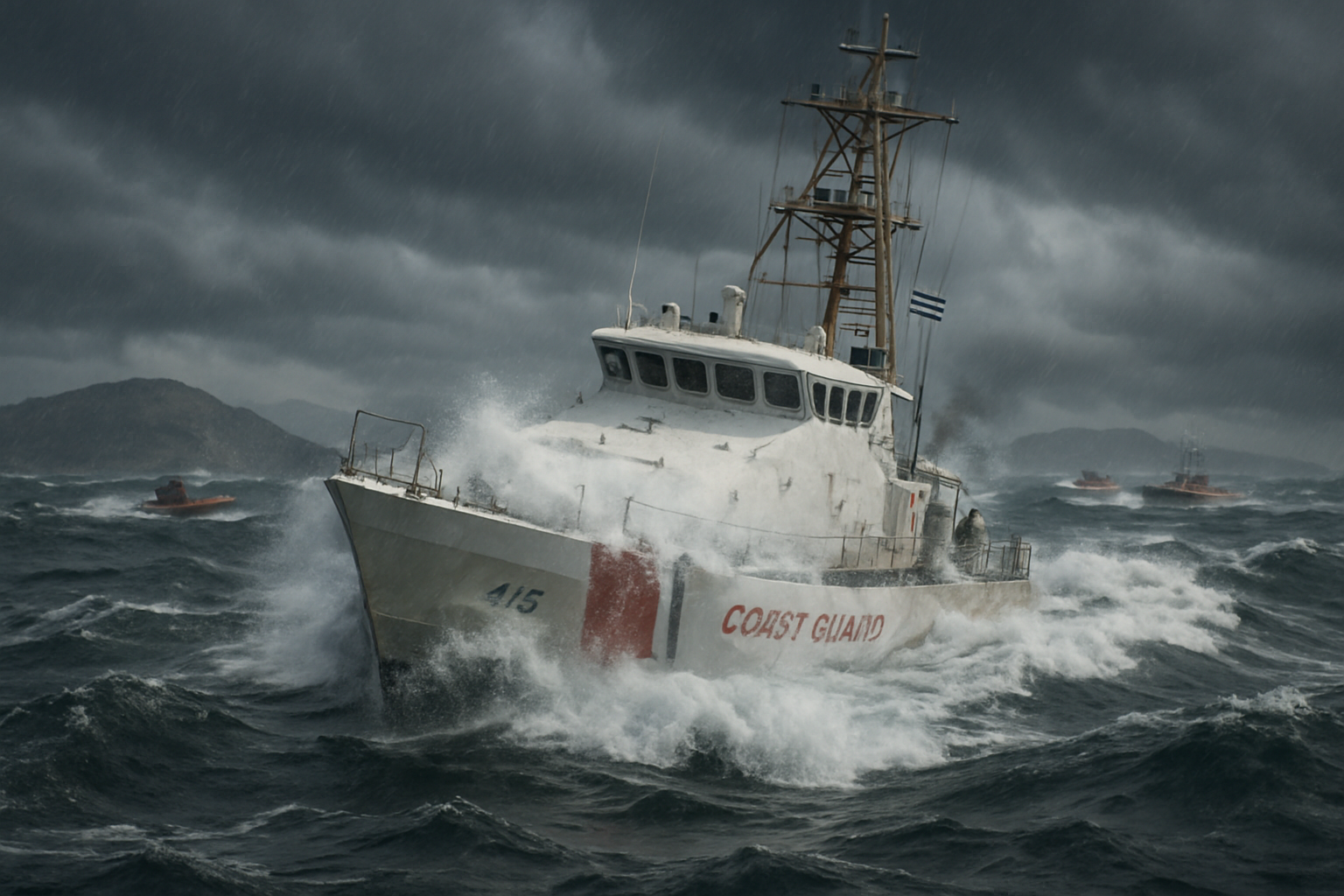
An Estonian Police and Border Guard Board vessel conducting a Frontex mission capsized and sank in Greek waters near Kastellorizo island on Monday afternoon, injuring four people including Estonia's ambassador to Greece in what marks a significant maritime incident for European border operations.
The vessel M-80, carrying five people including three Estonian border guards, a Greek coastguard officer, and Estonian Ambassador to Greece Karin Rannu, encountered difficulties around 4:20 PM local time near Megisti, also known as Kastellorizo, a small Greek island in the eastern Mediterranean close to the Turkish coast.
Rescue Operations and Casualties
All five individuals aboard the vessel successfully escaped before it capsized and subsequently sank completely. Greek Coast Guard officials coordinated the emergency response, with four people sustaining injuries during the incident. Estonian authorities confirmed that Ambassador Rannu was visiting the Estonian border guard unit as part of her official duties when the accident occurred.
The Estonian vessel was participating in a joint operation under the auspices of Frontex, the European Union's border and coast guard agency, which coordinates border security operations throughout the Mediterranean region. The mission represents part of ongoing EU efforts to manage migration flows and maintain maritime security in the Eastern Mediterranean.
Strategic Location and Context
Kastellorizo island sits at a crucial junction in the Eastern Mediterranean, approximately 1.6 kilometers from Turkey's coast and serving as a critical monitoring point for EU border operations. The island's proximity to major migration routes makes it a significant location for Frontex activities, with regular patrols conducted to monitor vessel movements between Turkish and Greek waters.
"This incident highlights the challenging conditions our border guards face while protecting European borders,"
— Estonian Border Guard Official
The sinking occurs during a period of heightened activity in the Mediterranean, where European border agencies have intensified operations following ongoing regional tensions. The area has witnessed increased maritime traffic and complex operational challenges for border security forces operating in contested waters.
Frontex Mission Implications
The incident raises questions about operational safety protocols for Frontex missions, particularly in challenging maritime environments. Estonian border guards have been active participants in EU border operations, contributing specialized vessels and personnel to joint missions across the Mediterranean region.
Frontex operations in the Eastern Mediterranean have expanded significantly in recent years, with multiple EU member states contributing assets to patrol operations. The agency coordinates activities ranging from migrant rescue operations to intelligence gathering on illegal border crossings, making vessel safety a paramount concern for participating nations.
Diplomatic Dimensions
Ambassador Karin Rannu's presence aboard the vessel during the incident adds a diplomatic dimension to what would otherwise be considered a routine operational accident. Her visit to Estonian border guard units reflects the high-level attention European governments place on Mediterranean border operations and the integration of national forces within EU frameworks.
Estonian officials have not yet released detailed information about the cause of the capsizing, though Greek authorities are expected to conduct a thorough investigation into the circumstances surrounding the vessel's sinking. The involvement of both Estonian and Greek personnel in the incident will require coordinated investigation efforts between the two nations.
Broader Maritime Security Context
The incident occurs amid broader maritime security challenges in the Mediterranean, where European naval forces have been dealing with multiple complex situations. Recent events have included various vessel emergencies and increased coordination between EU member states for maritime operations, reflecting the challenging operational environment faced by border security forces.
Estonian participation in Frontex operations demonstrates the Baltic nation's commitment to European border security, despite its geographic distance from the Mediterranean. The country has contributed both personnel and vessels to EU border operations, viewing participation as essential to collective European security efforts.
Investigation and Recovery Efforts
Greek Coast Guard officials have initiated standard procedures for maritime accident investigation, with Estonian authorities expected to participate in determining the cause of the vessel's capsizing. The complete loss of the M-80 represents a significant material loss for Estonian border operations, though the successful rescue of all personnel aboard has been the primary focus of official statements.
Recovery operations for the sunken vessel may prove challenging given the Mediterranean depths near Kastellorizo, though environmental concerns about the vessel's fuel and potential maritime pollution will likely drive efforts to assess the wreck's impact on the surrounding waters.
Future of EU Border Operations
The incident underscores the inherent risks faced by European border guards operating in challenging Mediterranean conditions. As Frontex continues expanding its operational scope and member state contributions, ensuring adequate safety protocols and emergency response capabilities remains crucial for successful mission execution.
Estonian border guards are expected to continue participating in EU border operations despite this setback, with officials emphasizing their commitment to European border security. The incident may prompt reviews of safety procedures for vessels operating in the Eastern Mediterranean's often challenging maritime environment.
The sinking of the M-80 serves as a reminder of the dangers faced by European border security personnel working to maintain EU external borders, highlighting both the dedication of participating forces and the need for continued vigilance regarding operational safety in complex maritime environments.