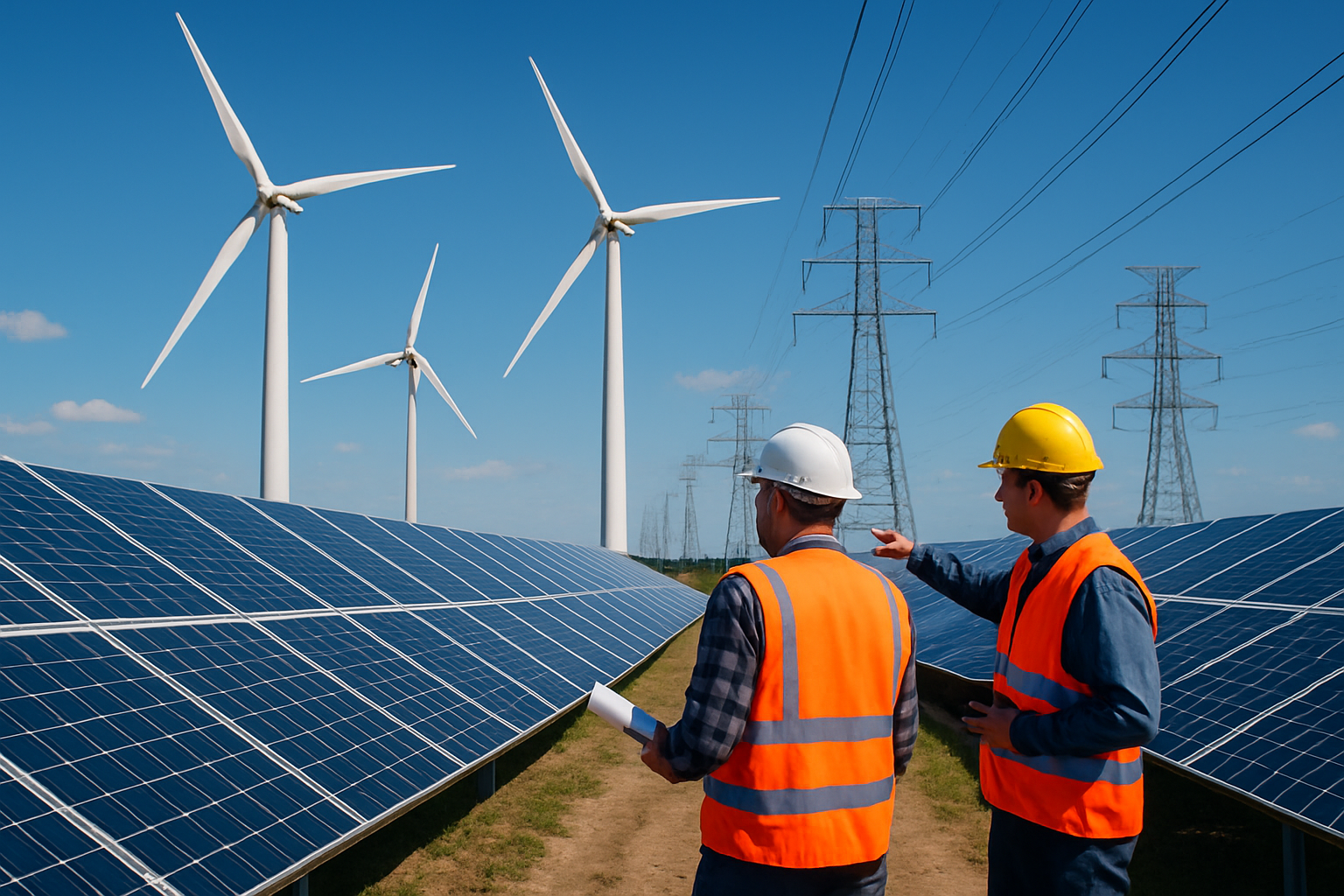
Ethiopia has officially inaugurated its 100-megawatt Asella Wind Farm in the Oromia Region, while Mauritius advances strategic energy partnerships with India, representing critical milestones in Africa's accelerating renewable energy transformation during a period of unprecedented global infrastructure investment.
Prime Minister Abiy Ahmed hailed the €145 million Asella project as a model of "smart borrowing" and a cornerstone of Ethiopia's push toward a climate-resilient green economy. Located in the Arsi Zone, the facility is expected to recover its entire cost within just two years through power sales and savings on fuel imports, demonstrating the compelling economics of modern renewable energy infrastructure.
Ethiopian Wind Power Achievement
The Asella Wind Farm was developed through a consortium of Spanish and Danish companies, with UAE-based Dar Al-Handasah Shair and Partners providing consulting services. This international collaboration highlights the sophisticated technical partnerships driving Africa's energy transition, combining European wind technology expertise with regional engineering capabilities.
Government officials emphasized that the project significantly strengthens Ethiopia's renewable energy portfolio while supporting the nation's ambition to become a regional clean energy hub. The facility's strategic location in the Oromia Region takes advantage of consistent wind patterns that characterize the East African highlands, providing reliable power generation capacity.
"This wind farm represents more than infrastructure development—it's a strategic investment in Ethiopia's energy independence and our commitment to climate leadership across Africa."
— Prime Minister Abiy Ahmed
Mauritius Strengthens Energy Security
Simultaneously, Mauritius is pursuing enhanced energy cooperation with India, with New Delhi examining a formal request for energy supply arrangements. Randhir Jaiswal, spokesperson for India's Ministry of External Affairs, confirmed that India is studying formalization of this cooperation through government-to-government agreements, representing a significant expansion of regional energy partnerships.
This bilateral energy initiative reflects broader Indian Ocean cooperation patterns, with India providing similar assistance to Bangladesh, the Seychelles, and other regional partners. For Mauritius, the partnership offers enhanced energy security and potential cost savings through diversified supply arrangements.
Global Infrastructure Investment Context
These African developments occur within a broader global infrastructure investment surge exceeding $570 billion in 2026, driven by climate urgency and supply chain diversification needs. The timing is particularly critical as January 2026 marked the 18th consecutive month of global temperatures exceeding 1.5°C above pre-industrial levels, intensifying the imperative for rapid clean energy deployment.
Africa's renewable energy sector has attracted increasing international investment, with the African Finance Corporation reporting $29.5 trillion in mineral reserves representing 20% of global totals. Seven African nations—including Angola, the Democratic Republic of Congo, Guinea, Kenya, Morocco, Sierra Leone, and Zambia—participate in the US-EU-Japan Critical Minerals Partnership, designed to diversify supply chains away from Chinese dominance of 60% production and 90% refining capacity for lithium, cobalt, and rare earth elements essential for renewable infrastructure.
Technology Integration and Economic Impact
Modern African renewable projects incorporate sophisticated technology integration from the design phase, including digital monitoring, predictive maintenance, automated operations, and climate adaptation features. The Asella Wind Farm employs advanced monitoring systems that enable real-time optimization and performance tracking, representing the evolution from basic infrastructure to complex integrated energy systems.
Economic multiplier effects from these projects extend far beyond construction activities. The Ethiopian facility creates specialized employment in manufacturing, installation, and maintenance sectors while positioning the country as a potential energy exporter during periods of excess renewable generation. Similarly, Mauritius's energy partnership with India strengthens the island nation's economic resilience through enhanced energy security.
Regional Energy Cooperation Models
The Ethiopia-Mauritius developments exemplify evolving South-South cooperation frameworks where developing nations are emerging as environmental solution providers rather than aid recipients. This paradigm shift challenges traditional development models by positioning African countries as strategic partners capable of sophisticated international investment management while maintaining sovereignty over development priorities.
Estonia's renewable energy leadership—achieving 88% renewable electricity and operating continental Europe's largest battery storage facility serving 90,000 households—provides a template for African nations rapidly scaling clean energy capacity while maintaining grid stability and economic development.
Climate Adaptation and Resilience
Both projects incorporate climate adaptation as fundamental design requirements, recognizing that infrastructure must be built for future climate conditions rather than historical patterns. Enhanced drainage, weather-resistant materials, and backup power systems are standard features addressing the increasing frequency and intensity of extreme weather events across Africa.
The continental approach to renewable energy development demonstrates sophisticated understanding that environmental challenges transcend national boundaries through atmospheric systems, ocean currents, and regional economic integration. Success requires unprecedented coordination of policy frameworks, shared monitoring, collaborative enforcement, and innovative financing mechanisms.
Strategic Significance for Africa's Future
April 2026 represents a potential inflection point for African development patterns that will influence continental competitiveness for decades ahead. These energy infrastructure projects establish crucial precedents positioning African nations as essential contributors to global prosperity, supply chain security, and climate adaptation rather than merely beneficiaries of international assistance.
The success of Ethiopia's wind farm and Mauritius's energy partnerships could catalyze additional international investment throughout the region, establishing Africa as a cornerstone of 21st-century sustainable prosperity. With the environmental action window narrowing as ecological systems approach critical thresholds, these projects provide practical templates for scaling renewable energy infrastructure globally during this decisive climate action decade.
As countries worldwide grapple with balancing energy security, economic development, and climate commitments, the Ethiopian and Mauritian examples demonstrate that sophisticated renewable energy deployment can serve multiple strategic objectives simultaneously, offering hope for comprehensive energy transformation during humanity's most environmentally challenging period in recorded history.