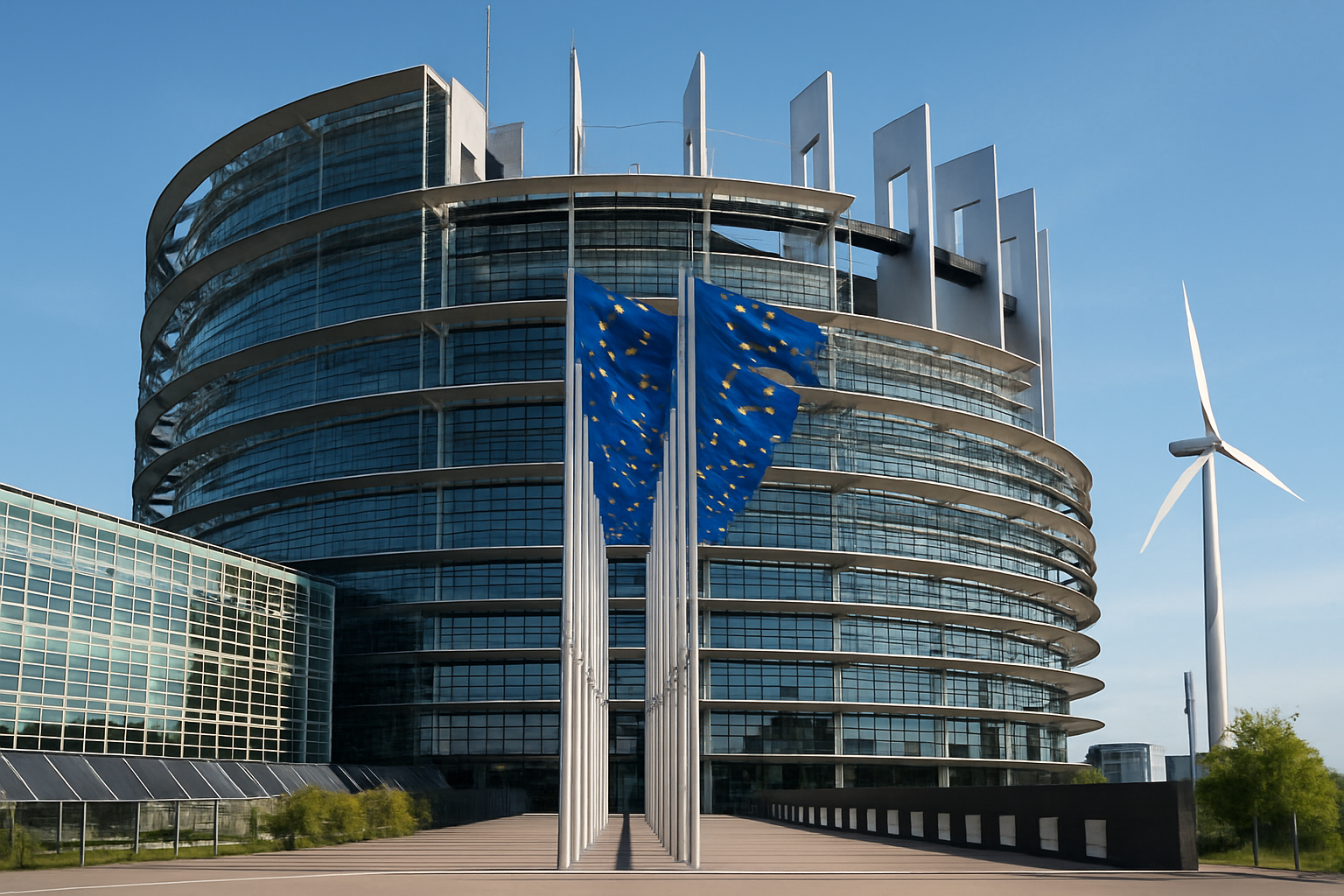
The European Parliament has approved a landmark 2040 climate target requiring a 90% reduction in greenhouse gas emissions compared to 1990 levels, marking the most ambitious climate legislation in the bloc's history as member states grapple with energy security challenges and soaring electricity prices.
The vote, which passed with 413 votes in favor and 226 against according to Taiwanese media reports, establishes a crucial milestone in the EU's path toward achieving carbon neutrality by 2050. The decision comes after extensive negotiations and represents a compromise that includes new flexibility mechanisms for member states.
Historic Climate Commitment
The approved legislation amends the EU Climate Act to enshrine the 90% emissions reduction target, building on the existing 2030 intermediate goals. According to German broadcaster Tagesschau, the European Parliament's approval follows lengthy negotiations that have resulted in measures "from which consumers should also benefit."
The target represents a dramatic escalation from current climate commitments and positions Europe as a global leader in climate action during a period when scientific evidence shows the urgency of rapid decarbonization. January 2026 marked the 18th consecutive month of global temperatures exceeding 1.5°C above pre-industrial levels, demonstrating the accelerating pace of climate change.
Energy Security and Supply Chain Challenges
The ambitious climate target comes as European countries face mounting energy security challenges. Sweden has experienced its highest electricity prices in two years, with daily electricity costs rising to unprecedented levels, according to SVT reports. Finnish electricity demand has reached record consumption levels, impacting Swedish households through interconnected Nordic energy markets.
Swedish Prime Minister Ulf Kristersson faces political pressure over rising energy costs, with Left Party leader Nooshi Dadgostar calling government responses "nonsense" while the government maintains that current prices remain below 2022 levels during the energy crisis.
The EU's climate ambitions occur against a backdrop of critical supply chain vulnerabilities. EU auditors have warned that climate goals face serious risks due to dangerous dependence on China, which controls 60% of global production and 90% of critical raw materials refining capacity essential for renewable energy infrastructure.
Flexibility Mechanisms and Member State Support
The approved legislation includes new flexibility mechanisms designed to help member states meet the stringent targets. According to Polish media reports, the package introduces international carbon credits and allows countries to utilize forests for emissions compensation, providing greater flexibility for nations with different energy profiles and economic structures.
These mechanisms represent a pragmatic approach to achieving ambitious climate goals while recognizing the diverse circumstances across EU member states. Countries with significant forest resources can leverage natural carbon sequestration, while others may pursue international cooperation through carbon credit markets.
Implementation Challenges and Economic Impact
The path to 90% emissions reduction will require massive transformation across all sectors of the European economy. Current renewable energy infrastructure, despite significant progress, faces constraints from material shortages and supply chain dependencies that threaten the timeline for achieving climate neutrality.
Estonia has demonstrated the potential for renewable energy leadership, achieving 88% renewable electricity production in 2024 and opening continental Europe's largest battery storage facility capable of serving 90,000 households. However, such achievements must be scaled across the entire union while addressing infrastructure limitations and energy security concerns.
The challenge extends beyond renewable energy deployment to encompass industrial transformation, transportation electrification, and building efficiency improvements. Each sector requires substantial investment, technological innovation, and policy coordination across member states.
Emergency Climate Response and Resilience
Alongside the emissions reduction targets, the EU is developing comprehensive climate emergency response capabilities. European Commissioner announcements indicate Brussels will present an integrated climate risks strategy and enhanced wildfire prevention communications, addressing the increasing frequency of extreme weather events.
The Union is also developing satellite-based emergency communication systems that function during power outages, recognizing that climate adaptation requires resilient infrastructure capable of operating during disasters. These technological solutions complement emissions reduction efforts by preparing for unavoidable climate impacts.
International Context and Global Leadership
The EU's 2040 target positions the bloc at the forefront of global climate action during a critical period for international cooperation. The commitment comes as other major economies pursue their own climate strategies, with varying levels of ambition and different approaches to balancing economic growth with environmental protection.
Taiwan's coverage of the parliamentary vote highlights international attention to EU climate policy as a potential model for other regions. The legislation's emphasis on both emissions reduction and economic competitiveness through flexibility mechanisms offers insights for global climate policy development.
Consumer Benefits and Social Considerations
The approved legislation includes provisions designed to ensure consumers benefit from the clean energy transition. These measures address concerns about energy poverty and ensure that climate action supports rather than undermines social equity across European societies.
Consumer protection mechanisms built into the legislation recognize that successful climate policy must address affordability and accessibility challenges that have emerged during previous energy transitions. The Swedish electricity price crisis illustrates the political sensitivity of energy costs and the importance of managing transition impacts on households.
Technology Innovation and Industrial Strategy
Achieving the 90% emissions reduction target will require unprecedented technological innovation and industrial transformation. The EU's approach emphasizes developing domestic capabilities while reducing dependencies on critical materials controlled by other nations.
Strategic investments in battery storage, renewable energy manufacturing, and clean technology development aim to build European industrial capacity while creating jobs and economic opportunities in emerging sectors. However, success depends on coordinated policies across member states and substantial public and private investment.
Looking Ahead: Implementation and Monitoring
The parliamentary approval represents the beginning rather than the end of Europe's climate transformation journey. Implementation will require detailed sectoral strategies, significant financial resources, and sustained political commitment across multiple electoral cycles.
Member states must now develop national implementation plans that align with the 2040 target while addressing their specific circumstances and challenges. The success of Europe's climate leadership will depend on translating ambitious targets into effective policies and measurable emissions reductions.
The 2040 climate target establishes Europe as a test case for rapid decarbonization in developed economies, with implications extending far beyond the continent's borders. As the world watches Europe's implementation of this ambitious agenda, the outcomes will influence global climate policy and demonstrate whether rapid emissions reductions are compatible with economic prosperity and social stability.