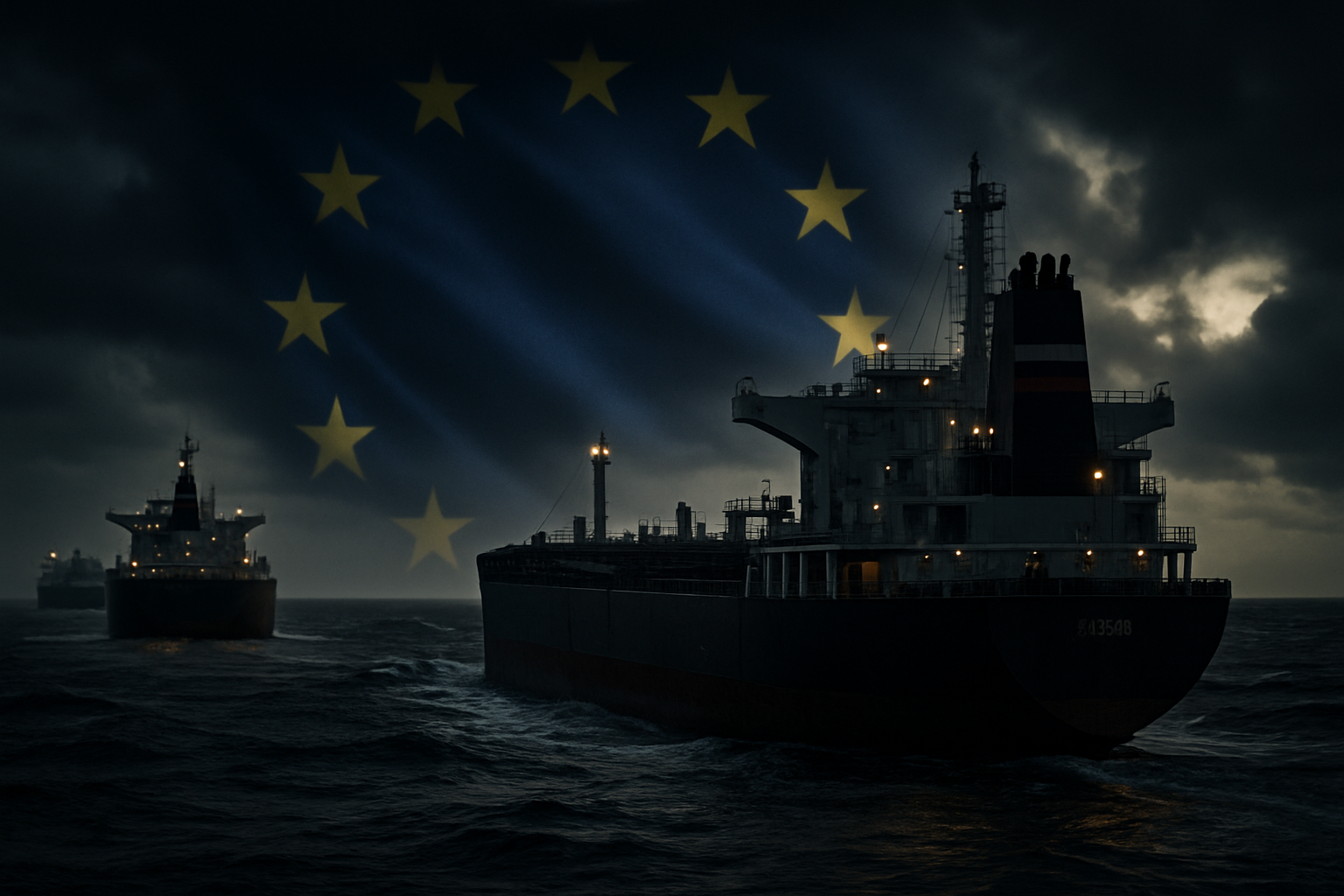
The European Union unveiled its 20th sanctions package against Russia on February 6, 2026, representing the most extensive measures to date targeting Russian crude oil exports and energy sector revenues, with new restrictions aimed at crippling Moscow's shadow fleet operations.
European Commission President Ursula von der Leyen announced the landmark package, which introduces comprehensive bans on maritime services supporting Russian seaborne crude oil exports, marking a dramatic expansion beyond previous piecemeal sanctions that focused primarily on direct oil imports.
Unprecedented Maritime Services Ban
The new sanctions package goes far beyond previous restrictions by implementing a complete prohibition on maritime services essential for Russian oil transport. According to German and Japanese sources, the measures encompass insurance, maintenance, port access, and technical support services that have enabled Russia to maintain its energy export operations despite existing sanctions.
The European Commission's proposal represents a sweeping ban on any services that support Russia's seaborne crude oil exports, addressing what EU officials acknowledge as sophisticated evasion networks that have undermined previous sanctions effectiveness.
"This package targets the very infrastructure that enables Russia to circumvent our sanctions through maritime deception."
— EU Commission Official
Shadow Fleet Under Siege
Central to the new sanctions is an aggressive targeting of Russia's so-called "shadow fleet" – vessels using sophisticated methods to obscure ownership, destination, and cargo details. Intelligence estimates suggest over 600 vessels worldwide participate in this network, using false documentation and complex ownership structures to evade detection.
The package adds 43 additional vessels to the EU's blacklist, bringing the total number of sanctioned tankers to unprecedented levels. These vessels have been identified through enhanced surveillance and intelligence cooperation among EU member states and international partners.
Ukrainian sources highlight that the sanctions target not only individual vessels but the entire support ecosystem enabling shadow fleet operations, including financial services, shipping management companies, and technical service providers.
Anti-Circumvention Mechanisms Activated
For the first time, the EU has activated comprehensive anti-circumvention mechanisms targeting third countries suspected of facilitating Russian sanctions evasion. The package introduces bans on exports of digital control machinery, computers, radio equipment, and other high-tech components to countries identified as high-risk re-export hubs.
This represents a significant policy evolution from targeting Russia directly to addressing the complex international networks that have enabled sanctions circumvention through third-party countries and intermediary companies.
Financial Sector Expansion
The sanctions package significantly expands restrictions on Russian banks and cryptocurrency mechanisms used to circumvent existing prohibitions. Banking sanctions now encompass additional institutions and their international subsidiaries, while new cryptocurrency restrictions aim to close digital asset loopholes that have provided access to international markets.
EU officials acknowledge that Russia has increasingly relied on cryptocurrency networks and alternative financial mechanisms to maintain international trade relationships despite traditional banking restrictions.
Implementation Challenges and Member State Coordination
The comprehensive nature of the 20th package required extensive coordination among all 27 EU member states, with particular attention to countries with significant maritime commerce dependencies. Greece and Cyprus, major shipping nations, negotiated specific implementation timelines to accommodate their substantial shipping industries.
EU officials acknowledge significant enforcement challenges given the global nature of maritime commerce and the sophisticated evasion methods employed by sanctioned entities. The package includes transitional provisions for existing contracts and humanitarian exemptions for certain goods categories.
"The complexity of global maritime commerce makes complete enforcement challenging, but we are committed to closing every loophole."
— Senior EU Diplomat
Strategic Context and Timing
The announcement comes during a period of significant diplomatic activity, including ongoing Ukraine-Russia-US trilateral peace talks in Abu Dhabi. The timing demonstrates the EU's commitment to maintaining maximum economic pressure on Russia regardless of concurrent diplomatic initiatives.
The package reflects growing concerns about resilient Russian energy revenues that continue to sustain military operations despite nearly four years of sanctions. Intelligence assessments suggest Russia has successfully adapted many of its export mechanisms to minimize sanctions impact through the shadow fleet network.
Coordination with G7 partners ensures consistency with the existing $60-per-barrel price cap mechanism, while the new maritime services ban aims to make compliance with price restrictions more enforceable by targeting the service infrastructure.
Economic Impact Projections
EU economists project that the maritime services ban will significantly increase global oil transportation costs for Russian crude, potentially forcing Moscow into expensive and inefficient shipping arrangements requiring substantial state-controlled infrastructure development.
However, officials acknowledge that complete enforcement faces inherent challenges given the complexity of global commerce and the time required for alternative supply arrangements to develop fully.
Long-term Strategic Implications
The 20th sanctions package represents a fundamental shift toward comprehensive economic isolation strategy, moving beyond targeted restrictions to systemic pressure aimed at altering Russia's cost-benefit calculations for continued military operations.
As the fourth anniversary of the sanctions regime approaches, the package demonstrates sustained EU commitment to maintaining pressure while adapting to evolving Russian evasion capabilities through increasingly sophisticated enforcement mechanisms.
The success of these unprecedented measures will largely depend on international cooperation in maritime surveillance, port inspections, and financial monitoring – representing a critical test of multilateral sanctions enforcement in the modern global economy.