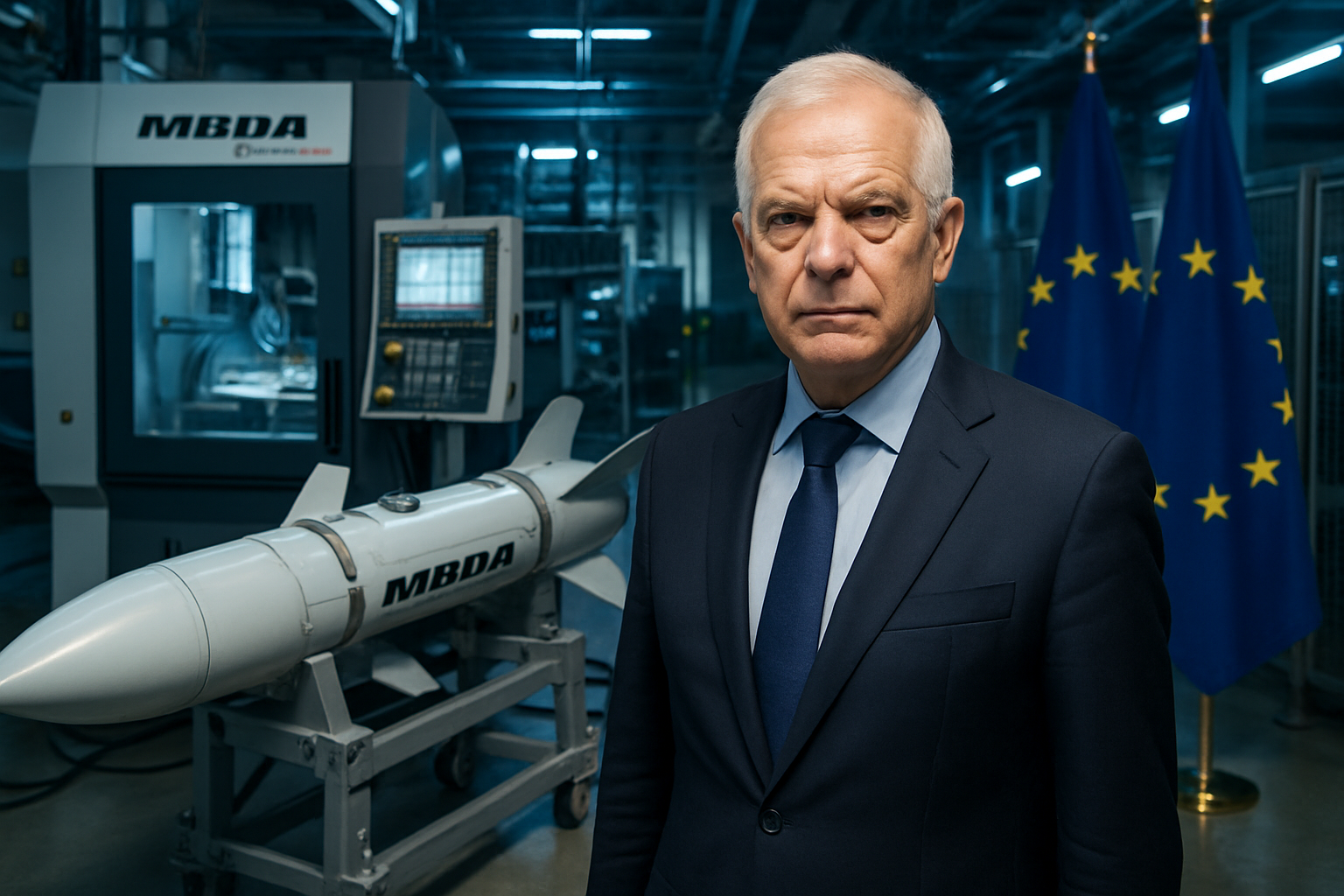
European Union Defense Commissioner Andrius Kubilius has called for a dramatic acceleration in missile production during a visit to MBDA facilities, as Russia launched its most devastating coordinated attack wave of 2026, killing at least 19 civilians and wounding hundreds across Ukraine.
The dual developments on April 16, 2026, underscore the critical intersection of European defense industrial policy and the ongoing humanitarian crisis in Ukraine. Kubilius's call to "move up a gear" in missile production at the European manufacturer MBDA comes as Ukraine faces unprecedented assault levels from Russian forces.
Russia's Deadliest 2026 Attack Wave
Russian forces launched their most devastating coordinated assault of 2026, deploying over 300 drones and dozens of missiles targeting civilian infrastructure across multiple Ukrainian regions. The systematic attack pattern represents a significant escalation in what experts describe as "energy terrorism" combined with deliberate civilian targeting.
According to Ukrainian officials, at least 19 civilians were killed in the overnight attacks, with casualty tolls continuing to rise. Kyiv Mayor Vitali Klitschko confirmed 4-5 deaths in the capital, including a 12-year-old boy and 35-year-old woman, with 45 injured. Emergency services reported rescuing a mother and child from a collapsed central district building.
The attacks spread across Ukraine's major cities: Odesa reported 7 killed with people still missing, while Dnipro suffered 2 deaths as residential buildings were set ablaze. Ukrainian air defenses intercepted the majority of incoming projectiles, but several strikes penetrated critical infrastructure, causing significant civilian casualties and infrastructure damage.
EU Defense Manufacturing Response
Commissioner Kubilius's visit to MBDA facilities represents a pivotal moment in European defense industrial strategy. The call for accelerated missile production acknowledges the urgent need to both support Ukraine's defensive capabilities and rebuild Europe's own defense stockpiles, which have been significantly depleted through military aid transfers.
MBDA, a joint European venture between Airbus, BAE Systems, and Leonardo, produces advanced missile systems including air defense interceptors and precision-guided munitions. The company's manufacturing capacity has become crucial for European security architecture as conventional defense procurement timelines clash with immediate operational requirements.
The timing of Kubilius's announcement reflects broader European recognition that current missile production rates are insufficient for both immediate Ukrainian needs and long-term European security requirements. Recent assessments indicate Ukraine requires thousands of interceptor missiles monthly to counter Russian drone and missile campaigns.
Systematic Civilian Targeting Pattern
Norwegian defense experts characterized the latest Russian assault as combining "attacks on critical infrastructure with terror bombing of the civilian population," representing a calculated escalation in warfare tactics. The pattern violates Geneva Conventions provisions protecting civilian populations during armed conflict.
The systematic nature of the attacks is evidenced by their timing, targeting civilian areas during peak activity periods, and the coordination across multiple Ukrainian regions simultaneously. Energy infrastructure remains a primary target, continuing the "energy terrorism" strategy that has left over 1,170 Kyiv buildings with inadequate heating throughout the winter months.
Ukrainian nuclear plants have been forced to halt electricity production for the first time since the conflict began, highlighting the broader implications of infrastructure targeting. International humanitarian law experts document these attacks as systematic violations of civilian protection requirements under international law.
Diplomatic Context and Peace Efforts
The escalation occurs against the backdrop of indefinitely suspended trilateral peace negotiations between Ukraine, Russia, and the United States. The diplomatic breakthrough achieved in February 2026 - including a historic 314-prisoner exchange and restoration of US-Russia military communications after a four-year suspension - remains stalled due to the Iran crisis consuming American foreign policy attention.
President Zelensky's statements indicate US negotiators currently have "no time for Ukraine" due to Iran crisis priorities, with trilateral negotiations postponed until security conditions allow. The framework for diplomatic engagement remains preserved, with prisoner exchange mechanisms and Pentagon-Moscow deconfliction protocols intact for potential future reactivation.
"The situation around Iran means there are still no necessary signals for trilateral meetings until the security situation allows."
— Volodymyr Zelensky, Ukrainian President
European Defense Industrial Implications
The accelerated missile production initiative represents a fundamental shift in European defense thinking, moving beyond traditional supplier-recipient relationships toward comprehensive defense industrial cooperation. Recent revelations that the UK operates four military repair and overhaul (MRO) facilities in Ukraine, with a fifth planned, demonstrate the evolution toward sustainable, in-theater defense support capabilities.
Germany has committed to providing 35 Patriot missiles, while Sweden and Denmark jointly pledged €246 million for air defense systems. These commitments, combined with the EU's historic €90 billion loan package (the largest single-nation assistance ever), reflect unprecedented European defense integration under crisis conditions.
However, internal European divisions persist, with Hungary, Slovakia, and Czech Republic refusing participation in the loan package, exposing vulnerabilities in unified European defense policy. Lithuanian officials warn the EU "cannot become Budapest's hostage" as Hungarian Prime Minister Viktor Orbán threatens vetoes over energy disputes.
Ukraine's Strategic Transformation
Parallel to receiving increased European support, Ukraine has evolved from aid recipient to security provider, deploying over 200 military specialists to Middle Eastern countries including the UAE, Qatar, Jordan, Bahrain, and Kuwait. These experts share battlefield experience in countering Iranian Shahed drones - the same weapons systems devastating Ukrainian infrastructure.
This strategic pivot creates potential diplomatic leverage while demonstrating Ukraine's value as a regional security partner beyond the current conflict. The development of indigenous defense capabilities, combined with European joint production initiatives, positions Ukraine as a significant player in global defense technology markets.
Nuclear Governance Crisis Backdrop
The escalation unfolds against an unprecedented nuclear governance crisis. The New START treaty between the United States and Russia expired February 5, 2026, marking the first time in over 50 years without bilateral nuclear constraints between the superpowers controlling 80% of global nuclear weapons.
UN Secretary-General António Guterres has characterized the situation as a "grave turning point," warning that nuclear risks are at their "highest in decades." The restored military communications between Pentagon and Russian General Staff officials represent the only formal diplomatic channel between the nuclear superpowers.
International Response and Support
Brazilian President Luiz Inácio Lula da Silva publicly stated that Brazil "has never supported Russia in its war against Ukraine and has not recognized Moscow's right to occupy Ukrainian territories," reinforcing international consensus on territorial sovereignty principles.
The humanitarian toll continues mounting, with 55,000 Ukrainian soldiers officially disclosed as killed and a "large number" missing, with estimates suggesting actual casualties may be 2-3 times higher. Over 17.8 million Ukrainians access winter support programs as systematic infrastructure targeting creates ongoing humanitarian crises.
Looking Forward
The convergence of accelerated European missile production and Russian attack escalation highlights the critical juncture facing European security architecture. Success in rapidly scaling defense industrial capacity while maintaining diplomatic framework preservation could determine whether innovative conflict resolution mechanisms can overcome military escalation approaches.
The stakes extend beyond immediate Ukrainian defense needs to encompass 21st-century territorial sovereignty principles, international law enforcement credibility, and European strategic autonomy development. Commissioner Kubilius's missile production acceleration represents recognition that European security requires both immediate defensive capabilities and long-term industrial capacity for sustained deterrence.
The timeline for resumed diplomatic negotiations remains dependent on Iran crisis resolution and broader Middle East stability. Military escalation continues with systematic civilian targeting while Ukraine expands international partnerships and maintains operational capabilities, setting the stage for either diplomatic breakthrough or continued military determination of European security outcomes.