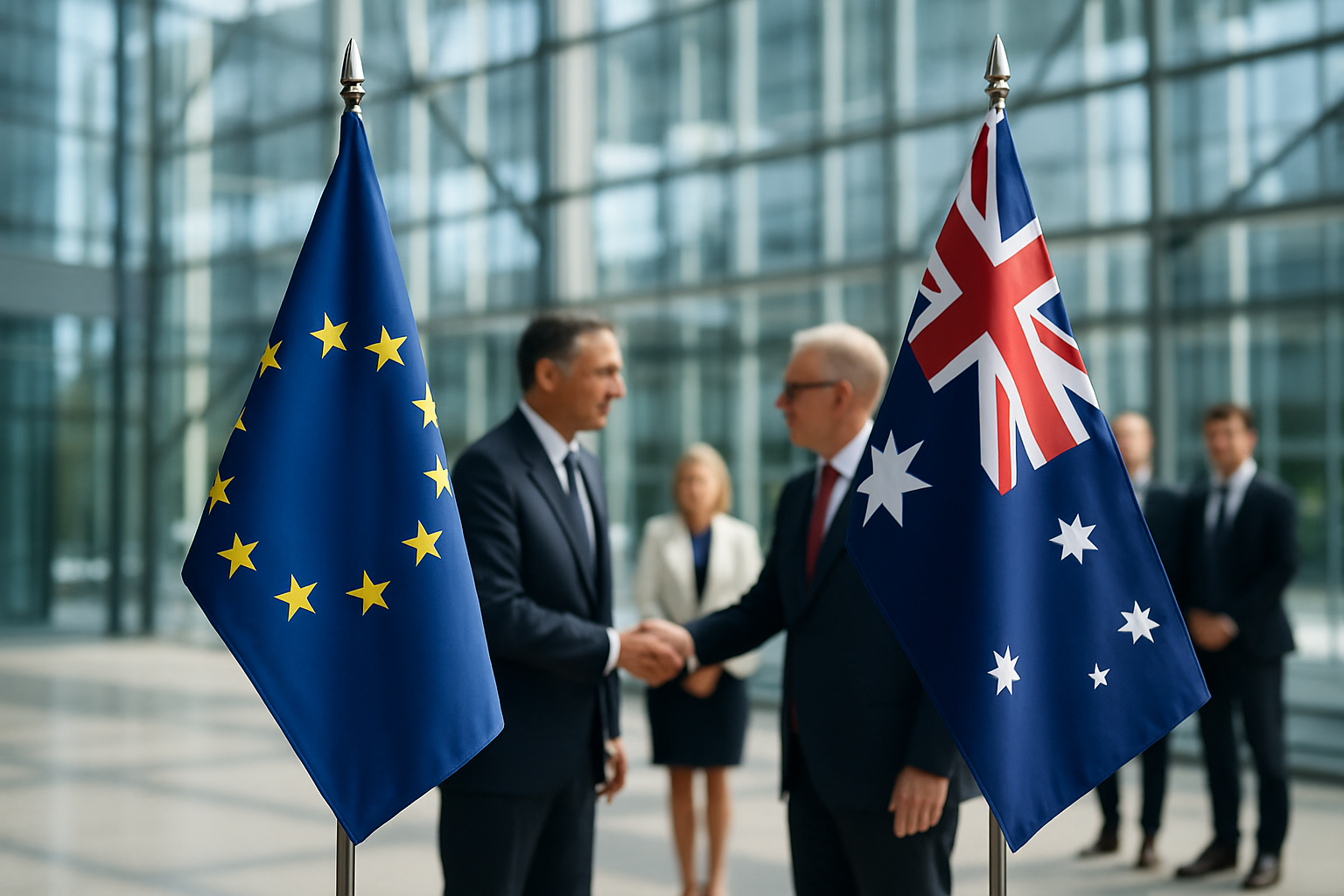
The European Union and Australia have officially finalized their comprehensive free trade agreement on March 24, 2026, marking the conclusion of eight years of complex negotiations and creating new opportunities for trade worth billions of euros annually between the two democratic partners.
The landmark agreement, announced simultaneously by European Commission President Ursula von der Leyen and Australian officials, eliminates tariffs on nearly all European goods entering Australia and removes barriers for virtually all Australian critical minerals exports to the 27-member European bloc.
"The EU and Australia may be geographically far apart but we couldn't be closer in terms of how we see the world," von der Leyen declared in a statement marking the agreement's completion. The deal represents a significant milestone in EU-Australia relations and positions both regions to strengthen democratic partnerships amid global trade uncertainties.
Comprehensive Trade Liberalization
According to sources familiar with the agreement, the deal eliminates 99% of tariffs between the two trading partners, creating substantial market access opportunities for businesses on both sides. European exporters of automobiles, machinery, chemicals, and pharmaceuticals will gain unprecedented access to Australia's market of 26 million consumers, while Australian agricultural producers and critical minerals exporters secure enhanced pathways to the EU's 450 million consumers.
The Belgian Businesses Federation (VBO) has already welcomed the agreement, noting its potential to provide "a boost for exports" following eight years of detailed negotiations. The trade deal aims to deepen economic ties by reducing trade barriers and strengthening cooperation between the EU and Australia across multiple sectors.
However, the agreement includes specific provisions for certain sensitive agricultural products. Australian beef and sheep meat exports will be subject to export quotas under the finalized terms, a concession that has drawn criticism from Australian farming organizations who describe the access as "subpar" compared to their initial expectations.
Critical Minerals Strategic Partnership
Beyond traditional trade liberalization, the EU-Australia agreement establishes crucial cooperation on critical minerals supply chains. The deal ensures nearly all Australian exports of lithium, cobalt, rare earth elements, and other strategic materials will face no European tariffs, addressing a key vulnerability in European supply chains.
This minerals partnership becomes particularly significant given China's dominant position in global supply chains, controlling approximately 60% of critical materials production and 90% of refining capacity. European Commission analysis indicates the minerals cooperation component could be "crucial" for reducing European dependence on Chinese-controlled supply chains, as von der Leyen noted in recent statements.
The agreement also includes a parallel security and defense cooperation framework, strengthening ties between democratic partners in an era of increased geopolitical competition. This dual approach—combining trade liberalization with strategic minerals cooperation—reflects the evolving nature of international economic relationships in the 21st century.
Implementation Timeline and Parliamentary Approval
Despite the completion of negotiations, the agreement still requires formal approval processes in both the European Parliament and Australian federal parliament before implementation can begin. These parliamentary procedures could extend the timeline for practical implementation by several months, though officials express confidence in eventual ratification.
European Parliament approval represents a particularly crucial step, given recent European legislative focus on ensuring trade agreements align with environmental standards and democratic governance principles. The Australia agreement includes comprehensive frameworks covering goods, services, investment protection, digital commerce, and environmental standards that must satisfy European parliamentary scrutiny.
Australian Parliamentary consideration will focus heavily on the agricultural access provisions, particularly the quotas on beef and sheep meat exports that have generated domestic criticism. However, the agreement's broader economic benefits and strategic minerals components are expected to garner strong bipartisan support in Canberra.
Global Trade Context and Strategic Implications
The EU-Australia agreement emerges during a period of significant global trade realignment. European officials describe the deal as part of efforts to establish Europe as a "third pole" in global competition, reducing dependence on single trading partners while building partnerships with like-minded democracies.
This strategic approach becomes particularly relevant given ongoing US trade policy uncertainties under the Trump administration and Europe's simultaneous efforts to manage complex relationships with China. The Australia deal demonstrates the EU's capacity to conclude significant bilateral agreements while maintaining its commitment to multilateral frameworks.
The agreement's completion also coincides with increased focus on supply chain resilience following recent global disruptions. Memory chip shortages that caused sixfold price increases and ongoing concerns about critical materials availability have elevated supply chain diversification to a top policy priority for both European and Australian leaders.
Economic Impact and Business Opportunities
Economic analyses suggest the agreement could generate substantial mutual benefits through market integration covering over 475 million people across both regions. Brussels has highlighted the potential for 87% growth in European investment opportunities with improved access to Australian markets, particularly in advanced manufacturing and services sectors.
For Australian exporters, the agreement provides significant opportunities beyond traditional agricultural products. The critical minerals provisions position Australia as a key strategic partner for European green energy transitions, with lithium and rare earth exports facing no tariff barriers under the new framework.
European automotive manufacturers, chemical companies, and machinery exporters are expected to benefit substantially from tariff elimination, creating new competitive opportunities in Australian markets. The pharmaceutical and advanced manufacturing sectors also gain enhanced market access under the comprehensive services provisions.
Environmental and Sustainability Framework
The finalized agreement includes comprehensive sustainability chapters requiring adherence to Paris Climate Agreement commitments and anti-deforestation measures. These environmental provisions reflect both partners' commitment to ensuring trade expansion supports rather than undermines global climate objectives.
Environmental groups have monitored the negotiations closely, with some expressing concerns about potential impacts on biodiversity and sustainability standards. However, the agreement's environmental framework includes enforcement mechanisms designed to ensure trade expansion occurs within sustainable development parameters.
The critical minerals cooperation component specifically emphasizes sustainable extraction and processing methods, aligning with both European Green Deal objectives and Australian commitments to responsible resource development. This approach seeks to demonstrate how trade agreements can support rather than conflict with environmental protection goals.
Regional and Global Precedent
The successful completion of EU-Australia negotiations establishes important precedents for democratic trade partnerships in an era of increased global competition. The agreement demonstrates that comprehensive trade deals addressing both traditional commerce and strategic supply chains remain achievable despite complex international conditions.
Regional observers note the agreement's potential influence on broader Indo-Pacific trade relationships, particularly as European engagement in the region continues expanding. The security cooperation elements suggest evolving integration between economic and strategic partnerships among democratic nations.
The deal's structure—combining traditional trade liberalization with strategic minerals cooperation and environmental standards—may provide a template for future agreements between developed democracies seeking to balance economic opportunities with strategic autonomy and sustainability objectives.
As both partners move toward parliamentary ratification processes, the EU-Australia agreement represents a significant achievement in international economic cooperation during a period of global trade uncertainty, positioning both regions for enhanced prosperity through democratic partnership and strategic resource cooperation.