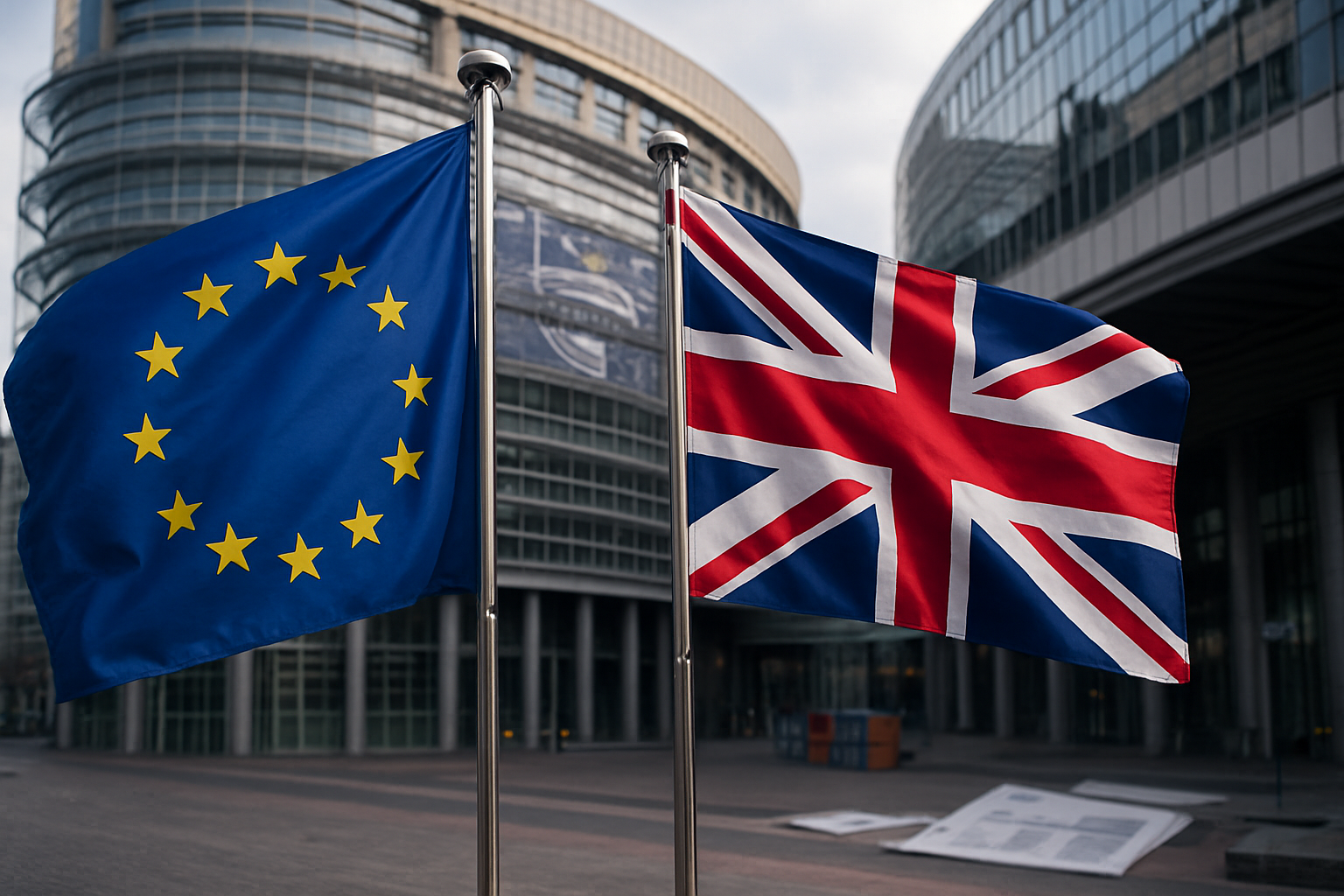
The Cypriot Presidency has announced a groundbreaking agreement with the European Parliament to modernize the EU's customs union, marking what Finance Minister Makis Keravnos called "the biggest reform since the creation of the Customs Union in 1968," as new trade figures reveal the complex economic landscape facing Europe seven years after Brexit.
The announcement comes as fresh Eurostat data shows the European Union recorded a €128 billion trade surplus in goods for 2025, representing an €8 billion decrease from 2024's €136 billion surplus. This decline reflects shifting trade dynamics across key sectors and partners, underscoring the need for comprehensive customs modernization in an era of heightened global competition.
Historic Customs Union Transformation
Speaking on behalf of the Cypriot Presidency, Finance Minister Makis Keravnos emphasized the transformative nature of the reforms, which represent the most significant overhaul of EU customs procedures in over five decades. The agreement addresses longstanding inefficiencies in cross-border trade processing and aims to enhance the EU's competitive position amid increasing pressure from both Chinese economic expansion and American bilateral trade strategies.
The customs union reforms come at a critical juncture for European trade policy, as the EU navigates complex relationships with traditional partners while establishing new frameworks for strategic autonomy. The modernization includes enhanced digital processing capabilities, streamlined procedures for businesses, and improved coordination mechanisms between member states.
Shifting European Trade Landscape
The latest Eurostat figures reveal the nuanced reality of European trade performance in the post-Brexit era. While the EU maintained its trade surplus throughout 2015-2025, except for the energy crisis year of 2022, the recent decline signals evolving global dynamics requiring adaptive policy responses.
Trade surpluses in machinery, vehicles, and chemicals continued to outweigh persistent deficits in energy imports, with the chemicals sector showing remarkable growth. The surplus in chemicals and related products doubled from €128.3 billion in 2015 to €256.7 billion in 2025, representing the largest sectoral increase over the decade. Similarly, the food and drink trade balance strengthened from €32.0 billion to €39.7 billion during the same period.
These developments occur against the backdrop of ongoing Brexit-related adjustments, as the UK continues to implement new trade arrangements while maintaining complex relationships with European partners. The introduction of the Electronic Travel Authorization system, requiring a £16 fee for Europeans, symbolizes the continuing evolution of UK-EU relations seven years after the referendum.
Democratic Governance Under Pressure
The customs union reforms take place amid broader challenges to European democratic institutions, highlighted by a controversial decision from the European Parliament regarding Polish MEP Grzegorz Braun. Parliament voted to lift the immunity of the far-right leader, allowing him to face criminal charges in Poland, including Holocaust denial accusations.
According to Romanian media reports, Braun faces prosecution not only for attacking a Jewish religious ceremony but also for statements denying the existence of gas chambers at Auschwitz. The decision represents a significant test of European Parliament procedures for addressing extremist rhetoric within EU institutions.
This development underscores the ongoing tension between democratic values and populist challenges across Europe, with implications for the continent's ability to maintain unified responses to external pressures while preserving internal cohesion.
Strategic Context and Global Competition
The customs union modernization reflects broader European efforts to maintain competitiveness amid intensifying global trade competition. Recent memory of supply chain disruptions, semiconductor shortages, and energy crises has highlighted the vulnerability of traditional trade arrangements to external shocks.
European leaders have recognized the need for more flexible and resilient trade infrastructure, capable of adapting to rapidly changing global conditions while maintaining the fundamental principles of the single market. The reforms announced by the Cypriot Presidency represent a concrete step toward achieving these objectives.
The timing of these reforms coincides with significant developments in global trade architecture, including China's expansion of zero-tariff agreements with African nations and ongoing tensions in transatlantic trade relationships. These external pressures have reinforced the imperative for European institutional adaptation.
Implementation Challenges and Opportunities
The successful implementation of customs union reforms will require coordination across 27 member states, each with distinct economic structures and trade patterns. The Cypriot Presidency's role in facilitating this agreement demonstrates the continued effectiveness of the EU's rotating presidency system in driving complex negotiations.
Technical aspects of the reform include enhanced digital capabilities for customs processing, improved data sharing mechanisms between national authorities, and streamlined procedures for businesses operating across multiple member states. These changes are expected to reduce administrative burdens while strengthening security and compliance monitoring.
The reforms also address long-standing concerns about varying implementation standards across different member states, establishing more uniform procedures and performance metrics to ensure consistent application throughout the European Union.
Brexit Legacy and Future Relations
The customs union reforms occur against the continuing backdrop of Brexit-related adjustments, as both the UK and EU adapt to new realities of their relationship. Recent developments, including London Mayor Sadiq Khan's call for Labour to campaign on rejoining the EU, demonstrate that Brexit remains a dynamic political issue rather than a settled question.
Khan's intervention, citing "economic instability caused by Donald Trump" as a factor making EU membership more attractive, reflects the evolving nature of British public opinion and the complex interplay between domestic politics and international economic pressures.
The EU's customs union reforms may indirectly affect UK-EU trade relationships by establishing new standards and procedures for third-country engagement. British businesses operating in European markets will need to adapt to updated requirements, potentially influencing future discussions about closer economic cooperation.
Economic and Political Implications
The modernization of EU customs procedures represents more than technical administrative reform; it embodies the European project's capacity for institutional adaptation in response to changing global conditions. The agreement between the Cypriot Presidency and European Parliament demonstrates the continued functionality of EU decision-making processes despite increasing political pressures.
For businesses operating within the single market, the reforms promise reduced compliance costs, faster processing times, and improved predictability in cross-border operations. These improvements could enhance European competitiveness in global markets while strengthening the attractiveness of EU market access for international partners.
The political significance extends beyond economic considerations to questions of European sovereignty and strategic autonomy. By modernizing customs capabilities, the EU enhances its capacity for independent economic policy while maintaining open engagement with global partners.
Looking Forward
As the customs union reforms move toward implementation, they will serve as a test case for European institutional capacity in addressing 21st-century challenges. The success of these modernization efforts could provide a template for other areas requiring institutional adaptation, from digital regulation to climate policy coordination.
The reforms also represent a concrete manifestation of European strategic autonomy, demonstrating the EU's ability to develop independent capabilities while maintaining beneficial international partnerships. This balance between autonomy and cooperation remains central to European approaches to global governance.
The coming months will reveal whether the ambitious reforms can deliver on their promises of enhanced efficiency and competitiveness. Success would strengthen arguments for continued European integration and institutional modernization, while setbacks could fuel skepticism about the EU's capacity for effective governance in a rapidly changing world.
The customs union modernization, combined with ongoing efforts to address democratic governance challenges and manage complex international relationships, represents the European Union's commitment to adaptation and renewal in the face of mounting global pressures. The outcomes of these efforts will significantly influence Europe's trajectory in the remainder of the decade.