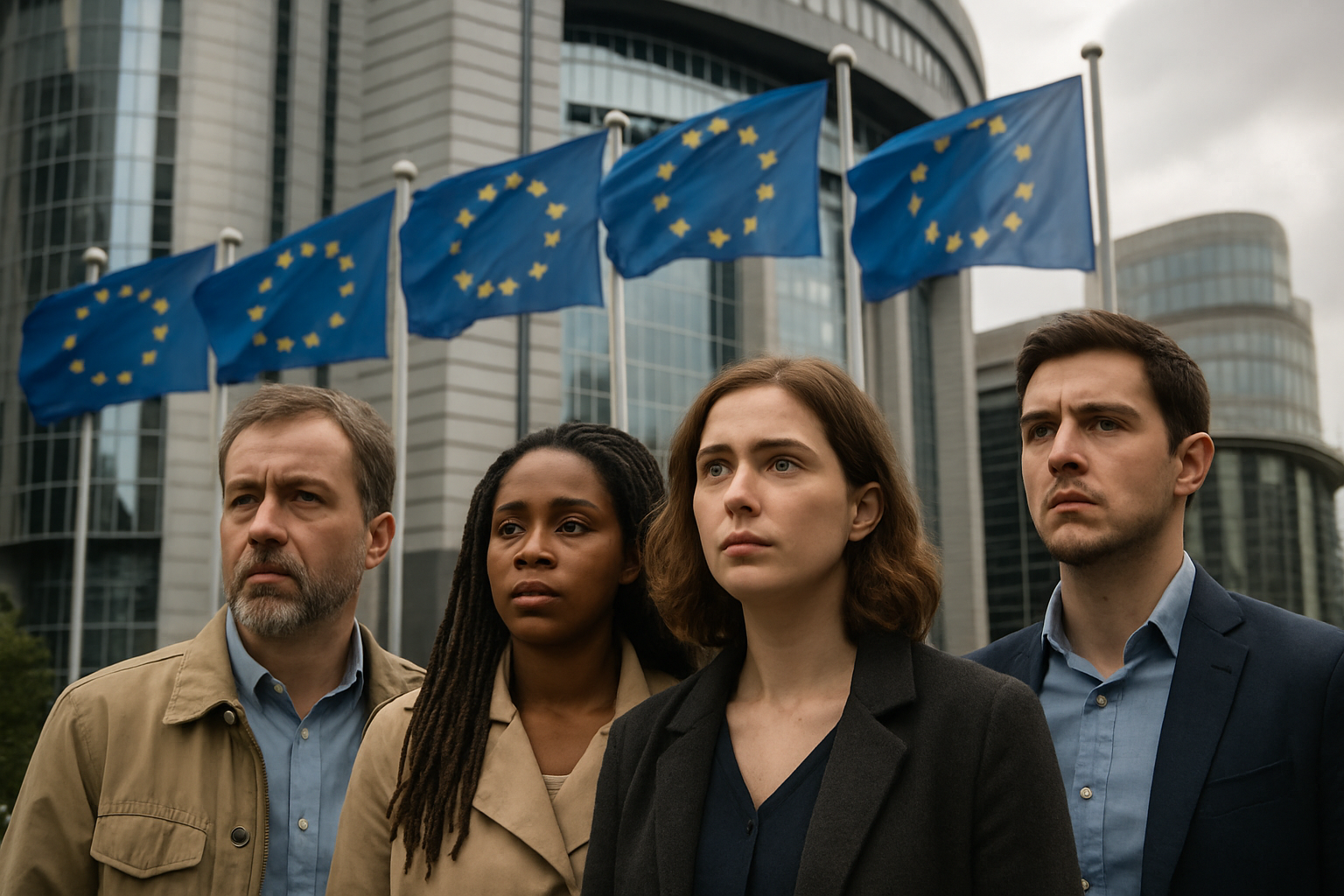
European citizens are increasingly demanding stronger European integration while expressing growing concerns about future security challenges, according to the latest Eurobarometer survey released across multiple EU member states, revealing a paradoxical relationship between anxiety and support for deeper unity.
The comprehensive survey, conducted between November 6-30, 2025, across all 27 EU member states shows that 89% of Europeans are calling for greater unity within the European Union, while 86% want the bloc to have a stronger voice on the global stage and 73% support increased resources to tackle global threats.
Security Concerns Drive Integration Support
The survey reveals that conflicts and wars near EU borders top European concerns, with 72% of respondents citing this as their primary worry. Terrorism follows at 67%, while cyber attacks concern 66% of citizens. These security anxieties appear to be strengthening rather than weakening support for European integration.
In Austria, citizens mirror EU-wide concerns about conflicts and wars, but simultaneously show renewed positive sentiment toward EU membership despite future anxieties. The Austrian public increasingly sees European unity as a solution to geopolitical instability rather than a constraint on national sovereignty.
"In a time of growing geopolitical tensions, citizens have increasingly greater concerns about the future and expect from the EU unified and ambitious action."
— Austrian Press Release, OTS Agency
Economic Pressures Persist Across Member States
Despite growing support for integration, economic concerns remain paramount for many Europeans. Inflation, rising prices, and cost of living represent the primary concern for 40% of Romanian citizens, closely matching the EU average of 41%. This economic anxiety spans across multiple member states, from Greece where cost of living issues dominate public discourse, to Malta where economic stability remains a key consideration.
The Romanian survey data shows that 59% of Romanians remain optimistic about their country's future, exceeding the EU average and demonstrating resilience despite economic challenges. This optimism coincides with strong support for European integration as a pathway to economic stability and prosperity.
Malta Shows Exceptional EU Confidence
Malta emerges as a standout case in the survey, with 81% of Maltese citizens viewing the EU as a shield against global instability. Seven in ten Maltese (70%) express optimism about the EU's future, surpassing their optimism for their own country (65%) and the world (45%). This exceptional confidence in European institutions reflects the island nation's strategic position and appreciation for EU membership benefits.
The Maltese perspective illustrates how smaller member states often see the EU as providing protection and amplified voice in international affairs that would be impossible to achieve independently. This sentiment appears increasingly shared across the continent as global uncertainties mount.
Political Dynamics and Democratic Tensions
The survey results come amid significant political developments within EU institutions. Recent investigations by German broadcaster Monitor revealed that the European People's Party (EPP), led by Manfred Weber, organized a parliamentary majority that included the entire right-wing bloc for a crucial vote, despite Weber's repeated denials of cooperation with radical right parties.
This revelation highlights the complex political dynamics within the European Parliament as traditional party lines blur amid pressure to address citizen concerns about security, migration, and economic challenges. The collaboration between conservatives and right-wing groups on specific legislation underscores the evolving nature of EU politics.
Greece Balances Pessimism with EU Support
Greek citizens exemplify the survey's central paradox: exceptional pessimism about the future combined with strong support for a more powerful European Union. Despite widespread concerns about economic conditions and cost of living pressures, Greeks overwhelmingly support deeper European integration as a solution to national and regional challenges.
This pattern reflects broader European sentiment where anxiety about external threats and economic pressures drives rather than diminishes support for collective European action. Citizens increasingly view national solutions as insufficient for addressing transnational challenges ranging from climate change to geopolitical instability.
Historical Context and Future Implications
The current survey results represent a significant shift from historical patterns where economic crises typically weakened support for European integration. The 2008 financial crisis and subsequent eurozone troubles led to decreased confidence in EU institutions across multiple member states.
However, the current geopolitical environment, marked by conflicts in Ukraine, tensions with Russia, China's growing assertiveness, and climate challenges, appears to be strengthening European solidarity. Citizens increasingly recognize that individual member states lack the resources and influence necessary to address these global challenges independently.
The survey coincides with ongoing discussions about EU strategic autonomy, particularly regarding critical raw materials where China controls 60% of global production and 90% of refining capacity. Recent EU auditor warnings about climate goals being threatened by materials shortages have heightened awareness of the need for coordinated European responses.
Future Policy Directions
The overwhelming support for stronger EU unity and increased resources suggests significant public backing for ambitious European integration initiatives. These could include expanded EU competencies in defense, energy security, technology sovereignty, and climate policy.
The survey results provide political capital for EU leaders to pursue deeper integration measures that might have faced public skepticism in previous decades. From common defense initiatives to unified approaches on migration, energy, and technology policy, European citizens appear ready to support substantial transfers of sovereignty to EU institutions.
As European leaders prepare for upcoming policy decisions and the next EU budget cycle, the Eurobarometer results suggest strong public mandate for bold action rather than incremental change. The combination of external pressures and internal support for integration creates a unique window for advancing European unity.