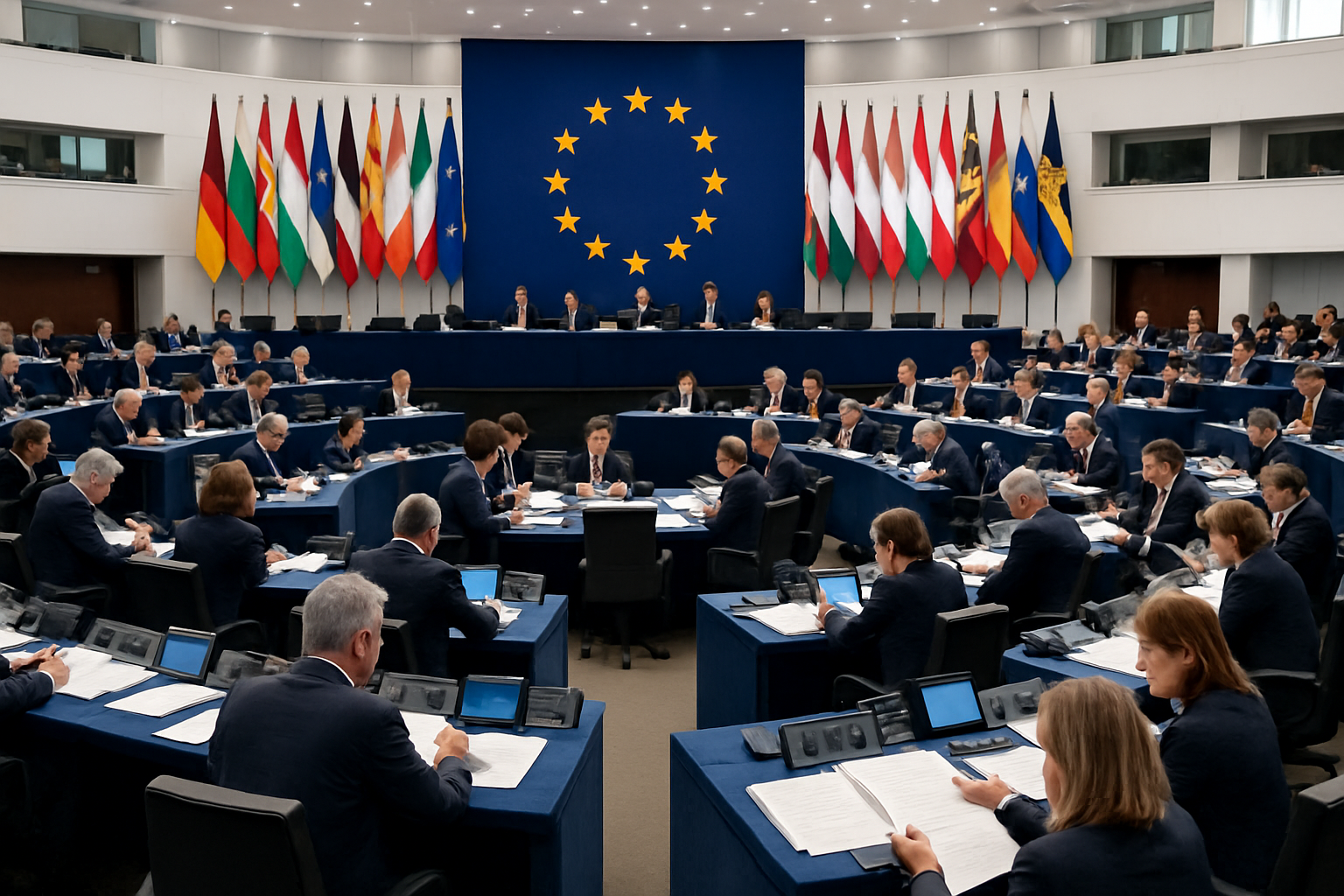
The European Union has embarked on a comprehensive policy transformation spanning asset taxation, building regulations, and telecommunications, as member states navigate the complexities of deeper integration while addressing both internal divisions and external pressures from geopolitical challenges.
In a series of interconnected policy announcements throughout February 2026, the EU has demonstrated both its ambition for greater unity and the persistent challenges of coordinating 27 diverse democratic systems. These developments come as the bloc faces unprecedented external pressures from the ongoing Ukraine conflict and internal divisions over fundamental policy directions.
Netherlands Retreats from Controversial Asset Tax System
The new Dutch government has decided to withdraw the planned Box 3 asset tax system that was scheduled for implementation in 2028. This decision represents a significant policy reversal driven by concerns over potential unrealized capital gains taxation that could have far-reaching implications for European tax policy harmonization.
The Box 3 system was designed to address long-standing European Union concerns about tax competition between member states by shifting from fictional returns to actual asset valuations. However, the policy faced universal criticism from various stakeholders who feared it could discourage investment and create administrative burdens for both taxpayers and authorities.
"The complexity of implementing fair asset taxation while maintaining competitive economic environments has proven more challenging than initially anticipated,"
— Dutch Finance Ministry Official
This retreat occurs within a broader context of European tax harmonization efforts, where member states are increasingly caught between EU directives promoting fiscal coordination and domestic pressures to maintain national sovereignty over taxation policies.
German Building Regulations Face EU Compatibility Crisis
Germany's new Building Modernization Act (Gebäudemodernisierungsgesetz) has created significant tensions with existing European Union environmental regulations. The German legislation allows for the installation of individual gas and oil heating systems in residential buildings, provided they operate using climate-friendly methods.
However, this approach potentially conflicts with EU-wide climate targets and environmental directives that aim to reduce dependency on fossil fuels across the European Union. The contradiction highlights the ongoing struggle between national implementation flexibility and collective European climate commitments.
The German government's decision comes as member states face mounting pressure to modernize their building stock while maintaining energy security amid ongoing geopolitical uncertainties. The conflict demonstrates the complexity of implementing coordinated environmental policies across diverse national contexts.
Western Balkans Roaming Integration Advances
In a more successful integration initiative, the European Commission has proposed opening negotiations with six Western Balkan countries to join the EU's "Roam Like at Home" system. This proposal, if approved by the EU Council, would extend the popular roaming regulation to Albania, Bosnia and Herzegovina, Kosovo, Montenegro, North Macedonia, and Serbia.
The initiative represents a significant step in the EU's enlargement strategy, offering tangible benefits to citizens in candidate countries while gradually integrating these nations into European systems. The roaming expansion would allow mobile users in these countries to use their phones across the EU without additional charges, mirroring the system that has proven popular among EU citizens since its full implementation.

"This proposal demonstrates our commitment to bringing the Western Balkans closer to the European Union through practical measures that benefit citizens directly,"
— European Commission Spokesperson
Integration Challenges Amid Geopolitical Pressures
These policy developments unfold against the backdrop of the ongoing Ukraine conflict, which has both accelerated some aspects of European integration while exposing persistent divisions. The historic €90 billion loan package for Ukraine, approved despite opposition from Slovakia, Czech Republic, and Hungary, exemplifies both EU solidarity and the limits of unanimity in crisis situations.
The Hungarian threat to veto both the Ukraine support package and the 20th sanctions package over the Druzhba pipeline dispute has exposed fundamental tensions within the EU about balancing individual member state interests against collective action. Lithuania's Foreign Minister warned that "the EU cannot become Budapest's hostage," reflecting broader concerns about unanimity requirements in critical decision-making.
Enhanced Cooperation Mechanisms Gain Prominence
In response to these challenges, discussions about enhanced cooperation mechanisms have intensified. These procedures allow smaller groups of member states to proceed with integration initiatives without requiring unanimous approval from all 27 members, potentially offering a path forward when traditional consensus proves elusive.
The success or failure of these mechanisms could fundamentally reshape how the European Union operates, potentially moving away from the unanimity requirements that have often paralyzed decision-making in recent years. This evolution could determine whether the EU can maintain unity while respecting member state sovereignty concerns.
Economic and Strategic Implications
The broader context of these policy changes includes the EU's efforts to maintain economic competitiveness amid challenges from both the United States and China. Recent summits at Alden Biesen focused on eliminating internal barriers and strengthening European champions in strategic sectors.
The coordination challenges are compounded by external pressures, including memory shortages affecting technology infrastructure and Trump administration bilateral trade deals that bypass EU frameworks. These factors create urgency for European policy coordination while highlighting the complexity of achieving consensus among diverse democratic systems.
Looking Forward: Democratic Governance Under Pressure
The February 2026 policy developments represent a critical test of the European Union's capacity to adapt its governance mechanisms while preserving democratic legitimacy. The simultaneous pursuit of deeper integration in some areas (Western Balkans roaming) and national flexibility in others (German building regulations, Dutch tax policy) reflects the ongoing challenge of balancing unity with diversity.
As European leaders prepare for further negotiations on these and related issues, the outcomes will likely influence the trajectory of European integration for years to come. The ability to resolve conflicts between national implementation and EU-wide coordination while maintaining democratic accountability remains central to the Union's future effectiveness.
The stakes extend beyond individual policy areas to fundamental questions about democratic governance in an interconnected world, where national sovereignty must be balanced against collective action on challenges that transcend borders. The European Union's experience in navigating these tensions may provide valuable lessons for democratic governance globally as similar challenges emerge worldwide.