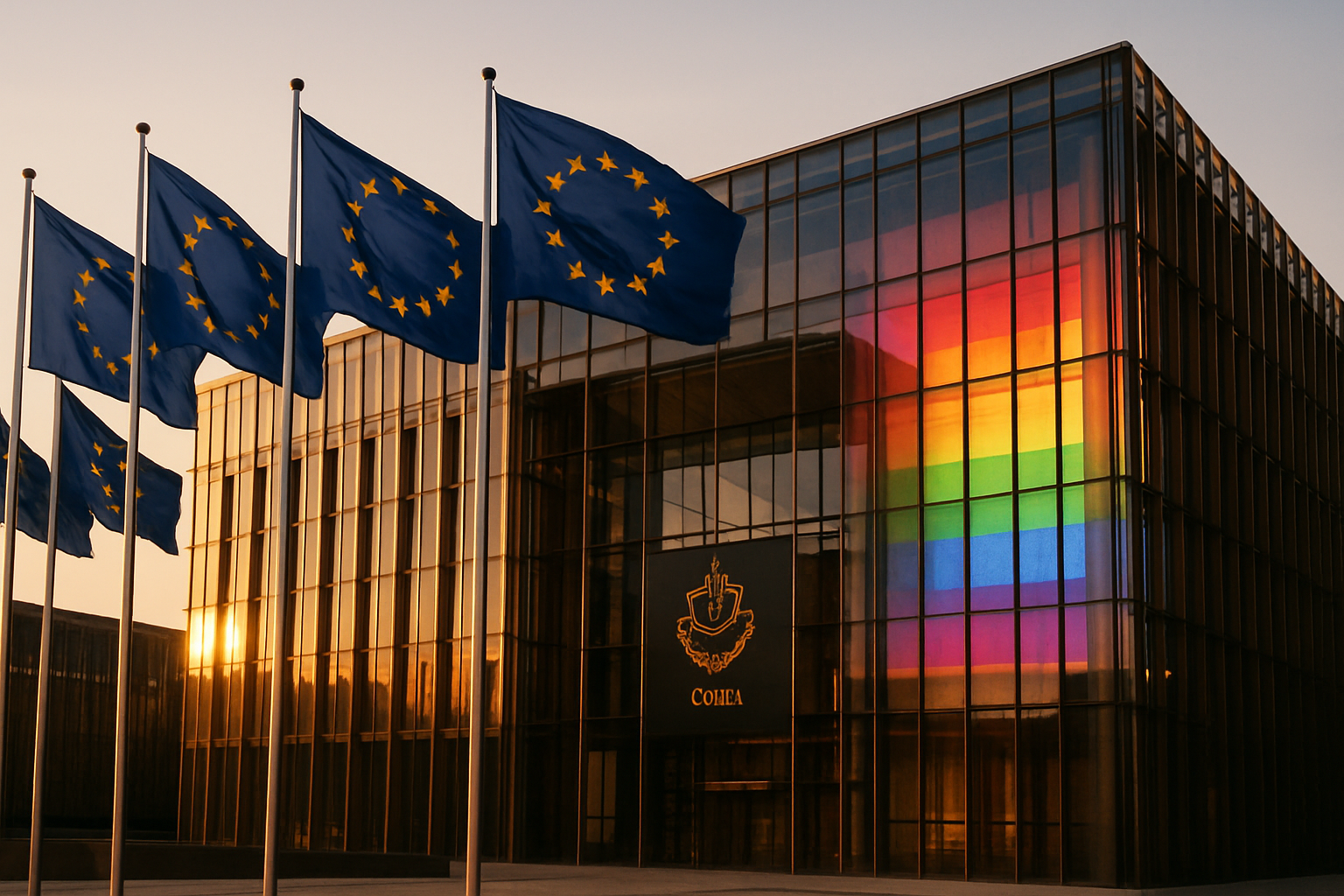
The European Court of Justice delivered a historic ruling on Tuesday, finding that Hungary's controversial 2021 anti-LGBTQ legislation fundamentally violates EU rules on non-discrimination and human dignity, in what advocates are calling the most significant victory for LGBTQ+ rights in European legal history.
The landmark judgment comes as Hungary undergoes dramatic political transformation following Viktor Orbán's electoral defeat just nine days earlier. The ruling provides an immediate test for new Prime Minister Péter Magyar's government, which has pledged to restore Hungary's alignment with European values and democratic principles.
The Court's Damning Verdict
In an unprecedented decision involving the largest coalition of EU institutions and member states ever assembled for a human rights case, the European Court of Justice found that Hungary's law "stigmatizes and marginalizes" LGBTQ+ individuals in direct violation of Article 2 of the Treaty on European Union, which establishes the bloc's foundational values of human dignity and equality.
The controversial legislation, originally framed as child protection measures but subsequently amended to ban the "promotion" of homosexuality and gender reassignment to minors, has been systematically dismantled by the court's ruling. The law restricted educational materials, advertisements, and media content related to LGBTQ+ issues, creating what the court termed "systematic discrimination" against sexual and gender minorities.
"This ruling represents a victory for human rights in Europe and demonstrates that no member state can systematically discriminate against its citizens while remaining within the European framework."
— Mario Lindner, SPÖ-LGBTIQ+ Spokesperson
Unprecedented Legal Coalition
The case represents an extraordinary mobilization of European institutions, with the European Commission, 16 of 27 EU member states, and the European Parliament bringing Hungary before the ECJ—the largest institutional coalition in the court's history for a human rights matter.
This unprecedented unity demonstrated European-wide commitment to protecting fundamental rights across all member states, even when facing resistance from national governments. The coalition's formation reflected growing concern across the continent about the erosion of LGBTQ+ rights and democratic values in several member states.
The court's decision comes amid a broader pattern of concerning restrictions on LGBTQ+ rights globally, including the March 2026 US Supreme Court decision to strike down Colorado's conversion therapy ban in a 6-3 ruling, and documented systematic discrimination in countries including Cuba, the UK, and Senegal.
Perfect Timing for Political Transformation
The ruling arrives at a pivotal moment for Hungary, just one week after Orbán's historic electoral defeat ended his 16-year authoritarian rule. Péter Magyar's Tisza Party achieved a constitutional supermajority with 138 of 199 seats in record 80% voter turnout—the highest since Hungary's 1989 democratic transition.
Magyar's victory was powered by "Generation Orbán" voters aged 18-30 who came of age under the former prime minister but decisively rejected his nationalist messaging. Over 70% of these young voters supported Magyar's pro-European vision, representing a generational transformation in Hungarian politics.
The new government has already begun reversing Orbán-era policies, immediately lifting Hungary's €90 billion Ukraine aid blockade and initiating the restoration of €19 billion in frozen EU funding. Constitutional supermajority powers enable comprehensive democratic reforms including judicial independence restoration, media oligarchy dismantling, and wealth tax implementation.
Enforcement Mechanisms and Implementation
Under EU law, Hungary must now align its domestic legislation with the court's ruling, requiring significant amendments to the 2021 law. The judgment strengthens the European Commission's ability to challenge discriminatory legislation across member states and establishes crucial precedent for future cases involving fundamental freedoms.
The ruling also reinforces potential Article 7 procedures—the EU's most severe sanctioning mechanism—if member states fail to comply with court decisions on fundamental rights. This creates powerful enforcement tools for protecting vulnerable communities when national governments fail to uphold European standards.
Civil society organizations played a crucial role in documenting the discriminatory impacts of Hungary's legislation and building international coalitions to challenge it. Their cross-border advocacy successfully leveraged EU legal mechanisms, providing a template for similar challenges to discriminatory legislation across Europe.
Global Context and Broader Implications
The ruling positions the European Union as a global advocate for LGBTQ+ rights during a period of increasing authoritarianism worldwide. It provides a counter-narrative to growing restrictions on sexual and gender minorities in various countries and strengthens the EU's credibility as a protector of human rights.
The decision's impact extends beyond Hungary, influencing LGBTQ+ advocacy strategies across Europe and internationally. It demonstrates how European legal frameworks can protect vulnerable communities even when faced with hostile national policies, offering hope for activists in other jurisdictions facing similar restrictions.
"This historic ruling reinforces the European Union's role as guardian of fundamental rights during times of democratic backsliding and authoritarian pressure worldwide."
— Senior EU Official
A Template for Democratic Renewal
The convergence of the court ruling with Hungary's democratic transformation represents a defining moment for European values. The peaceful electoral defeat of Orbán's government, combined with immediate legal vindication of LGBTQ+ rights, provides a powerful template for democratic renewal across the continent.
The decision strengthens arguments for the effectiveness of European institutions in protecting fundamental rights, even during periods of significant political pressure. It demonstrates that EU legal mechanisms can provide meaningful protection for vulnerable communities when democratic processes at the national level fail.
As Hungary begins implementing comprehensive democratic reforms under its new government, the ECJ ruling provides both legal framework and political momentum for advancing LGBTQ+ rights. The decision ensures that Hungary's return to European values includes concrete protections for sexual and gender minorities who suffered under years of systematic discrimination.
Looking Forward: Implementation and Impact
The immediate focus shifts to implementation, with Magyar's government expected to swiftly amend or repeal the discriminatory legislation to comply with the court's ruling. This process will test the new administration's commitment to European values and provide an early indicator of Hungary's democratic transformation.
The ruling also establishes important precedent for other ongoing cases involving fundamental rights across EU member states. It strengthens the legal foundation for challenging discriminatory legislation and reinforces the principle that European values are non-negotiable for member states.
Civil society organizations across Europe are already citing the decision in their advocacy efforts, using it as a blueprint for challenging similar restrictions in other jurisdictions. The ruling provides both legal precedent and political momentum for advancing LGBTQ+ rights continent-wide.
This historic victory demonstrates that European institutions can effectively protect vulnerable communities when citizens mobilize, legal mechanisms function properly, and democratic processes ultimately prevail. It offers hope for continued progress on LGBTQ+ rights across Europe and reinforces the EU's role as a global beacon for human dignity and equality.