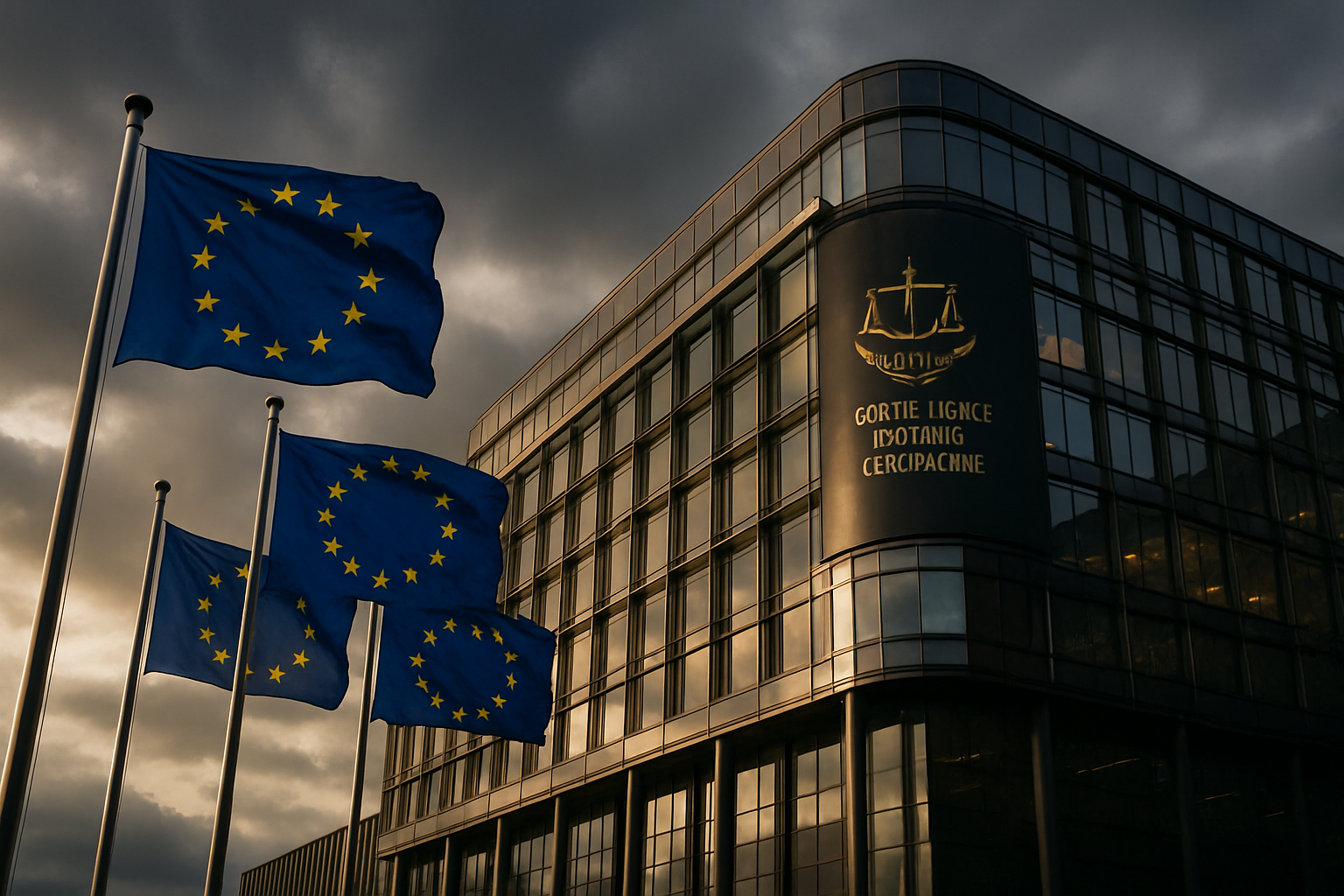
The European Union's highest court delivered a landmark ruling on Thursday that national legislation barring changes to gender information on identity documents violates EU law, marking a significant victory for transgender rights across the bloc.
The European Court of Justice (ECJ) found that restrictions preventing individuals from changing their legal gender markers create "considerable inconveniences" that hinder their fundamental right to free movement within the European Union. The case centered on a Bulgarian citizen who was registered male at birth but has begun hormone treatment and identifies as a woman.
The Bulgarian Case That Changed Everything
The applicant moved to Italy and requested Bulgarian authorities to change her legal gender, name, and identification number on official documents. Bulgarian courts denied the request, pointing to national rules that define sex strictly in biological terms and prohibit changes to gender information on identity documents.
According to court documents, the woman faced significant challenges when her lived gender identity did not align with her official documentation. The ECJ noted that mismatches between a person's gender identity and their identification documents can prompt doubts during routine checks, travel, or professional interactions.
Legal Reasoning and Implications
While the European Court of Justice acknowledged that member states retain responsibility for issuing identity documents, it emphasized that EU law requires these documents to facilitate free movement rights. The court found that when gender markers on documents contradict an individual's lived identity, it creates barriers to exercising fundamental freedoms guaranteed under European law.
The ruling does not mandate specific procedures for gender recognition but establishes that member states must provide some mechanism for individuals to update their documentation when their gender identity differs from their birth assignment.
Broader Context Across Europe
The decision comes at a time of increasing legal recognition for transgender rights across Europe, though approaches vary significantly between member states. Several countries, including Ireland, Malta, and Denmark, have implemented self-identification laws allowing individuals to change their legal gender through administrative processes rather than medical or judicial requirements.
However, other EU members, particularly in Eastern Europe, maintain more restrictive policies. Bulgaria, along with several other countries, has historically required medical sterilization or psychiatric evaluations for legal gender recognition, practices that human rights organizations have criticized as violating personal autonomy.
"This ruling represents a crucial step forward for transgender individuals across the European Union who have faced bureaucratic barriers to living authentically."
— Legal Expert, European Human Rights Organization
Impact on Member State Policies
The ECJ's decision will likely force several member states to reconsider their current policies on gender recognition. Countries with restrictive laws will need to evaluate whether their existing frameworks comply with EU free movement principles.
Legal experts suggest the ruling could accelerate legislative changes across the bloc, as governments seek to avoid similar challenges in European courts. The decision establishes a precedent that could influence future cases involving transgender rights and free movement within the EU.
Challenges and Implementation
Despite the positive ruling, implementation may face resistance in some member states where conservative governments have opposed expanding transgender rights. The court's decision focuses specifically on the free movement aspect rather than broader questions of gender recognition, potentially limiting its immediate scope.
Administrative processes for changing documentation vary widely across the EU, from streamlined self-identification procedures to complex medical requirements. The ruling may prompt harmonization efforts, though the specifics will likely remain within national jurisdiction.
Looking Forward
This decision represents part of a broader trend toward greater legal protection for LGBTI+ individuals within the European Union. The European Parliament and Commission have increasingly emphasized the importance of equality and non-discrimination as core European values.
Human rights advocates view the ruling as validation of their long-standing argument that freedom of movement includes the right to travel with documentation that accurately reflects one's identity. The decision may also influence similar cases in national courts across the EU.
The ruling reinforces the principle that European integration must include protection for minority rights and fundamental freedoms. As member states work to implement the decision, the case will likely serve as a reference point for balancing national sovereignty over civil status matters with overarching EU principles of free movement and human dignity.