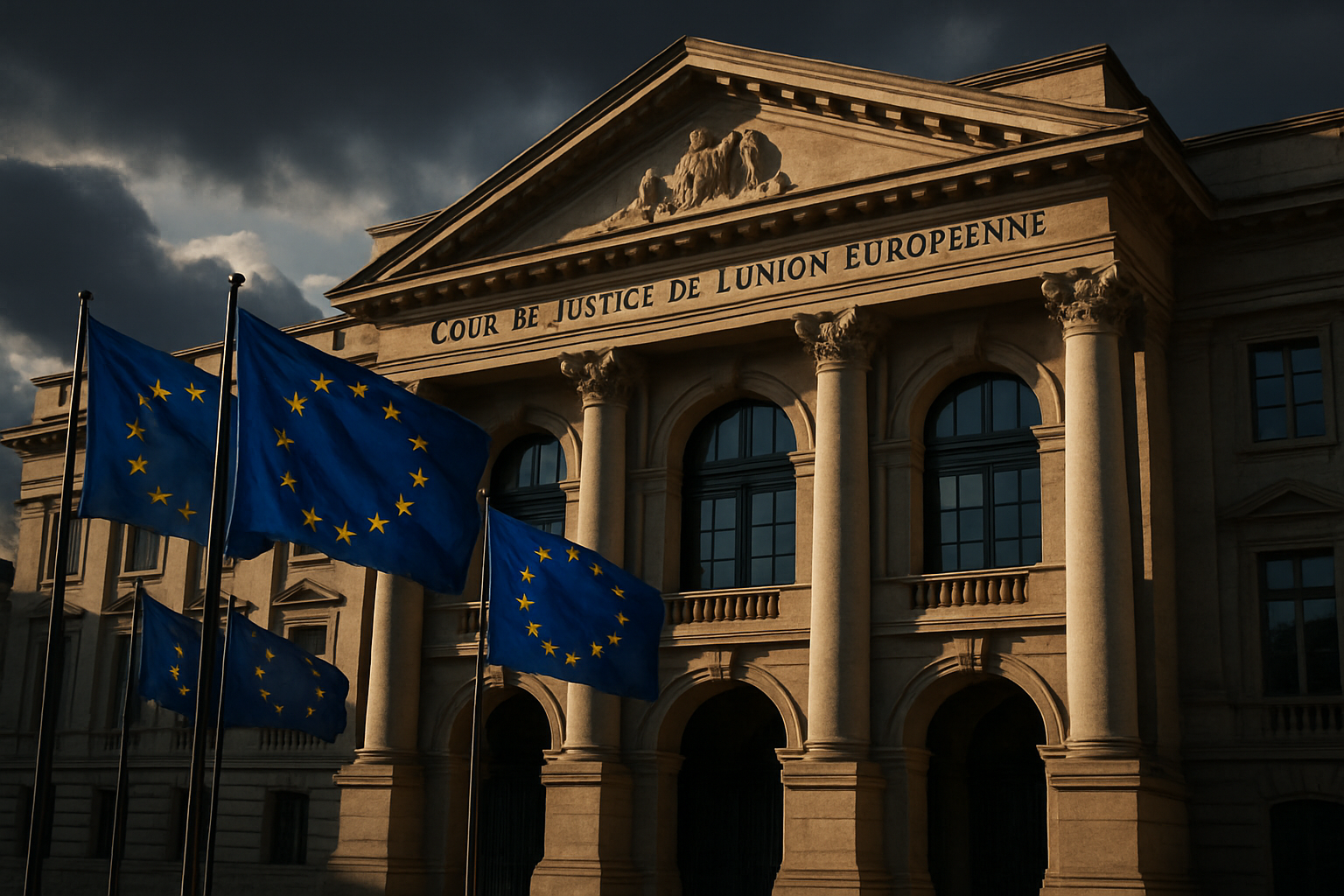
The European Court of Justice delivered a landmark ruling Tuesday that Hungary's controversial 2021 anti-LGBTQ legislation violates fundamental EU law and values, marking the conclusion of what has been described as the largest human rights case in the bloc's history.
The historic decision represents a decisive victory for LGBTQ+ advocates across Europe and deals a significant blow to Hungarian Prime Minister Viktor Orban's government, which had defended the law as protecting children and traditional family values. The ruling comes at a critical time when LGBTQ+ rights face mounting challenges globally, making this European judicial intervention particularly significant.
Unprecedented Legal Challenge
The case against Hungary's anti-LGBTQ legislation mobilized an extraordinary coalition of European institutions and member states. The European Commission, supported by 16 of 27 EU member states and the European Parliament, brought Hungary before the European Court of Justice over the 2021 law that severely restricts content related to sexual orientation and gender identity.
Originally framed as legislation to strengthen punishments for child abuse and protect minors, the Hungarian law was amended to include provisions that ban the "promotion" of homosexuality and gender reassignment to minors. The legislation effectively prohibited educational materials, advertisements, and media content that could be seen as promoting LGBTQ+ identities to anyone under 18.
The scale of opposition was unprecedented in EU legal history. The broad coalition challenging the law underscored the depth of European concern about Hungary's approach to LGBTQ+ rights and its compatibility with fundamental European values.
Court's Fundamental Rights Ruling
In its comprehensive ruling, the European Court of Justice found that Hungary's legislation breaches core EU principles, including Article 2 of the Treaty on European Union, which sets out the fundamental values upon which the EU is founded. The court determined that the law "stigmatizes and marginalizes" LGBTQ+ individuals in violation of European human rights standards.
The judgment specifically addressed how the legislation restricts access to information and creates discriminatory barriers that undermine the dignity and equality principles central to European law. The court's reasoning emphasizes that EU member states cannot enact domestic legislation that contradicts the bloc's foundational commitment to human rights and non-discrimination.
"This ruling reaffirms that the European Union will not tolerate laws that stigmatize and marginalize vulnerable communities."
— European Court of Justice ruling summary
Political Reactions and Celebrations
The ruling prompted immediate celebrations from LGBTQ+ advocacy organizations and political leaders across Europe. Austrian SPÖ-LGBTIQ+ spokesperson Mario Lindner hailed the decision as a "victory for human rights in Europe," congratulating both Hungarian and European civil society for their persistent advocacy.
The decision represents a significant setback for Viktor Orban's government, which has faced increasing isolation within EU institutions over its stance on LGBTQ+ rights and other rule-of-law issues. The Hungarian government had previously argued that the legislation was necessary to protect children and preserve traditional family structures.
European political leaders welcomed the ruling as validation of the EU's commitment to protecting fundamental rights across all member states, regardless of domestic political pressures or cultural differences.
Historical Context and Global Significance
This landmark ruling comes during a period of significant challenges for LGBTQ+ rights worldwide. Recent memory from Planet News coverage reveals a concerning pattern of restrictions across multiple jurisdictions, making the European court's strong stance particularly important for the global movement.
The timing of the decision is especially significant given recent setbacks in other regions. In March 2026, the U.S. Supreme Court struck down Colorado's conversion therapy ban in a 6-3 decision that prioritized First Amendment protections over child welfare concerns. Meanwhile, systematic discrimination has been documented in countries ranging from Cuba to the United Kingdom and Senegal.
The EU's firm judicial stance contrasts sharply with these restrictive trends elsewhere, positioning Europe as a beacon of LGBTQ+ rights protection in an increasingly challenging global environment.
Legal and Political Implications
The court's decision carries both immediate legal consequences and broader political implications for European integration. Hungary must now align its domestic legislation with EU law, potentially requiring significant amendments to the controversial 2021 law.
The ruling also strengthens the European Commission's ability to challenge member state legislation that conflicts with fundamental EU values. This precedent could prove crucial in addressing similar discriminatory laws that may emerge in other member states.
From a political perspective, the decision adds pressure on Hungary at a time when the country faces multiple disputes with EU institutions over rule-of-law issues. The comprehensive nature of the legal challenge and the court's decisive ruling demonstrate the EU's willingness to use its judicial mechanisms to defend core values.
European Values Under Pressure
The case emerges from broader tensions within the European Union about fundamental values and national sovereignty. Hungary's anti-LGBTQ legislation was part of a pattern of laws that critics argued undermined European principles of equality, non-discrimination, and human dignity.
The court's ruling reinforces that EU membership comes with binding commitments to uphold fundamental rights that cannot be overridden by claims of national sovereignty or cultural tradition. This principle has become increasingly important as populist movements across Europe have challenged various aspects of EU integration.
Civil Society Victory
LGBTQ+ advocacy organizations played a crucial role in bringing this case before European courts. Their persistence in documenting the discriminatory impacts of Hungary's legislation and building international coalitions proved essential to achieving this historic victory.
The success demonstrates the effectiveness of coordinated European civil society action in defending human rights. Organizations across multiple member states collaborated to challenge the Hungarian law, showing how cross-border advocacy can leverage EU legal mechanisms to protect vulnerable communities.
This victory provides a template for similar challenges to discriminatory legislation elsewhere in Europe, potentially strengthening LGBTQ+ rights protection across the continent.
Implementation and Future Challenges
While the court's ruling is legally binding, implementation will require ongoing monitoring and potentially additional legal action if Hungary fails to comply. The European Commission has various enforcement mechanisms at its disposal, including financial penalties and Article 7 procedures that could theoretically suspend Hungary's voting rights.
The decision also sets important precedents for future cases involving LGBTQ+ rights and other fundamental freedoms. Legal experts anticipate that this ruling will be cited in various contexts where member state legislation conflicts with European values.
However, challenges remain in translating legal victories into meaningful social change. While the court can strike down discriminatory laws, addressing underlying social attitudes and ensuring full equality requires sustained political and social efforts beyond judicial intervention.
Broader European Context
This ruling occurs during a critical period for European integration and fundamental rights protection. Recent developments have seen various member states challenging different aspects of EU law and values, making the court's strong stance on LGBTQ+ rights particularly significant.
The decision reinforces the role of EU institutions as guardians of fundamental rights, demonstrating that legal mechanisms exist to protect vulnerable communities even when national governments fail to do so. This function has become increasingly important as democratic backsliding concerns have emerged in various parts of Europe.
The comprehensive nature of this case – involving the Commission, Parliament, and multiple member states – shows the institutional unity that can emerge around core European values despite political divisions on other issues.
Looking Forward
The European Court of Justice's ruling against Hungary's anti-LGBTQ legislation represents more than a legal victory; it constitutes a defining moment for European values and the EU's commitment to protecting human rights across all member states.
As LGBTQ+ communities worldwide face increasing challenges, this decision provides hope and demonstrates that legal institutions can serve as effective bulwarks against discrimination. The ruling's impact will likely extend far beyond Hungary's borders, influencing LGBTQ+ rights advocacy and legal strategies across Europe and potentially worldwide.
The case also strengthens the European Union's position as a global advocate for human rights and democratic values, providing a powerful counter-narrative to growing authoritarianism and discrimination in various parts of the world.