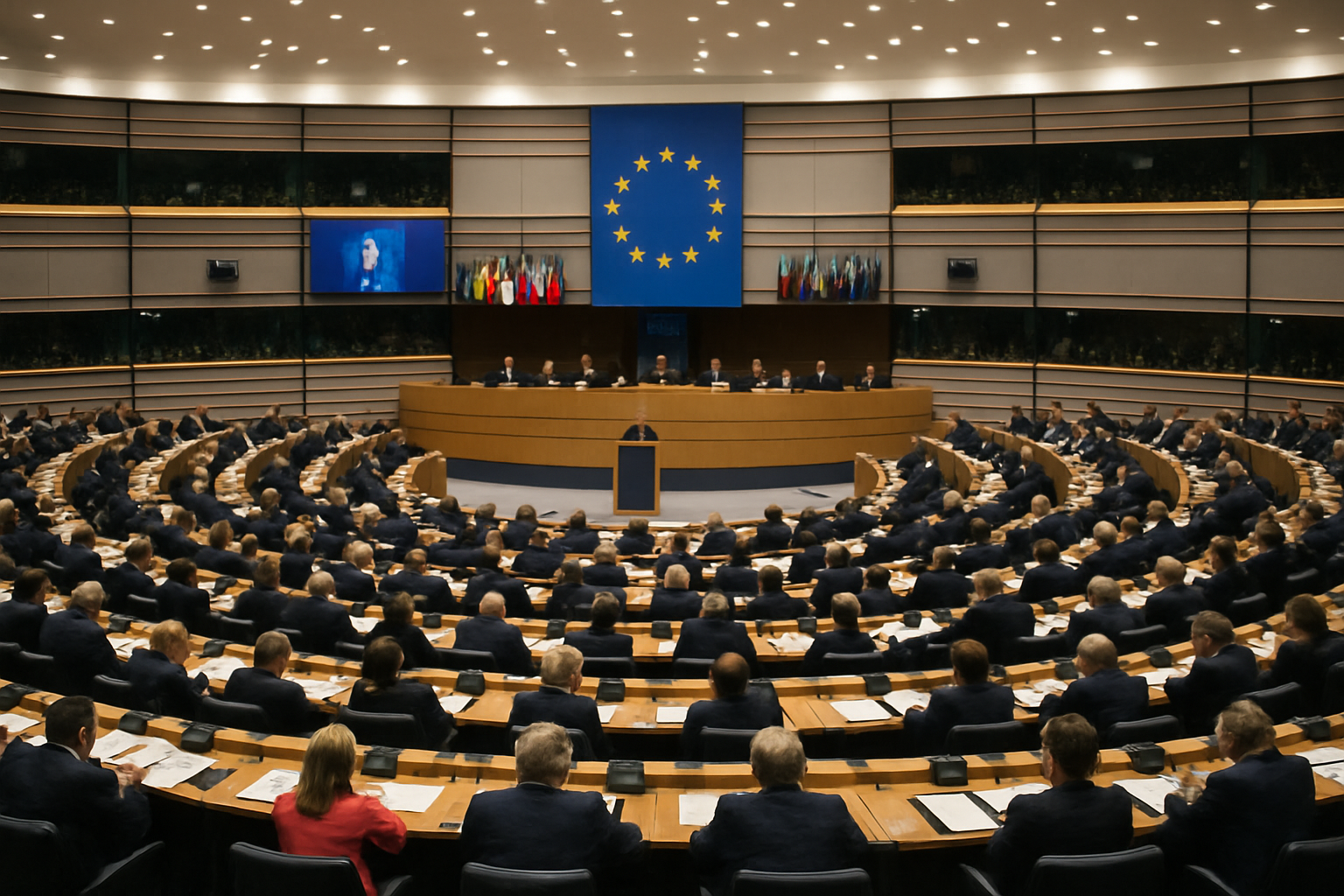
The European Union faces critical policy decisions on defense spending and governance frameworks, as member states grapple with mounting security challenges and citizen demands for greater unity, according to new data from Slovakia and Serbia.
Slovak media reports indicate the European crisis fund is actively considering unprecedented defense financing options totaling €430 billion, as rising military expenditures strain public finances across multiple member states. The proposal represents solutions previously considered only marginally feasible, highlighting the urgency of addressing Europe's security vulnerabilities.
This financial pressure coincides with striking public sentiment data from the latest Eurobarometer survey, revealing that 89% of European citizens demand greater EU unity, with 86% supporting a stronger global voice for the bloc. The survey, conducted across all 27 member states between November 6-30, 2025, demonstrates how geopolitical tensions are driving unprecedented European solidarity.
Security Concerns Drive Integration Support
The Eurobarometer findings reveal a dramatic shift in European public opinion, with security concerns at the forefront of citizen priorities. A substantial 72% of Europeans worry about conflicts and wars near EU borders, while 67% express terrorism concerns and 66% fear cyber attacks. These anxieties are translating into strong support for collective EU action.
Unlike historical patterns where crises typically weakened EU support, current geopolitical tensions are strengthening European solidarity. Citizens increasingly view the EU as a protective shield against instability, with Malta showing exceptional support at 81% seeing the union as protection against regional turbulence.
"Citizens are no longer viewing the EU as an abstract political project, but as an essential security umbrella in an increasingly dangerous world."
— European Political Analysis, February 2026
Defense Spending Pressure Points
The €430 billion defense funding consideration reflects mounting pressure on European public finances as security threats multiply. Military expenditures have surged across the continent, with member states struggling to balance fiscal responsibility with defense necessities.
According to Slovak analysis, the European crisis fund debate represents a fundamental shift from peripheral discussions to mainstream policy consideration. This evolution mirrors broader EU strategic autonomy discussions, particularly regarding dependency on China for 60% of critical materials production and 90% of refining capacity needed for defense and green energy transitions.
The defense spending debate occurs amid complex budget negotiations, with upcoming EU budget cycles requiring careful balance between existing commitments and new security imperatives. Energy security, technological sovereignty, and climate policy integration are creating unprecedented demands on European financial resources.
Digital Governance Framework Challenges
Parallel to defense debates, the EU continues grappling with digital governance frameworks that balance innovation with protection. Recent developments include Spain's aggressive social media regulation targeting under-16 users with executive criminal liability, while France and other member states coordinate on platform accountability measures.
The digital governance discussions reflect broader tensions between national sovereignty and EU-wide standards. Member states are navigating complex relationships between child protection, digital rights, and technological competitiveness in the global arena.
These policy challenges coincide with ongoing investigations into major tech platforms, including French authorities' actions against X (formerly Twitter) over content moderation and AI-generated harmful content concerns.
Economic and Political Implications
The policy debates reveal deep structural questions about European integration in the 21st century. With 73% of citizens supporting increased EU resources to address external threats, political leaders face mounting pressure to deliver concrete action on security concerns.
Economic pressures remain significant, with inflation concerns affecting 40% of Romanian citizens, matching the 41% EU average. However, recent data shows eurozone inflation declining to 1.7% in January 2026, providing some fiscal breathing room for ambitious integration projects.
Austria demonstrates renewed EU positivity despite future anxieties, while Greece shows a paradoxical pattern where domestic pessimism drives stronger EU support. These dynamics create complex political environments for implementing major policy changes.
Strategic Autonomy Implications
The defense funding and digital governance debates directly impact EU strategic autonomy goals. Critical materials dependency on China poses significant risks to both defense capabilities and green transition objectives. EU auditors have warned that climate goals face serious risks due to supply chain vulnerabilities.
The €430 billion defense consideration represents potential acceleration of European defense industrial capacity building, reducing reliance on external partners while strengthening collective security capabilities.
Digital governance frameworks aim to establish European alternatives to American and Chinese technology platforms, creating regulatory precedents for democratic oversight of global tech companies.
Looking Ahead
The convergence of citizen demands for unity, security imperatives, and fiscal pressures creates a critical moment for European integration. The unprecedented 89% support for greater EU unity provides political mandate for ambitious policy responses, including potentially massive defense spending increases.
Success will depend on member states' ability to balance national interests with collective action, while maintaining democratic accountability in an era of rapid geopolitical change. The €430 billion defense fund consideration, if implemented, would represent one of the largest EU financial commitments outside traditional budget frameworks.
These policy debates occur during a transformative period when European citizens are demanding stronger collective action while maintaining expectations for fiscal responsibility and democratic governance. The outcomes will significantly shape the EU's role in global security and technology governance for the coming decade.