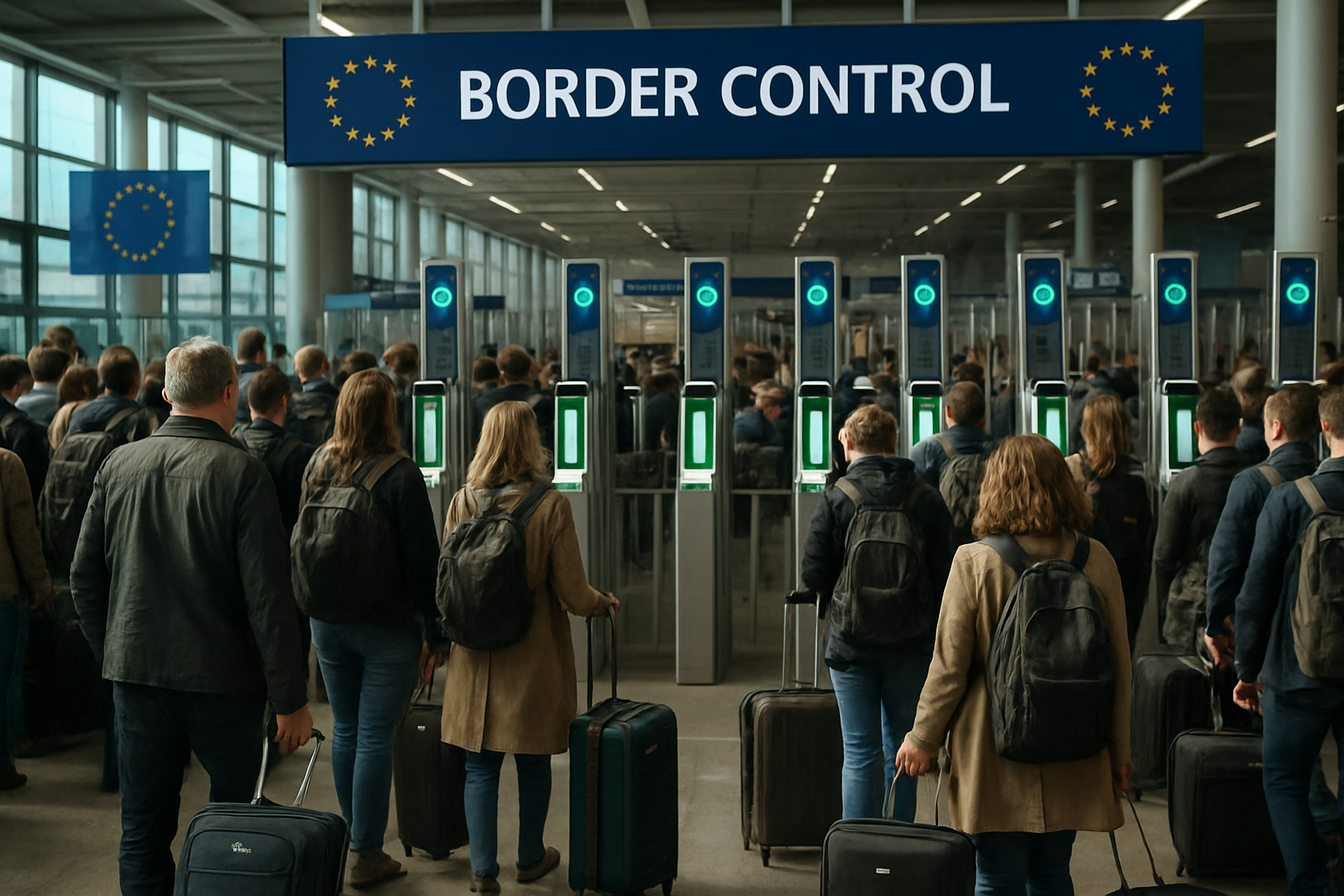
The European Commission has decided to allow member states to partially suspend the new Entry/Exit System (EES) during the summer months, citing growing concerns about potential travel chaos at Europe's busiest airports and ports during peak tourist season.
The digital border control system, which began its gradual rollout across Schengen zone entry points in October 2025, introduces biometric technology requiring travelers to provide facial photographs and fingerprints, along with accommodation payment data for their stay within the Schengen area. However, early implementation has already caused significant delays for passengers using airlines, ferries, and the Eurotunnel.
Implementation Challenges Emerge
The biometric technology expansion at border control points has experienced considerable initial problems, creating substantial delays for travelers across various transportation modes. According to reports from Albania's JavaNews, the system was originally scheduled to be fully operational across all European Union entry points by the summer of 2026.
The new border controls apply to all non-EU citizens entering the Schengen zone, including Albanian nationals and other third-country citizens. The comprehensive system requires not only biometric data collection but also detailed information about travelers' accommodation arrangements and payment methods for their European stay.
Summer Season Concerns Drive Decision
The European Commission's decision to permit partial suspension of the EES comes as authorities prepare for what is expected to be one of the busiest summer travel seasons in recent years. Peak season travel volumes at major European airports and ferry terminals could amplify existing delays, potentially creating widespread disruption across the continent's transportation network.
The Local France reports that member states will receive "the green light to partially suspend" the system specifically to avoid travel chaos during the high-traffic summer period. This represents a significant acknowledgment by EU authorities that the current implementation pace may not be sustainable under peak load conditions.
Technical Infrastructure Strain
The gradual implementation of biometric technology across Europe's vast network of airports and ports has revealed the complexity of managing such a comprehensive border control system. The Entry/Exit System represents one of the most ambitious digital infrastructure projects undertaken by the European Union, requiring coordination across dozens of countries and hundreds of entry points.
Early experiences have demonstrated that processing times for the new biometric procedures significantly exceed those of traditional passport controls, creating bottlenecks at high-traffic locations. The system's requirement for facial recognition, fingerprint scanning, and detailed accommodation verification adds multiple steps to the border crossing process.
Impact on European Tourism
The timing of these implementation challenges coincides with Europe's crucial recovery period for its tourism industry. Summer 2026 represents a critical season for destinations across the Schengen zone, making smooth travel experiences essential for maintaining visitor confidence and economic recovery.
Tourism industry representatives have expressed concerns that prolonged delays at border controls could discourage international visitors, particularly those from outside the European Union who must undergo the full EES processing. The commission's decision to allow temporary suspensions suggests recognition of these broader economic implications.
Looking Ahead to September
While the European Commission permits summer suspensions, the expectation remains that full EES implementation will resume by September 2026. This timeline gives authorities several months to address technical issues and optimize processing procedures before the autumn travel period.
The delay also provides opportunity for infrastructure improvements at critical border crossing points, including airports serving major tourist destinations and ferry terminals connecting the UK and continental Europe through services like the Eurotunnel.
The Entry/Exit System represents a fundamental shift in how the European Union manages its external borders, combining enhanced security measures with digital efficiency goals. However, the current implementation experience demonstrates the challenges inherent in deploying complex technology across such a diverse and high-volume transportation network.
As European authorities work to balance security objectives with practical travel facilitation, the summer 2026 period will serve as a crucial test of their ability to maintain both border integrity and the smooth movement of millions of international visitors across the continent.