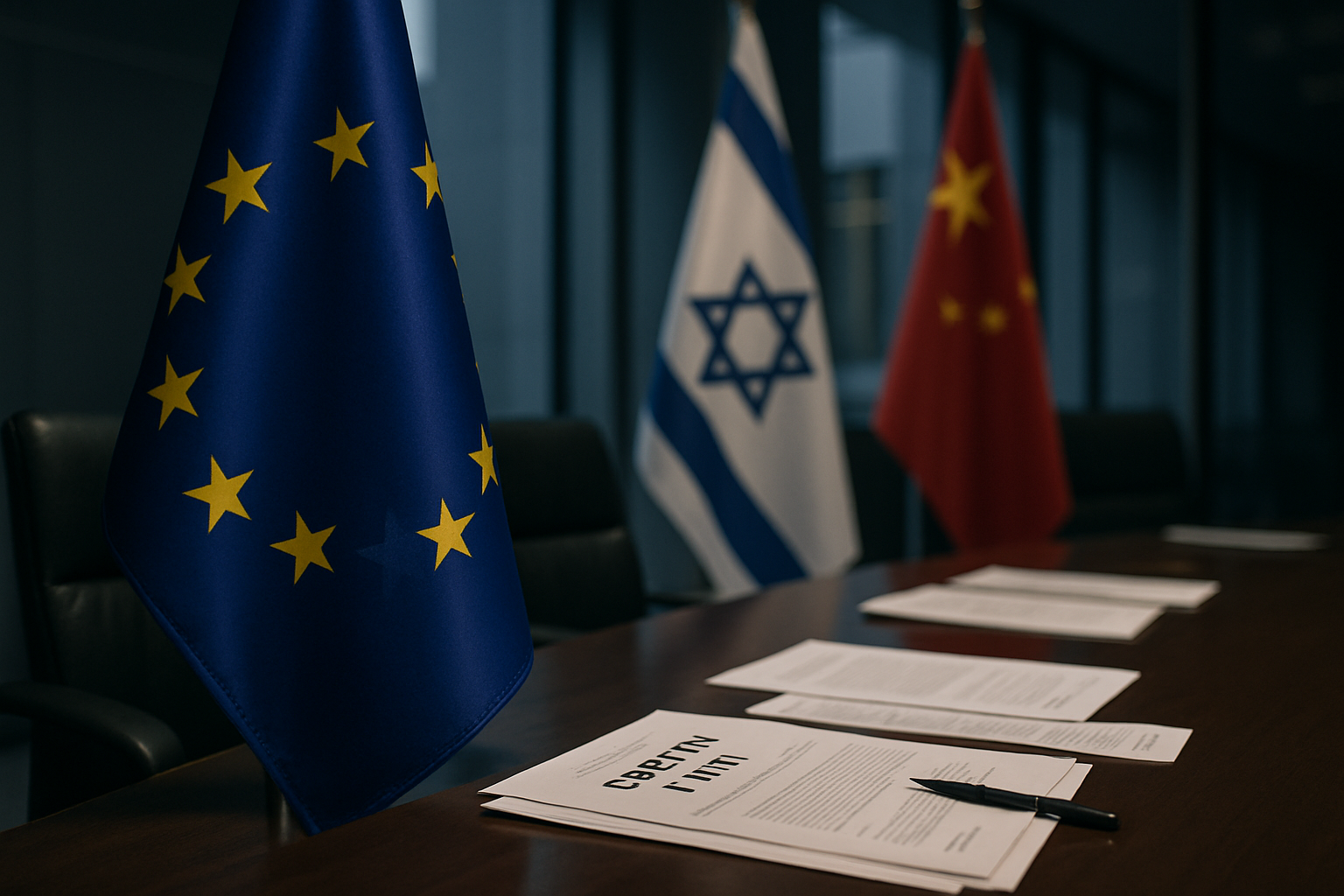
The European Union faces mounting pressure to suspend its partnership agreement with Israel as France becomes the latest major member state to condemn what it describes as "disproportionate" military strikes in Lebanon and escalating settler violations in the occupied West Bank.
French Foreign Ministry spokesman Pascal Confavre announced Thursday that given the gravity of recent Israeli actions, "the debate on suspending the EU-Israel partnership agreement cannot be excluded, in addition to national sanctions" that France may impose. This marks a significant escalation in European diplomatic pressure on Israel amid growing international concern over the conduct of military operations in Lebanon.
The French position represents a dramatic shift in European Union relations with Israel, coming at a time when the bloc is already grappling with complex internal policy challenges and strategic priorities. The timing is particularly significant as it coincides with a broader reassessment of EU foreign policy approaches in an increasingly multipolar world.
China Debate Sidelined by Middle East Crisis
In a clear indication of how Middle Eastern developments are reshaping European priorities, the European Commission has postponed its long-awaited strategic debate on China to focus on the escalating regional crisis. The Commission's security college was scheduled to hold what officials internally referred to as "China week" next Monday - the first strategic discussion among the bloc's 27 commissioners under the current leadership on Beijing's mounting economic pressure on Europe.
This postponement highlights Europe's struggle to treat China as a strategic priority despite increasing economic challenges and competition. The decision to shelve the China debate in favor of Middle East crisis management demonstrates how regional conflicts continue to dominate European diplomatic bandwidth, potentially at the expense of long-term strategic planning.
Historical Context of EU-Israel Relations
The current diplomatic tensions build on months of deteriorating relations between European nations and Israel. Recent memory includes Spain's permanent withdrawal of its ambassador in March 2026, marking the deepest crisis in Spanish-Israeli relations in decades, and widespread condemnation from 85 UN member states regarding Israeli West Bank expansion plans.
"The EU has consistently maintained that Israel has the right to defend itself, but its actions are not proportionate."
— Pascal Confavre, French Foreign Ministry Spokesman
The European approach reflects broader frustration within EU institutions. Over 400 EU diplomats have demanded increased pressure on Israel, while a European Left Coalition petition has garnered more than 400,000 signatures against EU-Israel partnerships. These developments suggest growing grassroots pressure within European political circles for a more assertive stance.
Complex Diplomatic Balancing Act
France's position illustrates the complex diplomatic calculations facing EU member states as they attempt to balance support for security concerns with adherence to international law principles. The French statement carefully noted that while Israel maintains "the right to defend itself," current military actions fail to meet proportionality standards under international humanitarian law.
The potential suspension of the EU-Israel partnership agreement would represent an unprecedented diplomatic escalation. Such a move would affect multiple areas of cooperation, including trade relationships, security coordination, scientific collaboration, and cultural exchanges that have developed over decades of partnership.
Legal and Political Implications
Any decision to suspend the partnership agreement would require consensus among EU member states, a challenging threshold given varying national positions on Israel-Palestine issues. The legal framework for suspension exists under EU association agreements, which include human rights and democratic principles clauses that can trigger review procedures.
The timing of these discussions coincides with broader European strategic autonomy debates, particularly in light of changing transatlantic relationships and the need for independent European foreign policy capabilities. The handling of this crisis will serve as a test case for Europe's ability to conduct principled foreign policy independently of external pressures.
Regional Implications and Broader Context
The European diplomatic crisis with Israel unfolds against the backdrop of the most dangerous international tensions since the Cold War. The postponement of the China strategy discussions reflects how immediate crises continue to overwhelm longer-term strategic planning, potentially undermining Europe's ability to address systemic challenges with major powers.
This pattern of crisis-driven policymaking highlights structural challenges within EU foreign policy coordination. While the bloc has developed sophisticated mechanisms for crisis response, as demonstrated by the activation of Cyprus's ESTIA evacuation plan during recent regional tensions, it continues to struggle with proactive strategic planning for complex, long-term challenges.
The current situation also reflects broader shifts in international relations, where traditional alliance structures face pressure from evolving geopolitical realities. European nations increasingly find themselves navigating between maintaining historical partnerships while upholding international law and democratic values.
Economic and Strategic Considerations
Beyond diplomatic considerations, the potential suspension of the EU-Israel partnership agreement carries significant economic implications. Israel represents an important technology and innovation partner for European industries, particularly in cybersecurity, defense technology, and agricultural innovation sectors.
The timing of these discussions is particularly challenging given Europe's current economic pressures, including energy security concerns, supply chain vulnerabilities, and the need for technological innovation partnerships. Any disruption to EU-Israel cooperation could affect European competitiveness in critical technology sectors where Israeli expertise has been valuable.
Looking Forward: Policy Implications
The resolution of this diplomatic crisis will have far-reaching implications for European foreign policy approaches. Success in developing a principled response that balances security concerns with international law compliance could strengthen EU credibility as a global diplomatic actor. Conversely, failure to achieve consensus or meaningful policy changes could undermine European influence in regional conflicts.
The postponement of China strategy discussions also raises questions about European strategic priorities and planning capabilities. As global competition intensifies, Europe's ability to maintain focus on long-term strategic challenges while managing immediate crises will be crucial for maintaining relevance in an increasingly multipolar world.
The coming weeks will be decisive in determining whether European nations can develop a unified response that preserves both partnership opportunities and adherence to international legal principles. The outcome will serve as a template for how democratic partnerships navigate complex security dilemmas in the 21st century.