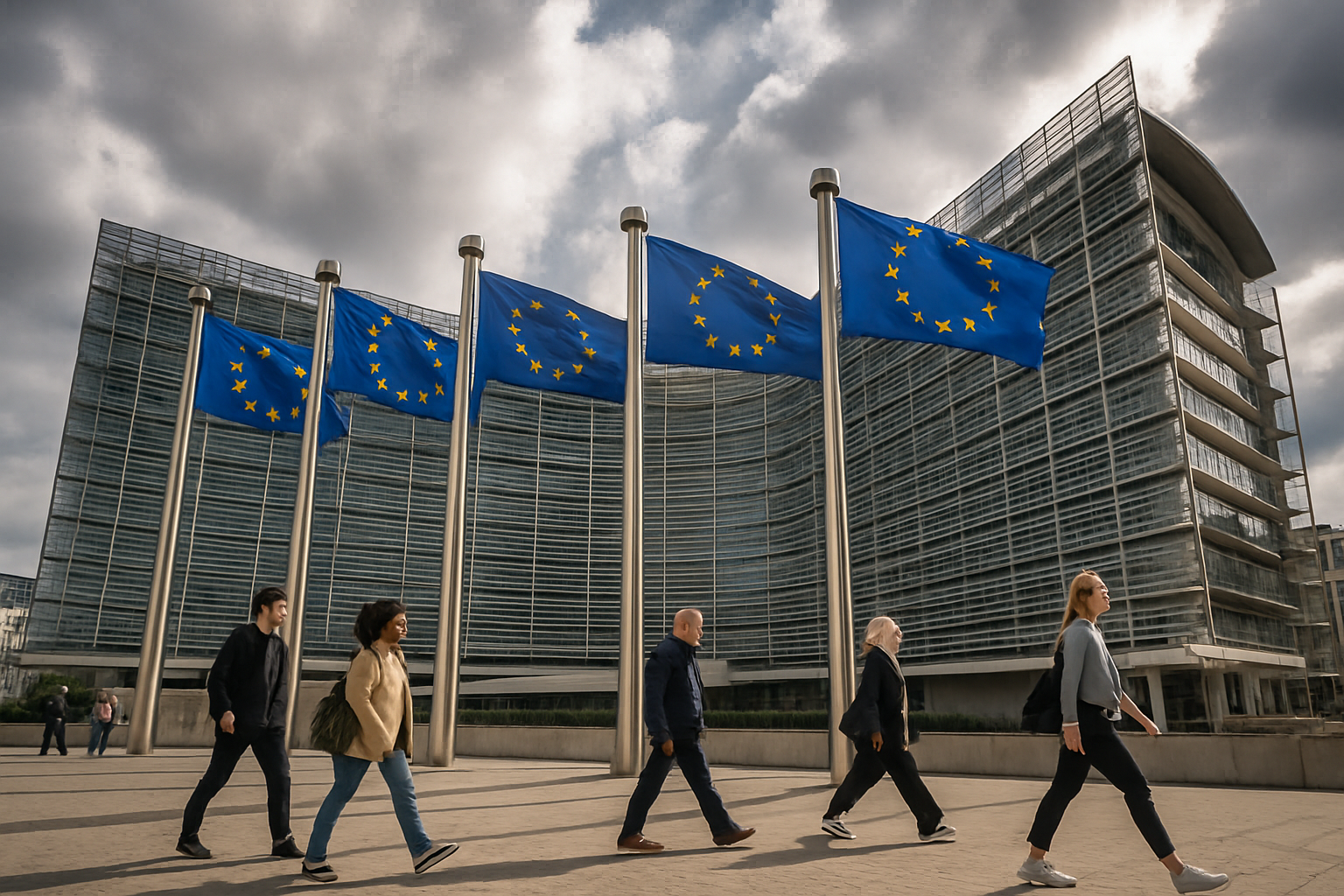
The European Commission announced a comprehensive strategy on February 18 to strengthen support for EU eastern regions bordering Russia, Belarus, and Ukraine, coinciding with a parliamentary delegation's assessment of Western Balkans integration progress amid ongoing regional tensions and enlargement challenges.
The European Commission's new EastInvest initiative represents a significant policy shift toward supporting frontier regions that have borne the brunt of regional instability and economic disruption. According to sources from The Baltic Times and Romanian media, the strategy encompasses five priority areas combining cohesion policy with other EU regulatory instruments to enhance security, economic stability, and infrastructure development.
Eastern Regions Strategic Support Framework
The Commission's approach addresses the unique challenges faced by regions with terrestrial borders to Russia, Belarus, and Ukraine, which have experienced heightened security concerns and economic pressures since 2022. The comprehensive strategy includes measures to improve financing mechanisms, enhance security infrastructure, and stabilize labor markets in these strategically vital areas.
Slovakia's TREND.sk reports that the EastInvest tool aims to improve financing access, security conditions, and employment stability across affected regions. This represents a recognition that these border areas require specialized support beyond standard cohesion policies to address their unique geopolitical position.
The timing proves particularly significant as these regions face multiple pressures: refugee flows from Ukraine, economic disruption from sanctions on Russia and Belarus, and heightened security requirements that strain local resources. The strategy acknowledges that standard EU regional development tools may be insufficient for areas dealing with such extraordinary circumstances.
Western Balkans Integration Assessment
Simultaneously, a delegation of Members of the European Parliament is conducting visits to Western Balkans states to evaluate EU accession progress, according to Albanian media reports. The delegation's work comes at a crucial moment when regional democratic institutions face various pressures and international attention focuses on enlargement processes.
European Council President Antonio Costa's statement that Western Balkans countries "belong to" the European Union reflects continued high-level political commitment to enlargement, despite ongoing challenges. However, MEPs are expressing "serious concerns" about certain practices, including the continued use of pre-trial detention measures that raise rule-of-law questions.
The assessment occurs against a backdrop of mixed progress across the region. While some countries have achieved significant milestones in their European integration paths, others continue to struggle with democratic governance challenges that affect their accession prospects.
"The Western Balkans belong to the European Union, but this membership must be based on genuine progress in democratic institutions and rule of law."
— European Council President Antonio Costa
Regional Security and Economic Integration
The dual focus on eastern border support and Western Balkans integration reflects broader EU strategic priorities amid an increasingly complex security environment. The EastInvest initiative acknowledges that EU border regions require enhanced support to maintain economic viability while contributing to overall European security.
For Western Balkans countries, the parliamentary assessment provides an opportunity to demonstrate concrete progress toward European standards. However, it also highlights persistent challenges in areas such as judicial independence, media freedom, and political stability that remain prerequisites for EU membership.
The Commission's eastern regions strategy includes provisions for infrastructure development, cross-border cooperation enhancement, and economic resilience building. These measures aim to ensure that proximity to non-EU neighbors does not become an economic disadvantage for European regions.
Challenges and Implementation
Both initiatives face significant implementation challenges. The eastern regions support strategy must balance immediate security needs with long-term economic development goals, while ensuring that enhanced security measures do not undermine the cross-border relationships that have historically benefited these areas.
For the Western Balkans, the challenge lies in maintaining reform momentum amid domestic political pressures and external influences that sometimes conflict with European integration objectives. The MEP delegation's assessment will likely influence future funding decisions and accession timelines.
The success of these parallel initiatives could significantly impact European integration patterns. Strong support for eastern border regions could serve as a model for how the EU addresses challenges faced by frontier territories, while genuine progress in Western Balkans integration could demonstrate the continued viability of the enlargement process.
Broader European Integration Context
These developments occur within a broader context of European integration challenges and opportunities. Recent memory shows that EU policy has evolved to address both internal cohesion needs and external enlargement objectives, with mixed results depending on specific circumstances and political commitment levels.
The Commission's approach reflects lessons learned from previous enlargement rounds and regional development experiences. By addressing eastern border regions' specific needs while maintaining enlargement momentum, the EU seeks to demonstrate that European integration can adapt to contemporary security and economic realities.
Political observers note that success in both areas could strengthen European unity at a time when external pressures test the bloc's cohesion. Conversely, failure to deliver meaningful results could undermine confidence in EU institutions and policies among affected populations.
The coming months will reveal whether these initiatives can achieve their ambitious objectives. For eastern border regions, the question is whether enhanced support can maintain economic viability and social stability while contributing to European security. For Western Balkans countries, the test is whether ongoing reforms can accelerate enough to maintain accession momentum despite persistent challenges.
As European integration faces multiple pressures, these parallel initiatives represent both an opportunity to demonstrate EU adaptability and a test of the bloc's capacity to address complex regional challenges through coordinated policy responses.