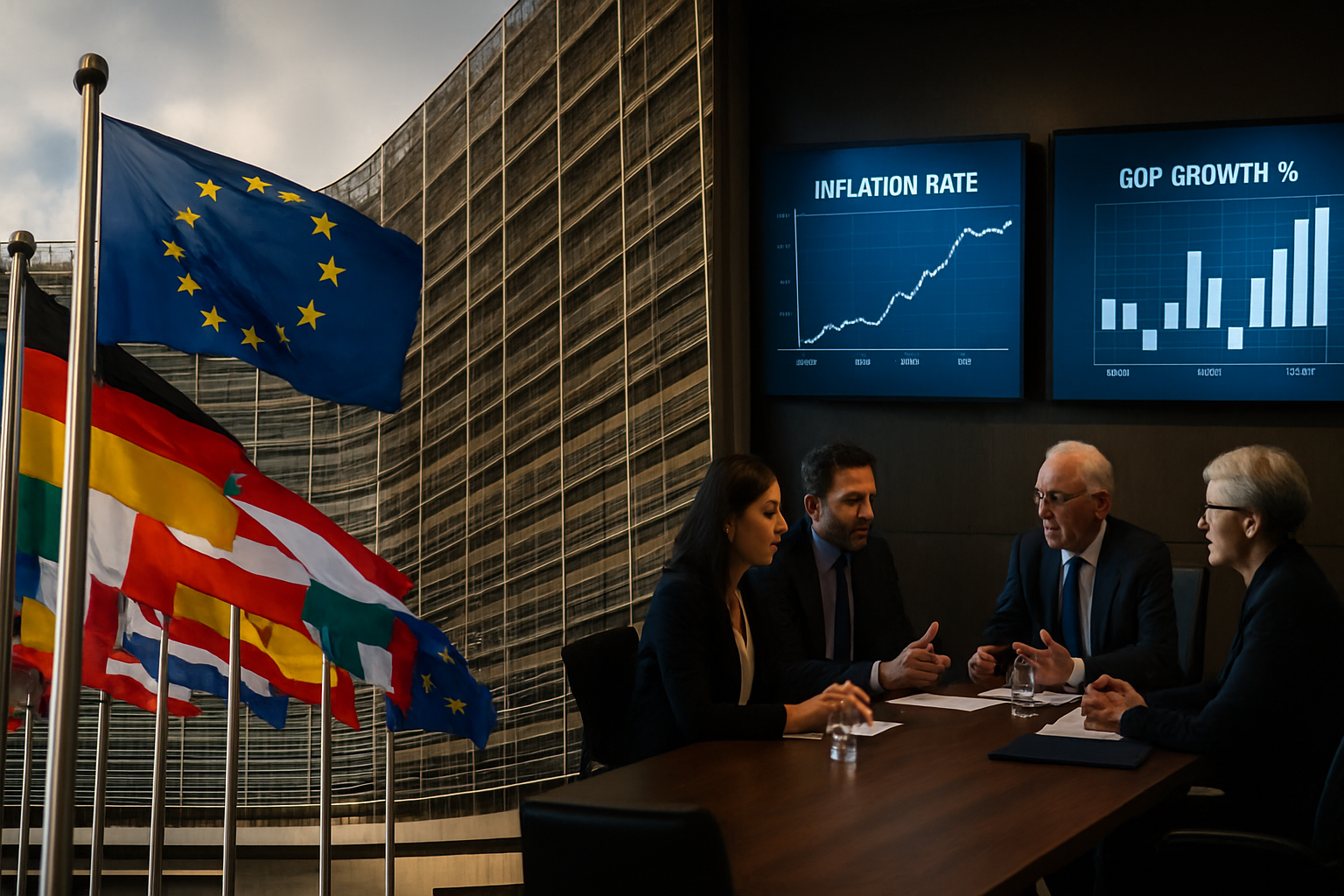
European Union member states are implementing a complex array of economic and policy measures as the bloc grapples with persistent inflation pressures, energy market volatility, and uneven economic growth across the continent, according to new data from Estonia, Finland, and the Netherlands.
The latest economic indicators paint a mixed picture of the EU's financial health, with member states pursuing divergent approaches to address mounting challenges while maintaining coordination through Brussels-led initiatives.
Inflation Dynamics Across the Baltic and Nordic Region
Estonia reported consumer price inflation of 3.2 percent year-over-year in February 2026, compared to the same period in 2025, representing a monthly increase of 0.75 percent from January levels, according to preliminary data from Statistics Estonia. The figures reflect ongoing price pressures despite broader European efforts to contain inflation.
Finland's harmonized consumer price index showed annual inflation of 1.8 percent in February, as reported by Statistics Finland, indicating continued price stability within the eurozone framework. The data suggests Finland's economy is maintaining relative equilibrium compared to regional peers facing more severe inflationary pressures.
These developments occur against the backdrop of the European Central Bank's continued 2 percent deposit rate, maintained to balance growth support with price stability objectives across the diverse eurozone economies.
Economic Growth Challenges and Government Spending Patterns
Estonia's modest 0.6 percent GDP growth in 2025 has drawn critical analysis from financial experts, with LHV analyst Triinu Tapver suggesting the expansion was primarily driven by government consumption rather than private sector dynamism.
"Estonia's 0.6 percent GDP growth in 2025 was mainly due to government consumption and shows money is simply moving from one end of the state to the other."
— Triinu Tapver, LHV Analyst
This assessment highlights concerns about the sustainability of growth patterns heavily dependent on public sector spending, rather than productivity gains or private investment that typically drive long-term economic expansion.
Energy Infrastructure Strains Emerge
The Netherlands faces mounting tensions over energy policy implementation, with Dutch energy cooperatives challenging fees imposed by grid operators for project placement on waiting lists. The energy sector resistance reflects broader challenges in Europe's green transition amid infrastructure constraints and regulatory complexity.
Energy cooperatives argue that grid access fees create financial strain while offering no certainty about project advancement, highlighting the difficulties faced by renewable energy developers across the European market.
Historical Context and Regional Pressures
These latest developments build upon a challenging period for European economic coordination. Recent months have seen persistent supply chain vulnerabilities, with China maintaining control over 60 percent of critical materials production and 90 percent of refining capacity for lithium, cobalt, and rare earth elements essential to renewable energy infrastructure.
The energy transition has created particular pressures, as evidenced by Estonia's achievement of 88 percent renewable electricity while managing Europe's largest battery storage facility serving 90,000 households. Despite these successes, regional coordination faces obstacles from varying national priorities and external economic pressures.
Policy Coordination Amid Divergent Pressures
European Union institutions continue working to balance member state sovereignty with collective action requirements. Recent Eurobarometer polling shows 89 percent of Europeans demand greater EU unity, while 86 percent want a stronger global voice for the bloc, providing democratic mandate for enhanced cooperation.
The challenge lies in translating this popular support into effective policy coordination that addresses immediate economic pressures while maintaining long-term strategic objectives for European integration and competitiveness.
Energy Security and Economic Competitiveness
The intersection of energy policy and economic performance remains critical for EU member states. Natural gas prices have surged 24 percent across Europe, creating additional pressure on both household budgets and industrial competitiveness. This volatility underscores the ongoing vulnerability of European economies to energy market fluctuations.
Meanwhile, memory chip shortages have driven semiconductor prices up sixfold, affecting everything from renewable energy control systems to smart building technologies, with shortages expected to persist until new fabrication facilities come online in 2027.
Looking Ahead: Balancing Stability and Reform
The current economic landscape requires European policymakers to navigate between immediate crisis management and longer-term structural reforms. The diverse challenges facing Estonia, Finland, and the Netherlands reflect broader tensions between national economic needs and European-wide coordination requirements.
Success in addressing these challenges depends on maintaining flexible policy frameworks that can respond to varying national circumstances while preserving the benefits of European economic integration. The ability to balance price stability, energy security, and sustainable growth will determine the EU's economic trajectory in the coming months.
As European leaders continue to grapple with these complex intersecting challenges, the effectiveness of coordinated policy responses will be crucial for maintaining economic stability and public confidence in European institutions during a period of significant global economic uncertainty.