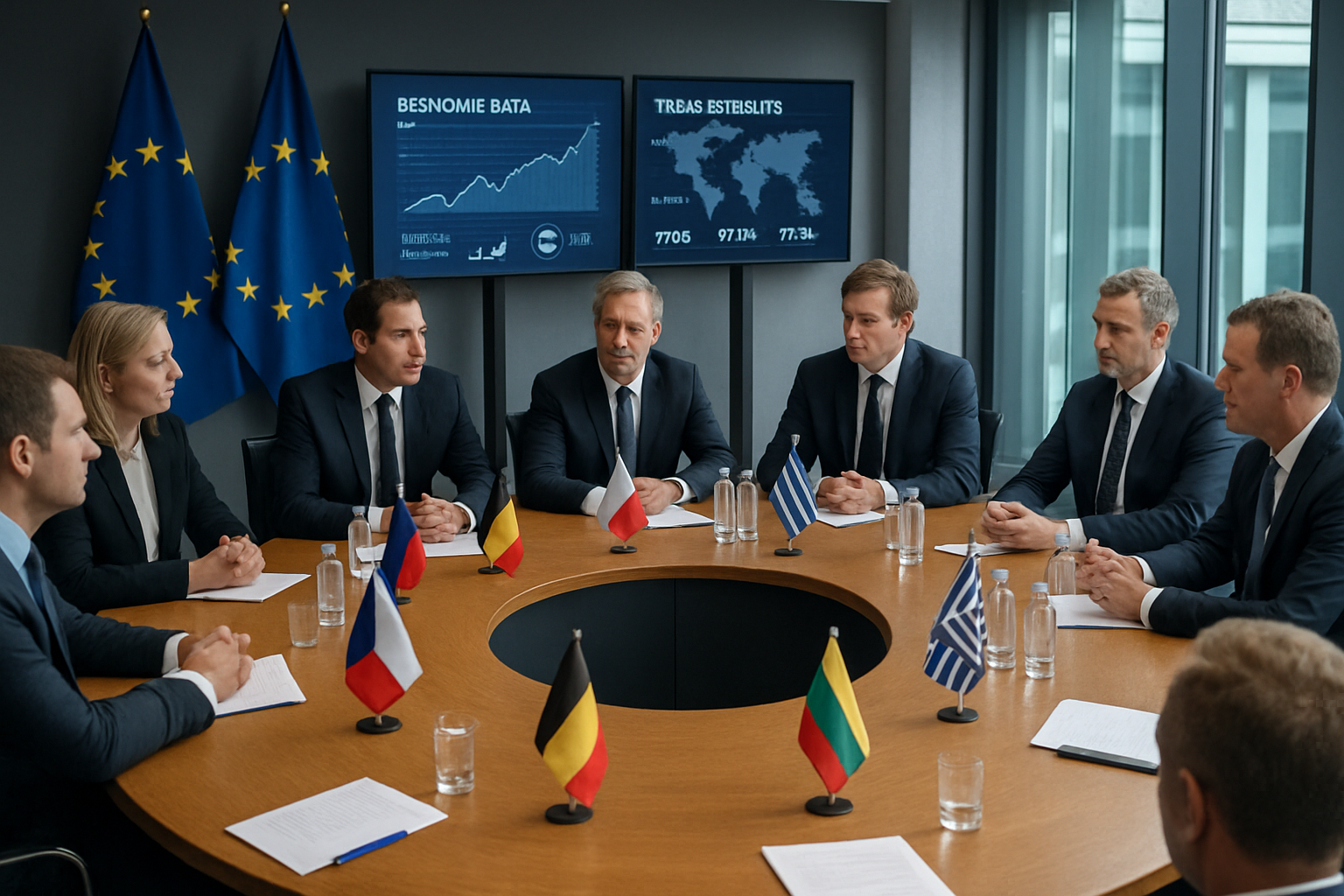
The European Union has unveiled significant economic support initiatives this week, approving fresh subsidies for France's embattled wine sector and authorizing Greece's ambitious €400 million state aid scheme for clean technology investments, marking a strategic shift toward proactive economic assistance for member states facing mounting trade and technological challenges.
The dual announcements, coming amid heightened global trade tensions and the ongoing pursuit of European strategic autonomy, represent the EU's most comprehensive sector-specific economic intervention since the post-pandemic recovery initiatives. These measures underscore Brussels' commitment to supporting traditional industries while simultaneously advancing the bloc's green transition agenda.
France Receives Lifeline for Wine Industry Crisis
The European Commission's decision to provide fresh EU subsidies for France's wine sector addresses an industry grappling with multiple simultaneous pressures. French winemakers have experienced declining demand, shifting consumer trends, and mounting pressure from US tariffs that have severely impacted export markets.
The wine industry's struggles reflect broader challenges facing European agricultural sectors, which have confronted eighteen consecutive months of temperatures exceeding 1.5°C above pre-industrial levels. Climate change has disrupted traditional growing patterns while simultaneously affecting global supply chains and consumer preferences.
European policymakers characterized the wine sector support as essential for maintaining France's agricultural heritage and economic stability. The industry employs hundreds of thousands across French regions and represents a cornerstone of the country's cultural identity and export economy.
Greece Secures Major Clean Technology Investment
In a parallel development demonstrating the EU's forward-looking economic strategy, the European Commission approved Greece's €400 million state aid scheme designed to boost strategic investments in clean technologies. The measure specifically aims to enhance production capacity for net-zero technologies, positioning Greece as a significant player in Europe's green industrial transformation.
The Greek initiative reflects the EU's broader strategic goal of achieving technological sovereignty while reducing dependence on external suppliers, particularly China, which currently controls 60% of critical materials production and 90% of refining capacity. This dependency has created what European officials describe as "kill switch vulnerabilities" for European infrastructure and manufacturing.
According to the Commission announcement, the clean technology aid scheme will support business investments across renewable energy, advanced manufacturing, and green infrastructure sectors. The program represents one of the largest single-country investments in clean technology approved by Brussels in recent years.
Strategic Context: European Economic Resilience
These economic support measures come against the backdrop of significant external pressures on European economic sovereignty. Recent memory chip crises have seen prices surge sixfold, affecting European technological competitiveness against major Asian manufacturers including Samsung, SK Hynix, and Micron.
The timing of these announcements is particularly significant given ongoing tensions with the Trump administration's bilateral trade approach. While the US has pursued country-by-country negotiations—including agreements with Argentina eliminating 1,600+ tariffs and reducing India's duties from 50% to 18%—the EU has maintained its preference for multilateral frameworks and internal market strengthening.
European leaders have increasingly emphasized the need for what they term "enhanced cooperation" mechanisms, allowing willing member states to advance policies without requiring unanimous consent from all 27 nations. This approach has proven essential for navigating complex economic challenges while preserving European unity.
Implementation and Future Outlook
The success of both initiatives will depend heavily on effective coordination between national governments and EU institutions. For France's wine sector, the subsidies must be deployed strategically to address both immediate market pressures and long-term competitiveness challenges, including adaptation to changing climate conditions and evolving consumer preferences.
Greece's clean technology investments face the challenge of rapid implementation while ensuring compliance with EU state aid regulations and achieving meaningful economic impact. The €400 million allocation represents a substantial commitment that could serve as a model for other member states pursuing similar green transition strategies.
Both programs reflect the EU's evolution from reactive crisis management to proactive economic planning. European officials have emphasized that these measures are part of a broader strategy to strengthen the bloc's economic resilience and reduce vulnerabilities to external economic shocks.
Broader European Economic Framework
The wine and clean technology support measures align with the EU's comprehensive approach to economic competitiveness established during the February 2026 Alden Biesen castle summit. That gathering focused on eliminating internal barriers, reducing administrative burdens, and promoting "Made in Europe" products amid unprecedented external pressure.
Recent Eurobarometer polling shows 89% of Europeans demanding greater EU unity, with 86% wanting a stronger global voice. This public mandate has provided political cover for ambitious economic integration initiatives across defense, energy, technology, and climate policy sectors.
The European approach contrasts sharply with the bilateral trade strategies pursued by other major economies. While maintaining openness to international cooperation, EU leaders have prioritized internal market strengthening and member state support as foundations for global competitiveness.
As these economic support programs enter their implementation phases, they will serve as critical tests of the EU's ability to balance traditional industry protection with future-oriented investments. The success or failure of these initiatives will likely influence the scope and structure of future European economic assistance programs, potentially setting precedents for how the bloc responds to sector-specific challenges in an increasingly complex global economic environment.