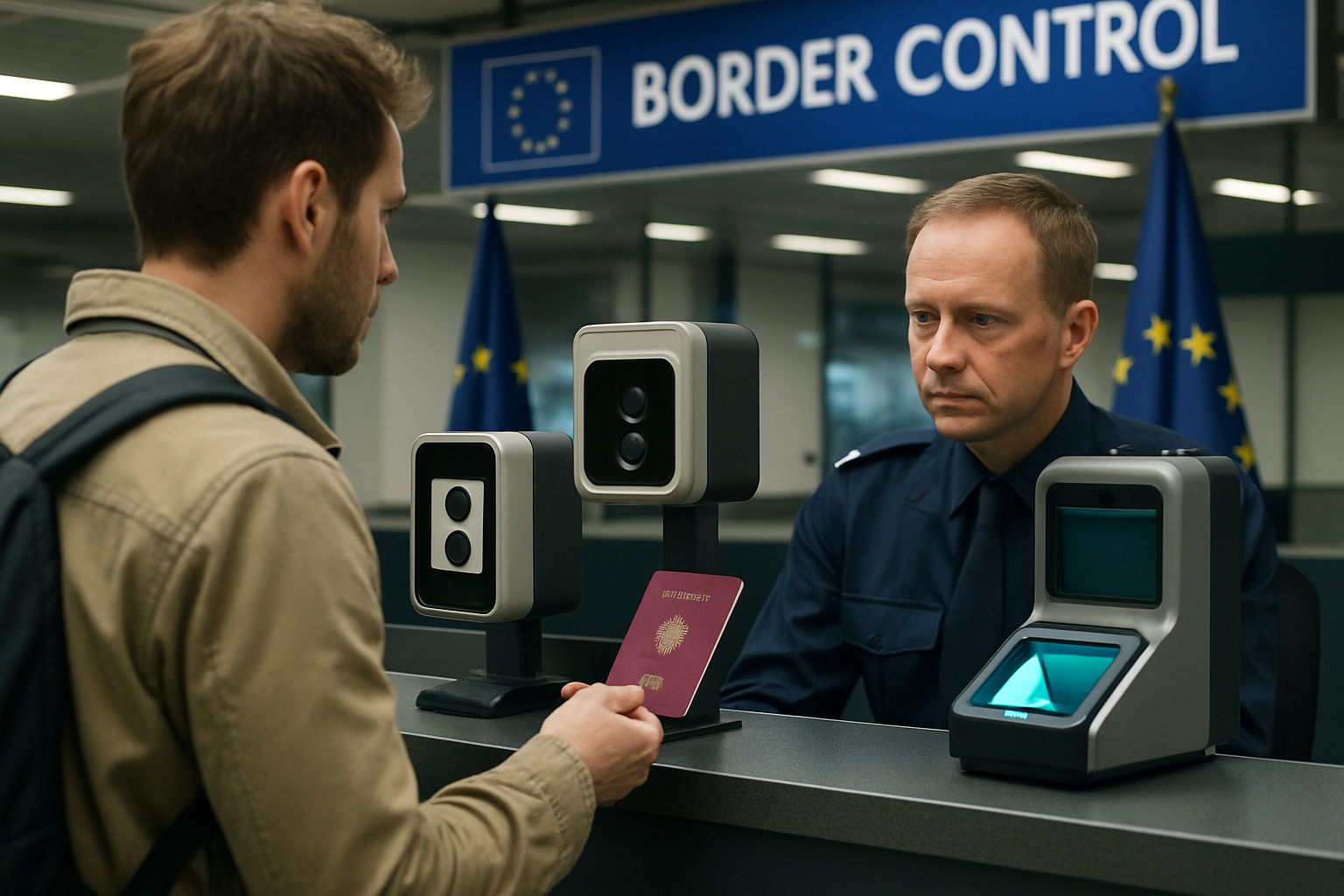
The European Union's ambitious Entry/Exit System (EES) has successfully identified 4,000 individuals who exceeded their 90-day visa limits during its first four months of operation, according to EU officials, marking a significant achievement for the bloc's most comprehensive border control modernization since the creation of the Schengen zone.
The biometric passport control system, which launched in October 2025 with a gradual rollout across Schengen area entry points, represents a fundamental transformation in how the European Union manages its external borders. The system requires non-EU citizens to provide facial photographs and fingerprints alongside accommodation and payment information when entering the 27-nation bloc.
System Performance Exceeds Expectations
EU officials confirm that the 4,000 overstayers detected represent one of the stated primary objectives of the EES implementation. The system's ability to track entry and exit patterns has provided authorities with unprecedented visibility into visa compliance across the Schengen zone, addressing a long-standing gap in European border management.
The detection capability marks a dramatic improvement over previous systems that relied heavily on manual passport stamping and inconsistent data sharing between member states. Under the old system, tracking individuals who overstayed their permitted 90-day visits within any 180-day period proved extremely challenging, particularly for those moving between different EU countries.
"The Entry/Exit System represents the largest digital transformation of European border control in decades, combining security imperatives with technological innovation."
— European Commission Official
Implementation Challenges Continue
Despite the detection successes, the EES rollout has faced significant operational hurdles. Airlines across Europe have repeatedly warned of potential chaos during the summer 2026 peak travel season, with industry sources predicting queue times extending up to four hours at major airports and ports.
The European Commission has already authorized member states to partially suspend the system during summer 2026 due to infrastructure limitations and processing delays. The suspension provisions reflect the complex balance between enhanced security objectives and maintaining the free movement of people that defines the European project.
Technical challenges have been particularly acute at older European airports struggling to accommodate the biometric processing requirements during high-volume periods. The system requires substantial infrastructure investments, including new scanning equipment, data processing capabilities, and staff training across hundreds of border crossing points.
Broader Digital Border Revolution
The EES implementation occurs within a broader context of European digital sovereignty initiatives and border management modernization. The system integrates with existing EU databases while establishing new frameworks for data sharing and analysis across member states.
Beyond overstayer detection, the system provides enhanced capabilities for tracking movement patterns, identifying security risks, and facilitating legitimate travel. The biometric data collection enables more sophisticated analysis of migration flows and border security threats while supporting the EU's broader digital transformation agenda.
The system's development represents a significant technological achievement, processing millions of border crossings while maintaining privacy protections and data security standards. The infrastructure requirements have driven substantial investments in digital capacity across the European Union.
Strategic Implications for European Security
The successful identification of 4,000 overstayers demonstrates the system's potential to address long-standing enforcement gaps in European immigration policy. The capability provides member states with concrete tools for managing visa compliance and maintaining the integrity of the Schengen zone's external borders.
The detection numbers also highlight the scale of visa violations that previously went undetected under manual systems. EU officials suggest that the 4,000 identified cases likely represent only a portion of actual overstays, indicating the magnitude of the enforcement challenge the system is designed to address.
From a broader security perspective, the EES creates a comprehensive database of non-EU citizen movements that can support various law enforcement and security applications beyond immigration control. The system's analytical capabilities enable pattern recognition and risk assessment tools that enhance overall European security infrastructure.
Economic and Tourism Considerations
The aviation industry's concerns about processing delays reflect broader tensions between security enhancement and economic competitiveness. Europe's tourism sector, still recovering from pandemic disruptions, faces potential negative impacts from extended border processing times during peak travel seasons.
Industry representatives have called for expanded suspension provisions and enhanced coordination to prevent the summer travel disruptions that could undermine Europe's tourism recovery efforts. The balance between security objectives and economic considerations remains a central challenge for EES implementation.
The system's long-term success will depend partly on its ability to streamline processing for legitimate travelers while maintaining enhanced security capabilities. Technological improvements and infrastructure investments may gradually reduce processing times as the system matures.
Future Development and Expansion
European officials indicate that full EES implementation will resume in September 2026 following the summer suspension period. The system's development roadmap includes continued technological refinements, expanded analytical capabilities, and integration with additional European security systems.
The initial detection success provides a foundation for expanding the system's applications and demonstrating its value to member states. The 4,000 overstayer identifications represent concrete evidence of the system's enforcement capabilities, supporting continued investment and development.
As the system reaches full operational capacity, its impact on European border management and immigration enforcement will become clearer. The combination of biometric technology, data integration, and analytical capabilities positions the EES as a cornerstone of 21st-century European border control.
The successful identification of thousands of visa violations in just four months demonstrates that Europe's investment in digital border technology is beginning to deliver measurable results, even as implementation challenges continue to require careful management and ongoing refinement.