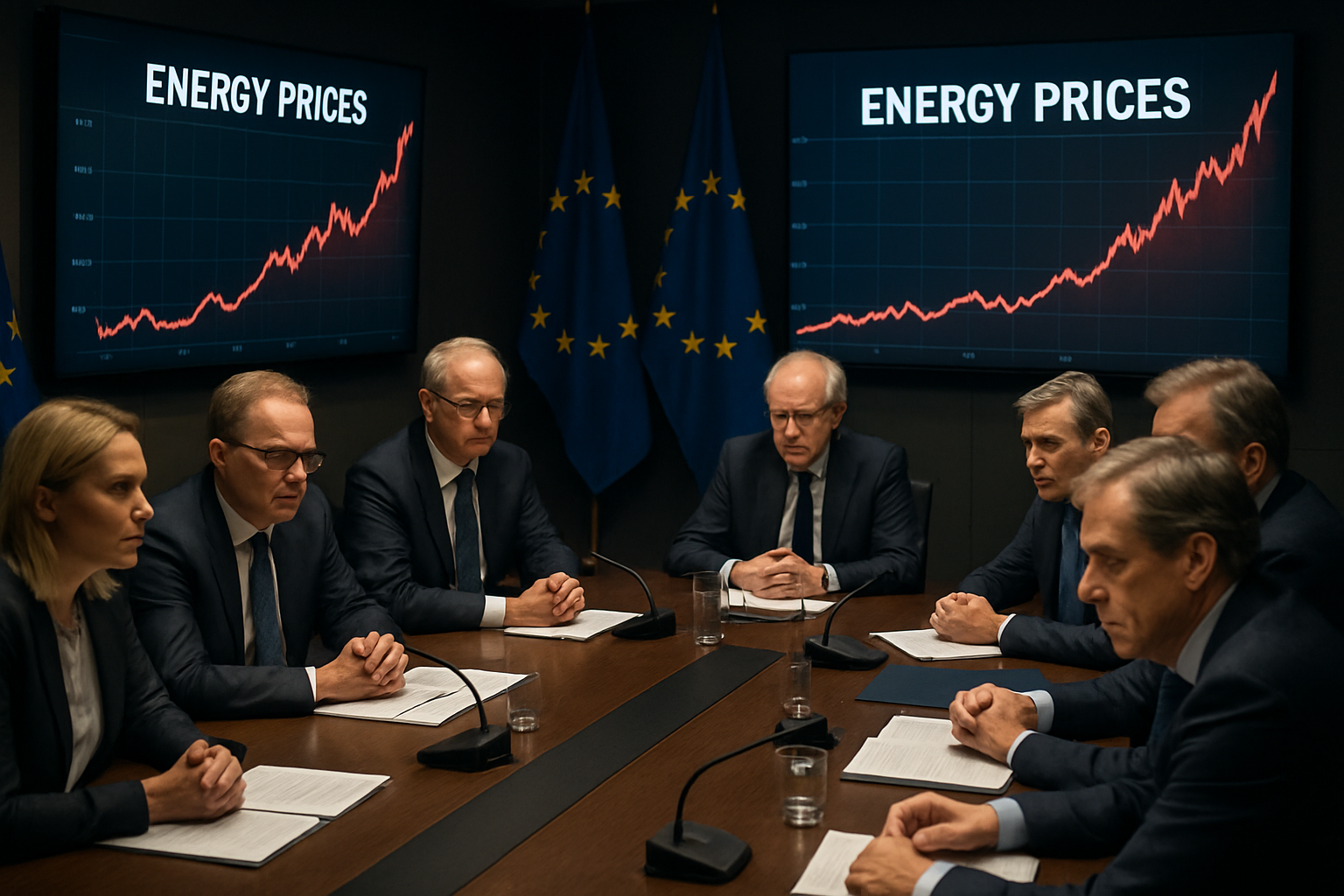
The European Union announced a coordinated package of emergency energy measures Wednesday as Middle East conflicts continue to drive unprecedented fuel shortages and soaring energy costs across the continent, with EU Energy Commissioner Dan Jørgensen warning that "even in the best case scenario, it looks bad."
The comprehensive response comes as Europe grapples with the most severe energy crisis since the 1970s oil shocks, triggered by Iran's closure of the Strait of Hormuz in March 2026 - a critical chokepoint handling 40% of global seaborne oil transit. The ongoing crisis has already cost Europeans "14 billion euros more in energy bills" in recent months, according to Commission estimates.
Coordinated European Response Measures
EU High Representative Kaja Kallas activated unprecedented crisis management protocols across all 27 member states, representing the most comprehensive energy coordination effort in the bloc's history. The package includes the establishment of a new fuel monitoring observatory to track petroleum reserves across member states and prevent critical shortages that have already affected aviation fuel supplies.
Germany has implemented significant market interventions, strengthening antitrust laws to prevent gas station price manipulation - marking the most substantial energy policy intervention in modern German history. France deployed 500 fuel station inspectors to combat "war-driven price explosions," while Romania outlined five emergency scenarios to prevent diesel prices from exceeding 10 lei per liter.
Hungary imposed immediate price caps on gasoline and diesel, while Slovakia activated strategic petroleum reserves for the first time under current protocols. These measures reflect a continent-wide abandonment of free-market principles in favor of consumer protection during the crisis.
"We will not return to normal even after peace returns to the region. This crisis has fundamentally changed our energy landscape."
— Dan Jørgensen, EU Energy Commissioner
Nuclear Energy Gets Enhanced Role
In a significant policy shift, the European Commission announced that nuclear power will play an expanded role in the bloc's energy security strategy. The decision reflects the harsh reality that renewable energy transitions, while essential for long-term independence, require years or decades for full implementation.
Estonia serves as a model for renewable independence, generating 88% of its electricity from renewable sources and operating continental Europe's largest battery storage system serving 90,000 households. However, the Estonian example also demonstrates the vulnerability that exists during the critical transition period before renewable systems reach full capacity.
Aviation Industry Faces Critical Fuel Shortages
The crisis has particularly devastated Europe's aviation sector, with multiple Italian airports - including Brindisi, Bologna, Milan Linate, Treviso, Venice, Reggio Calabria, and Pescara - experiencing severe jet fuel limitations. The International Energy Agency's Director Fatih Birol issued an unprecedented warning that Europe has "perhaps six weeks of jet fuel" remaining before widespread flight cancellations become inevitable by early June.
Jet fuel costs have surged 122% from $85-90 to $150-200 per barrel, forcing airlines to implement emergency surcharges across their networks. Over 18,000 flights have been cancelled worldwide since the crisis began - the most extensive disruption since the COVID-19 pandemic.
Consumer Impact Severe Across Member States
The energy crisis has created severe hardship for European consumers, with price increases varying dramatically based on each country's energy integration levels. Sweden faces electricity increases of 10-20 öre and gasoline increases of 1-2 kronor per liter, with the Malmö region most exposed due to its continental integration.
Ireland is experiencing what officials term "brazen rip-offs" with heating oil approaching €2 per liter, while Austria has seen fuel costs increase by 20%. Bosnia-Herzegovina has been reduced to just two days of gas reserves, illustrating the crisis's potential for rapid escalation into humanitarian emergencies.
Historic Emergency Response Measures
The International Energy Agency deployed the largest strategic petroleum reserve release in its 50-year history, releasing 400 million barrels from 32 countries - double the response to the 2022 Ukraine crisis. Japan contributed 80 million barrels in its first such deployment since the 2011 Fukushima disaster, despite the country's 95% dependence on Middle Eastern oil supplies.
The scale of international cooperation has been unprecedented, with traditional monetary policy tools proving limited effectiveness against structural geopolitical disruptions. The European Central Bank and Bank of Japan have coordinated emergency liquidity measures to prevent broader financial contagion.
"This crisis has exposed the dangerous over-dependence on strategic chokepoints that has characterized our energy architecture. We need fundamental restructuring to reduce vulnerability to volatile geopolitical regions."
— Samuel Ciszuk, Energy Security Expert
Long-term Transformation Required
The crisis has accelerated discussions about fundamental energy architecture transformation across Europe. The 21-mile Strait of Hormuz represents a single-point failure for modern logistics, affecting not just energy supplies but consumer goods and industrial materials worldwide.
Over 150 oil and LNG tankers remain stranded in the Persian Gulf with billions in cargo value, while major shipping companies Maersk and MSC have suspended operations entirely. The disruption affects manufacturing in automotive, electronics, and textiles sectors that depend on Gulf-based supply networks.
European leaders are accelerating energy independence infrastructure investments, expanding renewable capacity, enhancing member state interconnections, and developing storage facilities. However, these transformations require sustained political commitment and substantial resources over many years.
Recovery Timeline Uncertain
Unlike weather-related disruptions that follow predictable patterns, recovery from this crisis depends entirely on military and diplomatic developments in the Middle East. The aviation industry cannot maintain long-term scheduling with volatile security conditions, while energy markets remain unstable with critical transit routes blocked.
UN Secretary-General António Guterres has described the situation as the "greatest test of multilateral cooperation in the modern era," emphasizing the template-setting nature of the crisis for 21st-century energy governance approaches.
The success or failure of European coordination in managing this crisis will influence energy governance frameworks for decades to come, as the continent seeks to balance national sovereignty with collective security needs in an increasingly volatile global environment.