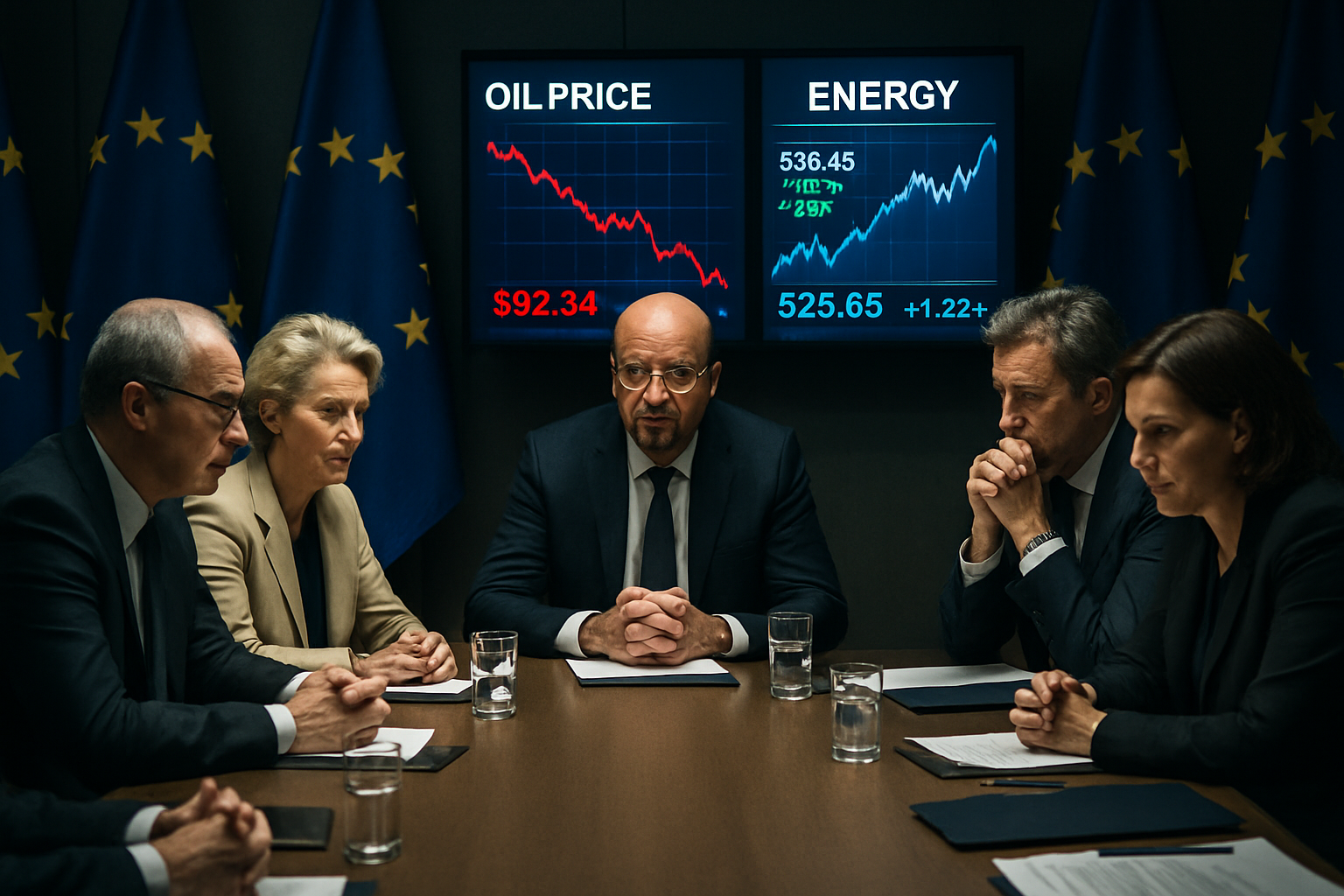
European governments are implementing sweeping emergency measures to combat soaring energy costs, with Italy reporting dramatic fuel price drops following tax cuts while Spain announces a historic reduction in fuel VAT from 21% to 10%.
The emergency response comes as Europe faces its most severe energy crisis since the 1970s oil shocks, with oil prices surging past $100 per barrel and the Iran-triggered closure of the Strait of Hormuz affecting 40% of global oil transit. The crisis has forced EU leaders to abandon fiscal conservatism in favor of unprecedented consumer relief measures.
Italy's Immediate Tax Relief Shows Results
Italy's fuel tax reduction has already delivered measurable results at the pump. According to the Italian Ministry of Business and Made in Italy's Price Observatory, diesel prices dropped from €2.190 per liter to €2.048, while gasoline fell from €1.967 to €1.812. LPG and methane prices, both in full-service mode, decreased from €0.837 and €1.545 to €0.804 and €1.548 respectively.
The tax cuts have temporarily moved Italy from being Europe's highest-taxed fuel market to 13th place, though this relief is scheduled to expire on April 7. The temporary nature of these measures reflects the emergency character of Europe's response to the ongoing Middle East crisis.
Spain's Historic VAT Reduction
Spain's government approved extraordinary measures in a Friday emergency Cabinet meeting, responding to the dramatic impact of Middle East conflicts on energy prices. The centerpiece of Spain's response is reducing VAT on fuels from 21% to 10%, alongside cuts to the special tax on hydrocarbons and suspension of the tax on electricity production value.
These measures directly address fuel price increases of 29% for diesel and 16% for gasoline since the onset of the Middle East crisis. The Spanish government's comprehensive approach includes both direct tax relief and structural changes to energy taxation, representing one of Europe's most aggressive fiscal responses to the crisis.
European-Wide Crisis Management
The coordinated European response extends far beyond individual national measures. Switzerland's economic observers note that high gas and oil prices are increasingly burdening the economy, with some EU countries questioning climate neutrality commitments despite renewable energy's potential to reduce Middle Eastern dependence.
The crisis has exposed fundamental vulnerabilities in European energy architecture. Sweden faces electricity increases of 10-20 öre and gasoline increases of 1-2 kronor per liter, with the Malmö region being most exposed due to continental European market integration. This demonstrates how energy market integration, while beneficial in normal times, can rapidly transmit price shocks across borders.
Historical Context and Escalating Severity
Drawing from extensive crisis documentation, this energy emergency represents the culmination of events that began in early March 2026 with Iran's Revolutionary Guard closure of the Strait of Hormuz. The 21-mile waterway handles 40% of global seaborne oil transit, creating what experts describe as a "single-point failure" in modern logistics.
Previous European responses included France deploying 500 fuel station inspectors to prevent price manipulation, Hungary implementing immediate gasoline and diesel price caps against "war-driven price explosions," and Romania developing five scenarios to prevent diesel exceeding 10 lei per liter. Slovakia activated strategic petroleum reserves for the first time under current protocols.
Consumer Impact Across the Continent
The crisis affects every level of European society. Malta's government acknowledges that fuel prices would be 45% higher without subsidies, while Bosnia-Herzegovina faces critically low gas reserves lasting only two days. Ireland confronts what officials call "brazen rip-offs" with heating oil approaching €2 per liter.
The aviation industry faces parallel crisis conditions, with over 18,000 flights cancelled worldwide—the most extensive disruption since COVID-19. European carriers including Air France-KLM have suspended operations to affected regions, while jet fuel costs have jumped from $85-90 to $150-200 per barrel, forcing airlines to implement emergency fare increases.
Economic and Financial Market Implications
Financial markets reflect the severity of the crisis, with the Pakistan Stock Exchange experiencing its largest single-day decline in history (-8.97%) and South Korea's KOSPI falling 12% with circuit breakers activated. The European Central Bank and Bank of Japan coordinate emergency liquidity measures as traditional monetary policy tools prove limited against structural geopolitical disruptions.
The International Energy Agency has released 400 million barrels from strategic petroleum reserves—the largest intervention in the agency's 50-year history, more than double the 2022 Ukraine crisis response. Japan is releasing 80 million barrels, marking its first strategic reserve deployment since the 2011 Fukushima disaster.
Long-term Energy Architecture Implications
The crisis exposes dangerous over-dependence on strategic chokepoints and highlights the need for fundamental energy architecture restructuring. While renewable energy transitions offer long-term solutions, they require years or decades for full implementation, leaving Europe vulnerable during this critical transition period.
Estonia's energy independence model—with 88% renewable electricity and continental Europe's largest battery storage system serving 90,000 households—represents a potential pathway forward. However, most European nations remain far from such energy autonomy, requiring coordinated emergency responses to manage immediate crisis impacts.
"This crisis serves as a template-setting moment for 21st-century energy security planning, requiring fundamental transformation to reduce dependence on strategic chokepoints."
— Energy Security Expert Samuel Ciszuk
Diplomatic Context and Future Implications
The current crisis emerged from the complete breakdown of US-Iran nuclear negotiations, despite what negotiators described as "broad agreement on guiding principles"—the most significant diplomatic progress since the 2018 JCPOA collapse. The failure of diplomatic solutions and subsequent military escalation demonstrates the fragility of modern crisis management in an increasingly multipolar world.
European unity faces significant tests as member states balance national energy security needs with collective EU responses. The crisis has accelerated discussions about European strategic autonomy and the need for enhanced energy infrastructure interconnections, storage facilities, and alternative supplier relationships.
Recovery Timeline and Uncertainty
Unlike weather-related disruptions, recovery timelines depend on military and diplomatic resolution rather than predictable technical factors. Aviation industries cannot schedule long-term operations with multiple airspaces closed, while energy markets remain volatile with critical transit routes blocked.
The United Nations Secretary-General António Guterres has described this as "the greatest test of multilateral cooperation and crisis management in the modern era." Success in containing the crisis could provide frameworks for future nuclear crisis resolution, while failure might accelerate military solutions and reshape Middle Eastern geopolitics for decades.
European governments face the challenge of maintaining emergency support measures while managing fiscal constraints and preparing for potential long-term energy market restructuring. The template set by current responses will influence European energy governance approaches for decades, balancing immediate consumer relief with sustainable energy independence strategies.