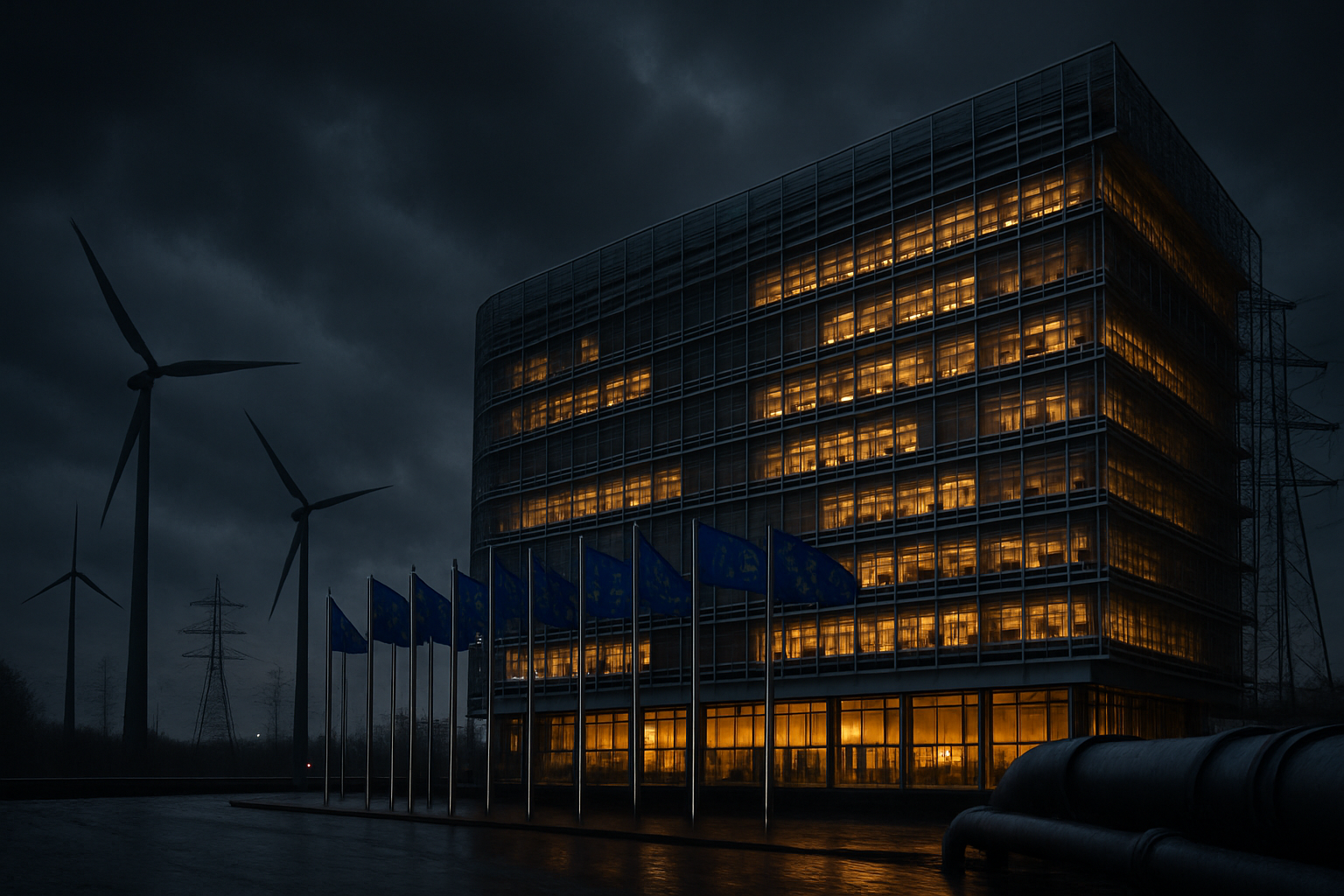
The European Union is rapidly developing emergency options to reduce energy prices as the devastating Middle East conflict enters its sixth day, with oil surging past $80 per barrel and natural gas prices exploding by 24% across Europe, creating the most severe energy crisis since the peak of the Ukraine war.
According to Bloomberg reports carried by Romanian media outlets G4Media and Digi24, EU officials are working around the clock to identify short-term relief measures before the bloc's planned green transition can naturally reduce energy costs in the coming years. The crisis has forced energy policy to the top of the EU's political agenda with unprecedented urgency.
Historic Energy Price Surge Drives Crisis
The current energy crisis stems directly from Iran's closure of the Strait of Hormuz, through which 40% of global seaborne oil transit normally flows, following the outbreak of conflict between the US-Israel coalition and Iran in what has been dubbed "Operation Epic Fury." European natural gas prices have rocketed to €47.32/MWh, the highest levels since February 2025, while oil prices have surged 10% in recent days.
Industrial sectors across Europe are bearing the brunt of the crisis. Heavy industry representatives have directly blamed the energy price increases for factory closures, with manufacturing operations becoming economically unviable at current energy costs. The situation has created a perfect storm of supply chain disruptions, with Qatar halting LNG production at its Ras Laffan and Mesaid facilities, which normally account for approximately 20% of global LNG exports.
"The current energy price levels are forcing us to make impossible choices between keeping factories running and maintaining competitiveness in global markets."
— European Heavy Industry Representative, speaking anonymously
State Aid and Price Compensation Measures Under Review
EU governments are examining several immediate intervention options, including expanded state aid programs and direct energy price compensation mechanisms. The measures under consideration represent a significant departure from the bloc's usual market-oriented approach, reflecting the extraordinary nature of the current crisis.
Member states are particularly focused on protecting energy-intensive industries that form the backbone of European manufacturing. The automotive, steel, and chemical sectors have been identified as priority areas for potential state support, as these industries face immediate threats to their viability under current energy pricing conditions.
The discussion around price compensation mechanisms centers on temporary subsidies that would bridge the gap between current market prices and sustainable levels for industrial consumers. However, EU officials are carefully balancing these measures against longer-term goals of energy transition and market efficiency.
Green Transition Timeline Under Pressure
The crisis has intensified debates about the pace and implementation of the EU's green energy transition. While renewable energy sources were always intended to provide price stability and energy security in the medium to long term, the current emergency has highlighted the vulnerability of Europe's energy system during the transition period.
Wind and solar power generation continues to expand across Europe, but the infrastructure and storage capabilities needed to fully replace fossil fuel dependence remain years away from completion. This timing gap has left European consumers and businesses exposed to exactly the type of geopolitical energy shocks currently unfolding.
EU energy officials are now examining whether emergency measures can be implemented to accelerate certain aspects of the green transition while simultaneously providing immediate relief. This includes fast-tracking renewable energy projects and expanding energy storage capabilities where possible.
Regional Impact Varies Across Member States
The energy crisis is affecting EU member states differently based on their energy mix and import dependencies. Southern European countries with higher reliance on Middle Eastern energy imports are experiencing more severe impacts, while nations with greater renewable energy capacity or domestic production are somewhat better positioned.
Sweden, which has a more diversified energy profile, is still predicting electricity price increases of 10-20 öre and gasoline price rises of 1-2 kronor. The Malmö region, designated as zone 4 in European energy markets due to its continental integration, faces particular exposure to these price fluctuations.
Meanwhile, countries like Germany, which had already been working to reduce dependence on volatile energy imports following the Ukraine war, are finding their energy security strategies tested once again by this new geopolitical crisis.
Financial Market Reactions and Economic Implications
European financial markets have responded with alarm to the energy crisis. Stock markets across the continent have experienced significant volatility, with energy-intensive industries seeing particularly sharp declines in their share prices. The crisis has also prompted central banks to consider emergency liquidity measures to prevent broader financial contagion.
The European Central Bank (ECB) is closely monitoring the situation, as sustained high energy prices could trigger inflationary pressures just as the eurozone was beginning to see price stability return. The potential for energy costs to feed through into broader price increases across the economy remains a key concern for monetary policymakers.
Small and medium enterprises, which form the backbone of many European economies, are particularly vulnerable to sustained high energy costs. Unlike large corporations, these businesses often lack the financial resources to weather extended periods of elevated energy prices, raising concerns about broader economic stability.
Global Supply Chain Disruptions Compound Crisis
The Middle East conflict has created supply chain disruptions extending far beyond energy markets. Major shipping companies, including Maersk and MSC, have suspended operations in the Persian Gulf, leaving more than 150 oil and LNG tankers stranded with billions of dollars worth of cargo.
These disruptions are affecting European industries dependent on materials and components from the Middle East and broader Asian markets. The automotive sector, already sensitive to supply chain interruptions, faces potential production delays and increased costs for critical components.
Aviation disruptions have been equally severe, with over 18,000 flights cancelled worldwide as eight Middle Eastern countries simultaneously closed their airspace. Dubai International Airport, the world's busiest with over 86 million passengers annually, remains completely shut down due to missile damage, severing critical connections between Europe and Asia.
Emergency EU Response Coordination
High Representative Kaja Kallas has been coordinating emergency EU foreign policy responses while simultaneously addressing the energy crisis implications. The bloc has activated various crisis management protocols, including the ESTIA evacuation plan in Cyprus – the first time this emergency framework has been implemented.
European officials are working closely with international partners to explore alternative energy supply routes and sources. This includes examining increased imports from Norway, Algeria, and other non-Middle Eastern suppliers, though the volumes available may not fully compensate for the current shortfall.
The crisis has also prompted renewed discussions about strategic energy reserves and the need for more robust buffer stocks to weather future geopolitical disruptions. EU energy security strategies developed following the Ukraine conflict are being reviewed and potentially expanded in light of current events.
Long-term Implications for EU Energy Policy
Beyond immediate crisis management, the current situation is likely to accelerate fundamental changes in EU energy policy. The vulnerability exposed by dependence on Middle Eastern energy sources is prompting calls for more rapid diversification and expanded renewable capacity.
Investment in energy independence infrastructure, including more extensive interconnections between member states and expanded storage facilities, is likely to receive increased political and financial support. The crisis has demonstrated that energy security and economic stability remain critically linked to geopolitical stability in key supply regions.
The experience may also influence EU external relations, as the bloc examines how to better insulate itself from the type of sudden supply disruptions currently being experienced. This could include strengthening relationships with alternative suppliers and developing more robust crisis response mechanisms.
Template for Future Crisis Management
The current energy crisis is being viewed by EU officials as a potential template for crisis management in an increasingly multipolar and volatile world. The speed and coordination of the response will likely influence how the bloc prepares for and responds to future geopolitical disruptions.
Success in managing this crisis through effective short-term measures while maintaining long-term strategic goals could provide a framework for handling similar challenges in the future. Conversely, failure to adequately respond could undermine confidence in European crisis management capabilities and energy security strategies.
The stakes extend beyond immediate energy prices to encompass European industrial competitiveness, economic stability, and the bloc's ability to maintain unity during external shocks. How effectively the EU navigates this crisis will have implications extending well beyond the current emergency, potentially shaping energy and security policies for years to come.