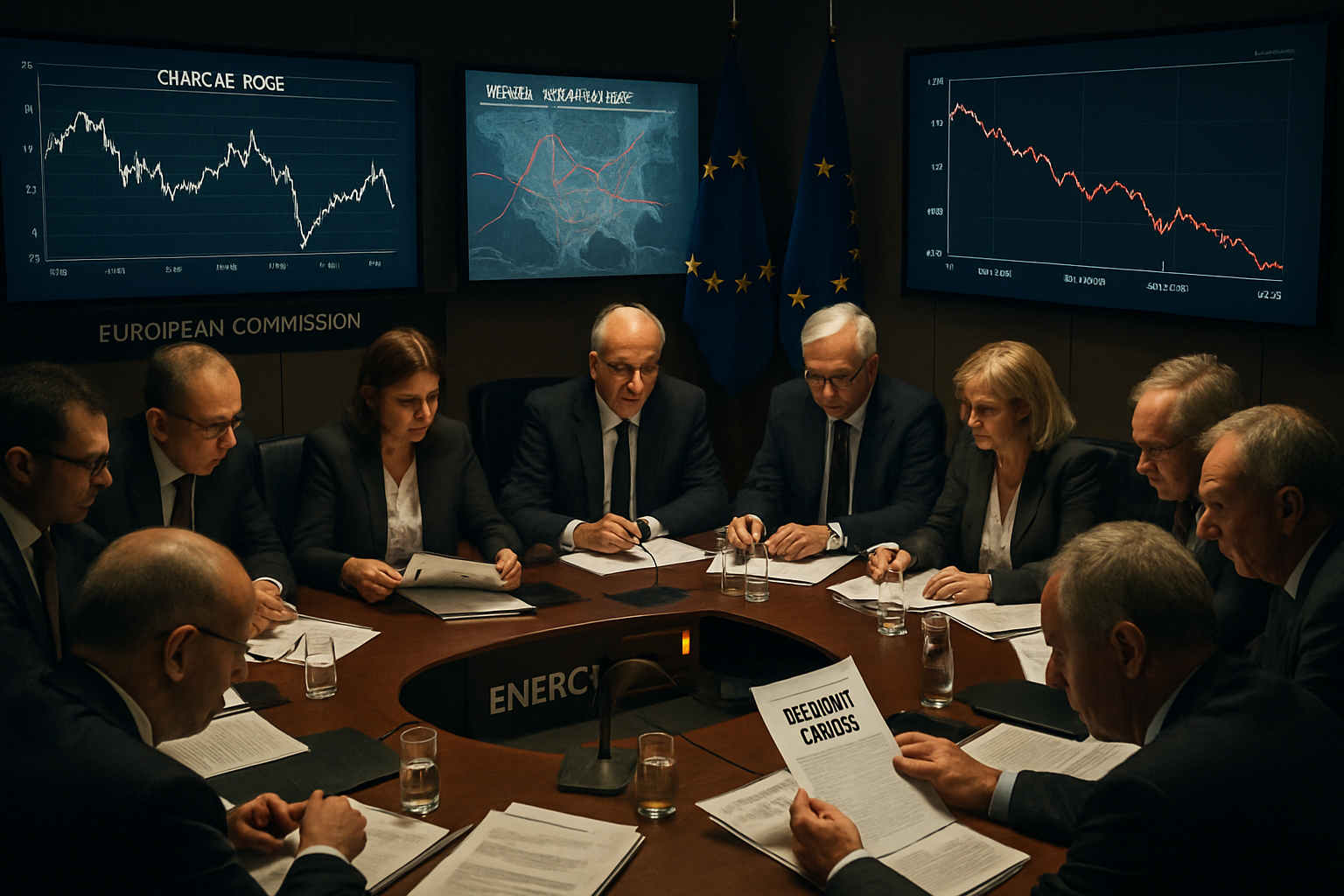
The European Commission has issued urgent warnings to EU member states and citizens to dramatically reduce energy consumption and limit travel as the ongoing Iran-US conflict threatens to create "prolonged supply disruptions" not seen since the 1970s oil crises.
EU Energy Commissioner Dan Jørgensen sent a letter to energy ministers across all 27 member states, urging immediate action to prepare for extended energy supply interruptions caused by the expanding Middle East war, according to reports from European media outlets. The warnings reflect growing fears that what began as a price crisis has evolved into a comprehensive energy supply emergency with global economic implications.
The escalating crisis stems from Iran's Revolutionary Guard effectively closing the Strait of Hormuz, the world's most critical energy chokepoint handling 40% of global seaborne oil transit. With over 150 oil and LNG tankers stranded in the Persian Gulf worth billions in cargo, the 21-mile waterway has become the epicenter of what experts are calling the most dangerous international crisis since the Cold War ended.
Unprecedented Supply Chain Disruption
Oil prices have surged past $100 per barrel for the first time since 2022, with Brent crude reaching peaks of $119.50 and West Texas Intermediate hitting record single-day jumps of 18.98%. Natural gas prices have exploded by 24% in Europe and 78% in the United States, reaching €47.32/MWh—the highest levels since February 2025.
The International Energy Agency (IEA) has implemented its largest strategic petroleum reserve release in its 50-year history, coordinating the deployment of 400 million barrels from 32 countries—double the amount released during the 2022 Ukraine crisis. However, industry analysts warn that strategic reserves provide only temporary relief when fundamental shipping routes remain blocked.
Qatar, which supplies approximately 20% of global LNG exports, has been forced to halt production at its Ras Laffan and Mesaid facilities following Iranian attacks. Qatar Energy Minister Saad Al Kaabi has warned Gulf states may declare force majeure "within weeks," with oil prices potentially approaching $150-200 per barrel that could "bring down the economies of the world."
Consumer Impact Spreading Across Europe
The energy crisis is now directly impacting European households and businesses. Sweden is predicting electricity increases of 10-20 öre and gasoline increases of 1-2 kronor per liter, with the Malmö region identified as most exposed due to continental integration. Ireland is facing heating oil price increases of 40% in a single week, approaching €2 per liter in what industry officials are calling "brazen rip-offs."
Austria has implemented fuel cost increases of 20%, while Malta faces prices that would be 45% higher without government subsidies. Bosnia-Herzegovina has been reduced to just two days of gas reserves, creating an immediate supply emergency across the Balkans.
Several European governments have activated emergency protocols not seen since the 1970s. Hungary has implemented immediate gasoline and diesel price caps to combat "war-driven price explosions." France has deployed 500 fuel station inspectors to prevent price manipulation, while Romania has outlined five scenarios to prevent diesel from exceeding 10 lei per liter through temporary tax and excise reductions.
Aviation Industry in Crisis
The transportation sector faces unprecedented disruption with over 18,000 flights cancelled worldwide—the most extensive aviation crisis since COVID-19. Eight Middle Eastern countries have implemented simultaneous airspace closures, severing critical Europe-Asia flight corridors and stranding hundreds of thousands of passengers globally.
Dubai International Airport, the world's busiest with 86 million passengers annually, remains completely shut down due to missile damage. Major carriers including Emirates, Air France-KLM, and Wizz Air have suspended all Middle East operations indefinitely.
Jet fuel costs have soared from $85-90 per barrel to $150-200 per barrel, forcing airlines worldwide to implement emergency fuel surcharges. Norwegian Air and multiple international carriers have announced significant fare increases as the industry struggles with unsustainable operating costs.
Financial Markets in Turmoil
Global financial markets have experienced severe volatility, with Pakistan's KSE-100 index suffering its largest single-day decline in history at -8.97%. South Korea's KOSPI fell 12%, triggering circuit breakers as the Korean won hit 17-year lows against foreign currencies.
The European Central Bank and Bank of Japan are coordinating emergency liquidity measures to prevent broader financial contagion, though traditional monetary policy tools have proven limited in addressing structural geopolitical disruptions.

Diplomatic Breakdown and Military Escalation
The current crisis emerged from the complete collapse of US-Iran nuclear negotiations despite achieving what diplomats described as "broad agreement on guiding principles"—the most significant progress since the 2018 JCPOA collapse. However, fundamental disagreements over Iran's ballistic missile program and regional proxy forces proved insurmountable.
The failure of diplomacy led to Operation Epic Fury, the largest coordinated US-Israeli military campaign since the 2003 Iraq invasion. The conflict escalated dramatically following the confirmed death of Iranian Supreme Leader Ali Khamenei on March 1, 2026, ending his 37-year rule and triggering the Islamic Republic's first constitutional succession crisis.
Iran's retaliation, dubbed Operation True Promise 4, has systematically targeted regional energy infrastructure under a policy of "no red lines remain." The Revolutionary Guard has deployed an estimated 2,000-6,000 naval mines throughout the Strait of Hormuz, effectively closing the waterway despite US efforts to destroy mine-laying vessels.
European Territory Attacked
In a dramatic escalation, Iranian drones struck RAF Akrotiri in Cyprus—marking the first attack on European territory since World War II. The assault prompted an unprecedented naval coalition response, with HMS Dragon, Spanish frigates, and vessels from Italy, France, the Netherlands, and Greece deploying to protect European interests in the Eastern Mediterranean.
The European Union activated its ESTIA crisis evacuation plan for the first time in bloc history, coordinating the extraction of over 2,000 EU nationals from conflict zones. The attacks on European soil have fundamentally altered the conflict's scope, drawing NATO allies into defensive preparations.
Energy Architecture Transformation
The crisis has exposed dangerous over-dependence on strategic chokepoints in volatile geopolitical regions. The 21-mile Strait of Hormuz represents a single-point failure in modern logistics, with no realistic alternative routes capable of handling diverted volume without significant time and cost penalties.
Estonia provides a potential model for European energy independence, generating 88% of its electricity from renewable sources and operating Europe's largest battery storage system serving 90,000 households. However, energy transitions require years or decades for full implementation, leaving Europe vulnerable during the critical interim period.
Industry experts emphasize that fundamental restructuring of global energy architecture is now imperative to reduce dependence on geopolitically volatile regions. Supply diversification and enhanced interconnections between European nations are being accelerated, but the timeline for meaningful alternatives extends far beyond the current crisis.
Government Emergency Responses
EU High Representative Kaja Kallas has activated unprecedented crisis management protocols, including coordinated state aid programs for energy-intensive industries and direct price compensation mechanisms for consumers. The response represents the most comprehensive crisis management effort in EU history.
Germany is strengthening antitrust laws to prevent gas station price manipulation—a significant market intervention in modern German economic policy. Slovakia has activated its strategic petroleum reserves for the first time under current protocols, while Cyprus has implemented its ESTIA evacuation plan following the Iranian drone attacks.
Japan, which depends on 95% Middle Eastern oil imports with 70% transiting through Hormuz, is considering deploying national oil stockpiles for the first time since the 2011 Fukushima disaster. The crisis has accelerated discussions about fundamental energy security strategies across developed economies.
Template-Setting Crisis Management
UN Secretary-General António Guterres has described the current situation as "the greatest test of multilateral cooperation and crisis management in the modern era." The rapid transition from diplomatic breakthrough to military confrontation demonstrates the fragility of crisis management mechanisms in an increasingly multipolar world.
The stakes extend far beyond immediate energy supplies. Success in containing the crisis could provide a framework for nuclear crisis resolution and strengthen diplomatic precedents for future disputes. Failure may accelerate the shift toward military solutions in international relations, reshaping Middle Eastern geopolitics for decades while encouraging nuclear proliferation globally.
"This is the most severe energy security crisis in decades, exposing single-chokepoint vulnerabilities that require fundamental restructuring of global supply chains."
— Samuel Ciszuk, Energy Security Analyst
Recovery Timeline Uncertain
Unlike weather-related disruptions, recovery from the current crisis depends entirely on military and diplomatic developments rather than predictable market factors. Aviation industries cannot implement long-term scheduling while multiple airspaces remain closed, and energy markets will remain volatile as long as critical transit routes are blocked.
Financial analysts warn that prolonged conflict could trigger broader economic recession, with energy-intensive industries particularly vulnerable to sustained high costs. The crisis serves as a stark reminder of the interconnected nature of modern global systems and their vulnerability to geopolitical shocks.
Looking Ahead
The March 2026 energy crisis represents a watershed moment for European economic resilience and international cooperation. The EU's response has demonstrated both the potential for coordinated action and the limitations of existing frameworks when confronted with external military aggression.
Success in managing the immediate crisis while accelerating long-term energy independence could establish Europe as a model for crisis resilience in an increasingly volatile world. However, the path forward requires unprecedented political will and international cooperation on a scale not seen since the Marshall Plan reconstruction efforts following World War II.
As European citizens face the prospect of rationing and reduced travel, the continent confronts a fundamental choice between short-term economic hardship and long-term strategic autonomy. The decisions made in the coming weeks will determine not only Europe's energy security but its role in shaping 21st-century international relations.