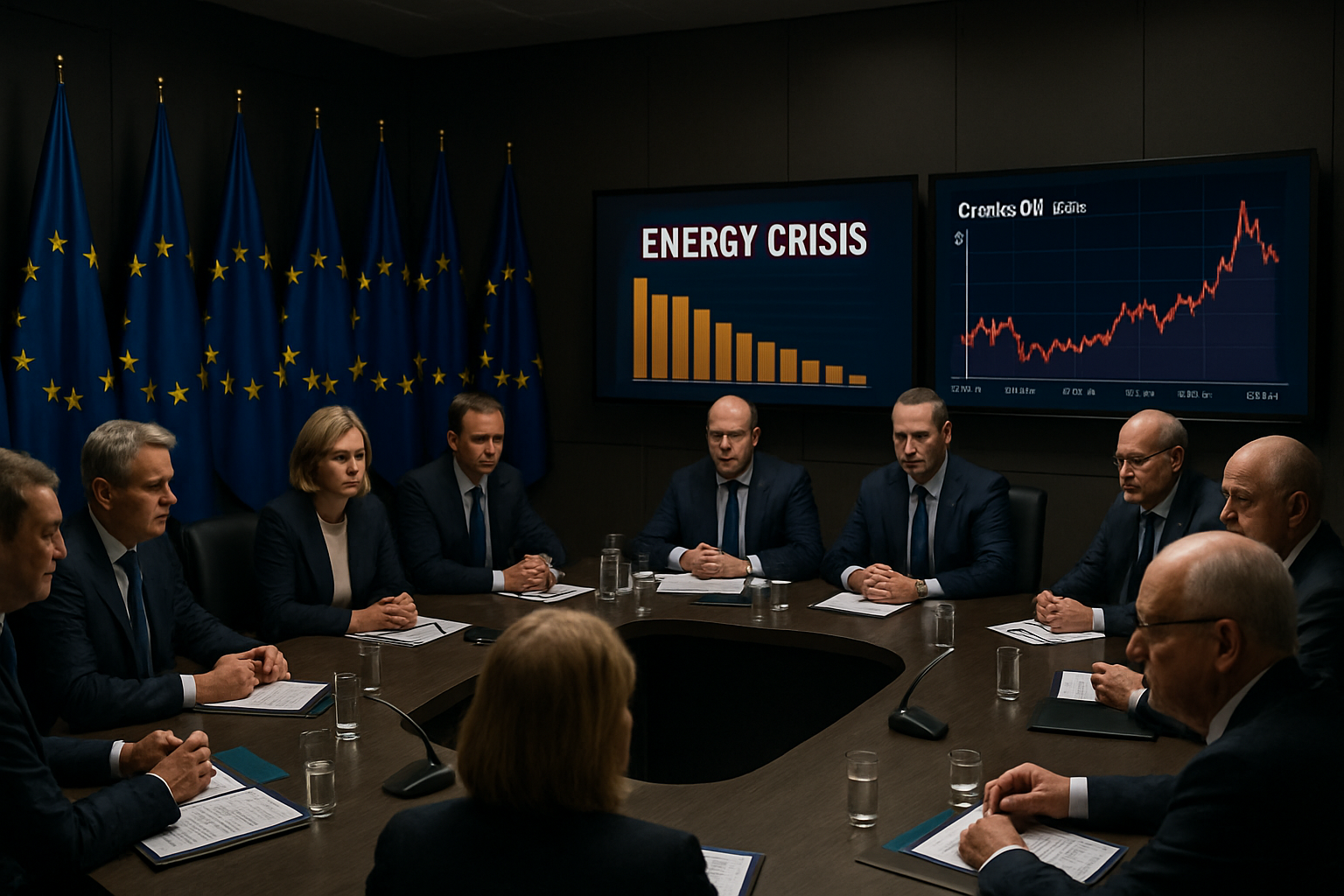
European Union energy ministers held emergency crisis meetings as the ongoing Middle East conflict severely threatens continental energy security, with Energy Commissioner Dan Jørgensen warning of prolonged market disruptions and calling for immediate conservation measures across the bloc.
The crisis talks, described by sources as among the most critical energy discussions since the 1970s oil shocks, come as oil prices have surged past $100 per barrel for the first time since 2022, while the Iran-controlled Strait of Hormuz remains effectively closed, blocking 40% of global oil transit.
Commissioner Warns of Prolonged Crisis
Energy Commissioner Dan Jørgensen issued stark warnings to EU member states in a letter obtained by European media, stating that the conflict has already cost Europeans "14 billion euros more in energy bills" in just one month. The commissioner emphasized that even if peace were achieved immediately, "we will not return to normal" energy markets for the foreseeable future.
Jørgensen's urgent communications to energy ministers specifically called for immediate reductions in diesel and aviation fuel consumption, urging both governments and citizens to encourage working from home and limit travel wherever possible. The recommendations echo International Energy Agency (IEA) guidelines for managing severe supply disruptions.
Member State Responses Reveal Deep Divisions
The emergency consultations have exposed significant divisions among member states regarding appropriate crisis responses. According to Finnish sources, "views on handling the energy shock vary significantly" between different national approaches to market intervention versus maintaining free-market principles.
Hungary and Slovenia have reportedly pressed for more aggressive measures, including demands for reopening energy supply routes that would require diplomatic engagement with sanctioned entities. Meanwhile, the European Commission favors only short-term support for those most affected by oil and electricity price surges.
"The Commission wants only short-term aid for those most affected by oil and electricity price increases. Hungary and Slovenia are demanding pipeline openings to Russia."
— Finnish government source
Crisis Context: Middle East Conflict Impact
The energy emergency stems directly from the ongoing Iran-US conflict that began March 1, 2026, following the death of Iran's Supreme Leader Ali Khamenei. The Revolutionary Guards' closure of the Strait of Hormuz through naval mining operations has created what experts describe as a "single-point failure" in global energy logistics.
European energy security has been particularly vulnerable due to continued dependence on Middle Eastern supply routes, despite years of diversification efforts following Russia's invasion of Ukraine. The current crisis exposes dangerous over-reliance on strategic chokepoints that can be weaponized during geopolitical conflicts.
Economic Impacts Across Europe
Multiple European nations are already implementing emergency measures to protect consumers from spiraling energy costs:
- Sweden: Electricity prices increased 10-20 öre with gasoline up 1-2 kronor, with the Malmö region most exposed due to continental grid integration
- Romania: Government outlined five emergency scenarios to prevent diesel exceeding 10 lei per liter
- Hungary: Implemented immediate price caps on gasoline and diesel to combat "war-driven price explosions"
- France: Deployed 500 fuel station inspectors to prevent price manipulation
The crisis particularly affects energy-intensive industries, with heavy manufacturing reporting factory closures due to unviable operational costs. Small and medium enterprises lack the financial resources to weather sustained high energy prices, putting thousands of jobs at risk across the bloc.
Strategic Reserves and Emergency Measures
In response to the crisis, the International Energy Agency announced the largest strategic petroleum reserve release in its 50-year history - 400 million barrels from 32 countries, more than double the 2022 Ukraine crisis response. Germany has confirmed participation in this coordinated release, while Japan is deploying 80 million barrels for the first time since the 2011 Fukushima disaster.
EU High Representative Kaja Kallas has activated unprecedented crisis management protocols, including state aid programs for energy-intensive industries and direct price compensation mechanisms. The European Commission is also exploring accelerated green transition elements, though renewable infrastructure requires years to replace fossil fuel dependence.
Aviation and Supply Chain Disruptions
The energy crisis parallels unprecedented aviation disruptions, with over 18,000 flights cancelled worldwide - the most extensive since COVID-19. Eight Middle Eastern countries have simultaneously closed their airspace, while Dubai International Airport, the world's busiest with 86 million passengers annually, remains shut due to missile damage.
Major shipping companies Maersk and MSC have suspended Persian Gulf operations, with over 150 tankers stranded carrying billions of dollars in cargo. These disruptions affect far more than energy, impacting automotive, electronics, and textile manufacturing dependent on Gulf logistics networks.
Long-term Implications for Energy Independence
The current crisis has accelerated discussions about fundamental European energy architecture transformation. Estonia's model of 88% renewable electricity generation and Europe's largest battery storage system serving 90,000 households represents one pathway toward energy independence, though such transitions require years or decades for full implementation.
Energy security experts warn that strategic petroleum reserves provide only temporary relief during sustained disruptions. The crisis exposes the urgent need for fundamental restructuring to reduce dependence on volatile geopolitical regions and single strategic chokepoints.
Market Response and Financial Implications
Financial markets have responded with severe volatility, as energy-intensive industries face sharp declines. The European Central Bank, coordinating with the Bank of Japan, has implemented emergency liquidity measures to prevent broader financial contagion. Traditional monetary policy tools show limited effectiveness against structural geopolitical disruptions.
Natural gas prices have surged 24% in Europe, reaching €47.32/MWh - the highest since February 2025. Qatar's halt of LNG production at major facilities represents approximately 20% of global exports, further straining European gas supplies as winter heating demands persist.
Template for 21st Century Crisis Management
According to UN Secretary-General António Guterres, the current situation represents the "greatest test of multilateral cooperation in crisis management in the modern era." The EU's response is being closely watched as a template for how democratic institutions can maintain unity while addressing severe external energy shocks.
The success or failure of European coordination during this crisis will influence energy governance approaches for decades. The balance between national sovereignty and collective security needs remains a critical challenge as member states pursue different strategies for protecting their citizens from energy price volatility.
Looking Ahead
Recovery timelines remain uncertain, depending on military and diplomatic developments rather than predictable economic factors. Unlike weather-related disruptions, the current crisis requires resolution of underlying geopolitical tensions affecting the entire Middle East region.
European leaders are accelerating long-term energy independence infrastructure investments, including expanded renewable capacity, enhanced member state interconnections, and strategic storage facility development. However, these measures require sustained political commitment and substantial financial resources over many years.
The coming weeks will be decisive in determining whether European institutions can effectively coordinate national responses within EU-wide frameworks while maintaining both energy security and democratic governance principles during one of the most challenging periods in the bloc's history.