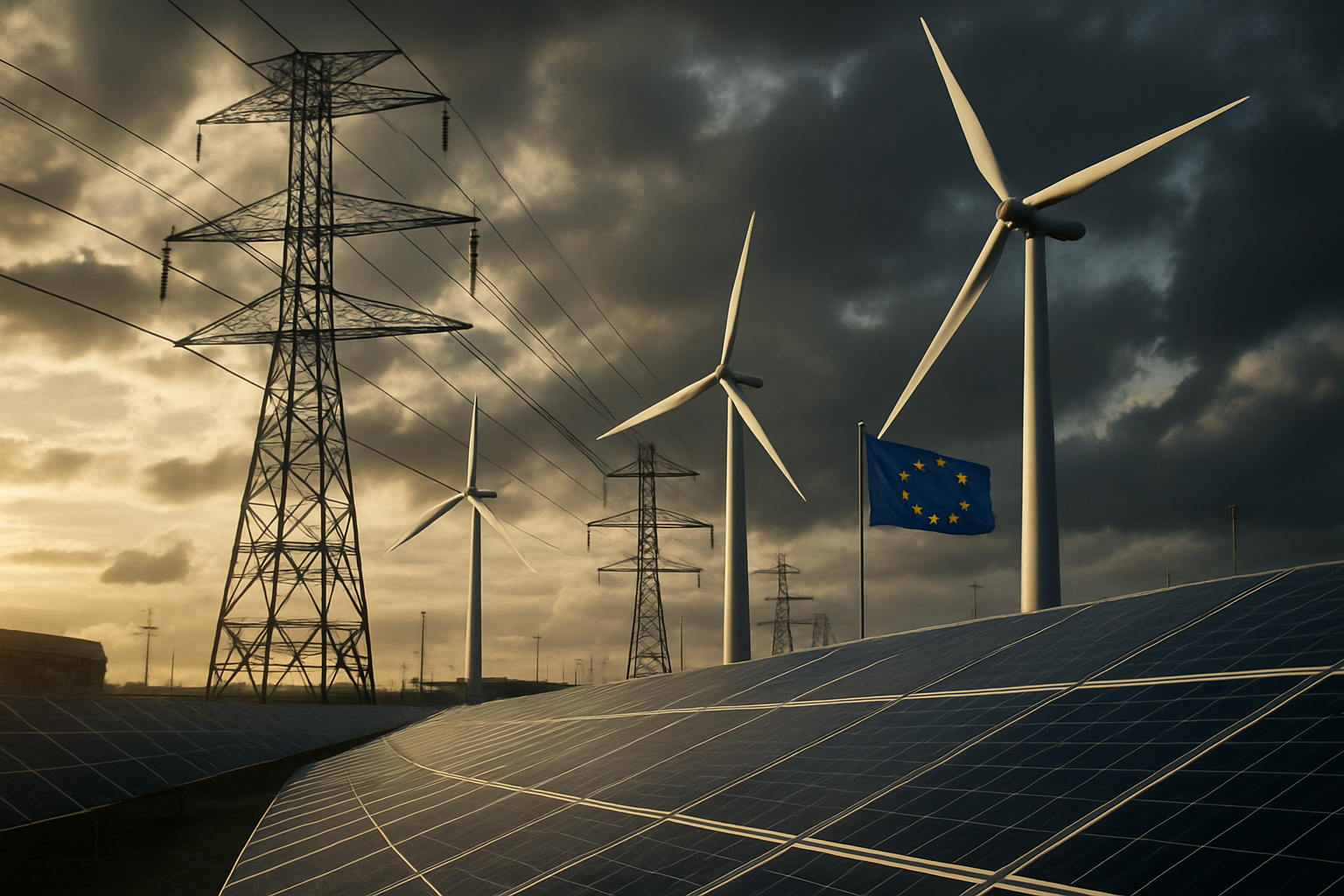
European leaders are accelerating an ambitious energy transformation designed to end the continent's dangerous dependence on fossil fuel imports from authoritarian regimes, driven by hard lessons from the catastrophic energy crisis that gripped the continent in March 2026.
The push comes as new data reveals the true scale of Europe's vulnerability. According to EU Energy Commissioner Dan Jørgensen, the recent Middle East conflict has already cost Europeans "24 billion euros more in energy bills" in just weeks, with prices that will not return to pre-crisis levels even after peace is restored.
Hannah Neumann, German MEP and Chair of the EU Parliament's Delegation for Iran, delivered a stark assessment during a France 24 interview: "The EU must shift to renewables to end fossil fuel blackmail from war-driving authoritarian regimes." Her comments reflect growing consensus across European capitals that energy independence is now a matter of national security.
Crisis Reveals Strategic Vulnerabilities
The March 2026 energy emergency—triggered when Iran's Revolutionary Guard closed the Strait of Hormuz, blocking 40% of global oil transit—exposed the continent's fatal dependence on volatile geopolitical regions. Oil prices surged to $119.50 per barrel for Brent crude, while natural gas exploded 24% in Europe, reaching €47.32/MWh, the highest level since February 2025.
The crisis forced unprecedented government interventions across the continent. Hungary implemented immediate price caps on gasoline and diesel to combat "war-driven explosions" in fuel costs. France deployed 500 fuel station inspectors to prevent price manipulation, while Germany strengthened antitrust laws against gas station manipulation—the most significant energy market intervention in modern German policy.
Samuel Ciszuk, a leading energy security analyst, described the events as "the most severe energy security crisis in decades, exposing single-chokepoint vulnerabilities that were simply assumed away." The International Energy Agency was forced to deploy its largest strategic petroleum reserve release in 50 years—400 million barrels from 32 countries—to stabilize markets.
Romania Leads Solar Revolution
Against this backdrop of crisis, European nations are witnessing unprecedented demand for renewable energy solutions. In Romania, demand for rooftop solar panels has surged dramatically since the Iranian conflict began, as households seek to protect themselves from skyrocketing electricity prices that have risen alongside oil and gas costs.
The solar boom represents more than just individual consumer choice—it signals a fundamental shift in how Europeans view energy security. What was once primarily an environmental consideration has become an economic necessity and national security imperative.
Estonian Energy Minister Jürgen Ligi emphasized the urgency of overcoming "renewable energy phobia," warning that oil prices could hit $200 per barrel in future crises. Estonia has emerged as a continental leader with 88% renewable electricity generation and Europe's largest battery storage system serving 90,000 households—a model that proved crucial for energy independence during the March crisis.
Bosnia Highlights Regional Challenges
The crisis's impact extended far beyond EU borders, with Bosnia and Herzegovina facing particularly severe challenges. The country found itself with just two days of gas reserves during the peak of the emergency, highlighting the vulnerability of nations still heavily dependent on traditional energy imports.
This regional dimension underscores the interconnected nature of Europe's energy security challenge. Even countries outside the EU's immediate frameworks found themselves caught in the crisis, demonstrating how energy vulnerabilities can cascade across borders and threaten stability throughout the continent.
France Pioneers Electrification Strategy
State-owned energy giant EDF has launched a comprehensive €240 million aid program to accelerate the transition from fossil fuels to electricity for households and small businesses. The program includes €1,000 in support for approximately 80,000 modest-income households installing heat pumps, with funding that can be combined with existing subsidies.
This electrification strategy represents part of a broader French approach to reducing dependence on volatile energy imports while building a more resilient domestic energy system. The initiative comes as France continues its nuclear renaissance, viewing atomic energy as a crucial complement to renewable sources in achieving energy independence.
Infrastructure Investment Accelerates
The crisis has dramatically accelerated infrastructure investment across the continent. Austria has doubled its charging capacity with 1,000 new electric vehicle charging stations, while multiple nations are fast-tracking renewable energy projects that were previously planned for later in the decade.
Supply chain considerations remain critical, however. China controls 60% of critical mineral production and 90% of refining capacity for lithium, cobalt, and rare earth elements essential to renewable infrastructure. The US-EU-Japan Critical Minerals Partnership, now encompassing 55 countries and seven African suppliers, represents an effort to diversify these crucial supply chains, though the initiative requires massive investment and years of development.
Economic Transformation Imperative
Beyond the immediate crisis response, European leaders recognize that the energy transition represents a fundamental economic transformation. The crisis demonstrated that even advanced European economies with sophisticated energy markets remain vulnerable to external shocks when dependent on strategic chokepoints controlled by authoritarian regimes.
Finland's experience during the crisis revealed significant divisions between member states on whether to pursue market intervention or maintain free-market approaches to energy pricing. These debates reflect deeper questions about how democratic societies can maintain both market principles and energy security in an increasingly volatile world.
The aviation sector has been particularly affected, with over 18,000 flights cancelled during the crisis peak—the most severe disruption since COVID-19. Jet fuel costs surged 122% from $85-90 to $150-200 per barrel, forcing airlines to implement emergency surcharges and fundamentally altering international travel patterns.
Nuclear Renaissance and Renewable Synergy
The crisis has also accelerated Europe's nuclear renaissance, with nations increasingly viewing atomic power as essential for providing reliable baseload electricity while renewable capacity scales up. Sweden has announced 36 billion kronor in new nuclear capacity alongside 183 billion for radioactive waste management, with Energy Minister Ebba Busch declaring the nation "must dare to build big."
This nuclear revival reflects pragmatic recognition that achieving energy independence requires all available clean energy technologies working in concert. Countries like Estonia demonstrate that high renewable penetration is possible, but the transition period requires maintaining energy security through diverse sources.
Long-term Strategic Implications
The March 2026 crisis has been described by UN Secretary-General António Guterres as "the greatest test of multilateral cooperation in crisis management in the modern era." The European response—coordinating national measures while maintaining EU-wide frameworks—provides a template for 21st-century energy governance.
However, experts warn that recovery timelines remain uncertain, dependent on diplomatic and military developments rather than predictable economic factors. Unlike weather-related disruptions, geopolitical energy crises can persist indefinitely, making rapid energy diversification not just preferable but essential for economic stability.
Energy security analyst Fatih Birol of the IEA has warned that Europe may have "perhaps six weeks of jet fuel" remaining before critical shortages force widespread flight cancellations by early summer if current supply constraints persist. Such warnings underscore the urgency of the energy transition challenge.
Building Resilient Energy Architecture
The crisis has revealed that strategic petroleum reserves, while crucial for temporary stabilization, cannot address sustained supply disruptions. Fundamental restructuring of energy architecture is required to reduce dependence on volatile geopolitical regions and strategic chokepoints like the Strait of Hormuz.
European leaders are now accelerating energy independence infrastructure investment, expanding renewable capacity, enhancing member state interconnections, and developing massive storage facilities. The transformation requires sustained political commitment and substantial resources, but the crisis has provided unprecedented political momentum for change.
As the continent moves forward, the integration of cutting-edge technology with traditional energy security approaches offers hope for a more resilient future. However, the window for effective action is narrowing, and the stakes extend far beyond Europe's borders.
The success or failure of Europe's energy transition will likely influence global approaches to energy security for decades to come, potentially determining whether the 21st century sees continued energy-driven conflicts or a new era of clean, independent power systems that reduce the ability of authoritarian regimes to weaponize energy supplies against democratic societies.