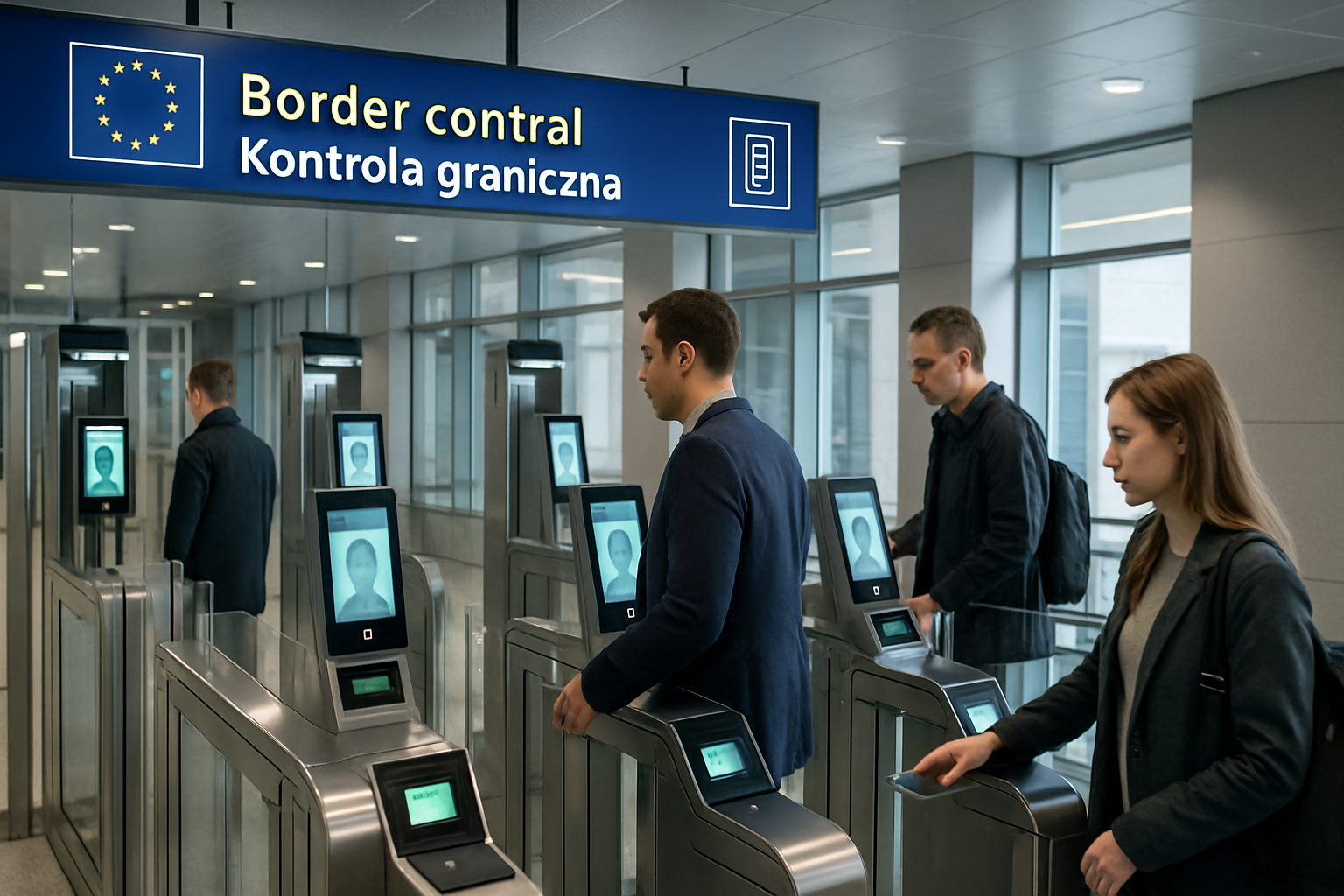
The European Union's Entry-Exit System (EES) achieved full operational status across all Schengen borders on April 10, 2026, marking the definitive end of manual passport stamping and completing the most significant transformation in European border management since the creation of the Schengen zone.
The system, which has been in gradual implementation since October 2025, now processes all non-EU citizens entering the Schengen area through advanced biometric technology, collecting facial photos, fingerprints, and accommodation information to create a comprehensive digital record of border crossings.
Historic Success Despite Implementation Challenges
According to sources across the region, the EES has already demonstrated remarkable effectiveness in its enforcement mission. The system detected over 4,000 visa overstayers in just its first four months of partial operation, far exceeding European Commission expectations and representing a dramatic improvement over the previous manual passport stamping system that struggled with inconsistent data sharing between member states.
"This is a historic moment for the entire security and immigration control of the European Union," stated Croatian border officials, emphasizing that the new system eliminates the potential for human error in tracking visitor stays and provides unprecedented visibility into cross-border movement patterns.
However, the transition has not been without significant operational challenges. Airlines across France, Germany, Italy, and Spain expressed coordinated concerns about system readiness during peak travel periods, with industry warnings of potential four-hour queues during the summer 2026 tourist season. These capacity constraints prompted the European Commission to authorize partial system suspensions during high-volume periods, with full implementation resuming in September 2026.
Portugal's Implementation Experience
Portuguese authorities confirmed that the new European border control system for non-EU citizens entered full operation Friday, following a phased implementation period that registered significant constraints, particularly at Lisbon's airport. The Portuguese experience highlighted the infrastructure challenges faced by older European airports in adapting to the biometric requirements during high-volume periods.
The technical sophistication required for the EES represents a fundamental shift in border management philosophy, moving from reactive passport stamping to proactive digital surveillance that enables real-time tracking of visitor compliance with immigration regulations.
Regional Implementation Across Europe
Croatia's implementation exemplifies the broader European experience. As reported by Total Croatia News, the system replaces the previous manual stamping process with electronic recording of all entries and exits from the Schengen external borders. For travelers, this means the complete abolition of passport stamping for third-country nationals, with all data recorded electronically.
Bosnian sources confirmed the operational timeline, noting that the system became fully operational on April 10, 2026, replacing manual stamping procedures that had been the standard for decades. The change affects all travelers from non-Schengen countries, requiring them to provide biometric data and accommodation information at border crossings.
Broader Context of European Immigration Policy
The EES implementation occurs within a dramatically transformed European migration policy landscape. In February 2026, the European Parliament approved historic asylum procedure changes allowing deportation to "safe" third countries through an unprecedented center-right and far-right alliance coalition. This represents the most significant shift in European migration governance since the 2015-2016 refugee crisis, fundamentally transforming protection-based principles toward deterrence-focused approaches.
Greece is leading a coalition with Germany, Netherlands, Austria, and Denmark to establish external processing centers in Africa for rejected asylum seekers whose home countries refuse readmission. Enhanced cooperation mechanisms now enable smaller member state groups to advance controversial policies without requiring unanimous consent, bypassing traditional humanitarian safeguards.
Technological Achievement and Infrastructure Challenges
The EES represents Europe's largest border control technological advancement in decades, combining advanced biometric verification with comprehensive database management to support law enforcement applications beyond simple immigration control. The system creates real-time analytics on migration patterns while maintaining strict privacy and data security standards required under European regulations.
However, implementation faces significant infrastructure constraints. The global semiconductor crisis, which has driven memory chip prices up sixfold, affects the smart border technology systems until new fabrication facilities come online in 2027. Technical challenges have been particularly acute at older European airports struggling to implement biometric processing requirements during high-volume periods.
Modern border management systems require sophisticated integration of digital monitoring, automated operations, and artificial intelligence optimization as standard infrastructure components rather than retrofit additions. The EES incorporates real-time passenger processing with predictive maintenance capabilities and environmental monitoring to optimize energy consumption throughout the border control process.
Economic and Tourism Industry Impact
The tourism industry has expressed significant concern about the psychological barriers the new system may create for spontaneous European travel. Business travel has been disrupted by advance planning requirements that conflict with urgent commercial needs, particularly affecting small and medium enterprises that rely on flexible cross-border movement.
Airlines warn that processing delays could create substantial negative publicity during the crucial summer booking season, potentially undermining pandemic recovery efforts. The European Commission's partial suspension provisions represent an attempt to balance security objectives with economic competitiveness, though the long-term impact on European tourism patterns remains uncertain.
Despite these challenges, supporters argue the system provides essential security improvements while facilitating legitimate travel through more efficient processing of compliant visitors. The comprehensive database enables faster clearance for frequent travelers while focusing enhanced scrutiny on potentially problematic entries.
Public Opinion and Democratic Mandate
Recent Eurobarometer polling shows that 89% of Europeans demand greater EU unity, with 72% expressing border security concerns, providing democratic legitimacy for enhanced border control measures. This public support has enabled European policymakers to implement sophisticated technological solutions despite their complexity and cost.
However, the shift toward deterrence-based policies has created tensions with traditional European humanitarian commitments. Human rights organizations are preparing comprehensive legal challenges over potential non-refoulement violations and international humanitarian law concerns, with constitutional challenges expected in multiple jurisdictions.
Climate and Economic Context
The EES implementation occurs against a backdrop of unprecedented climate pressures, with March 2026 marking the 19th consecutive month of temperatures exceeding 1.5°C above pre-industrial levels—the longest sustained warming period in recorded history. Environmental migration experts warn that current asylum categories are inadequate for climate-induced displacement, adding unprecedented complexity to already strained immigration systems.
Economic contradictions persist as countries face severe labor shortages in healthcare, agriculture, and construction sectors while simultaneously implementing restrictive immigration policies. Germany's Bertelsmann Foundation research indicates the country requires 288,000 foreign workers annually to prevent a 10% workforce contraction by 2040, highlighting the tension between demographic needs and political approaches to migration.
International Template Significance
The European EES experience is being closely monitored by democratic nations worldwide as a potential template for 21st-century migration management. The success or failure of external processing centers, technological border management, and enhanced enforcement capabilities will influence international migration strategies for decades ahead.
Albania's contrasting approach—successfully integrating 27,000 foreign nationals to address labor shortages—demonstrates alternative models that prioritize economic integration over restrictive enforcement. This divergence in approaches provides valuable comparative data for international policymakers considering their own migration frameworks.
Looking Ahead: Critical Test for Democratic Governance
April 2026 represents a watershed moment for European migration governance, with policy decisions establishing precedents that will affect millions globally and shape how democratic societies navigate the intersection of security, technology, and human rights. The coming months will determine whether European enhanced border security models can successfully manage migration pressures while preserving the democratic values and humanitarian principles that have defined European civilization.
The EES implementation demonstrates that technological solutions can deliver measurable security improvements, but the broader policy transformation toward deterrence-focused approaches represents a fundamental test of democratic institutions' ability to maintain humanitarian commitments while adapting to contemporary realities of climate change, conflicts, and economic disparities driving global migration.
Success in balancing these competing demands could establish a new international standard for democratic border management, while failure risks either ineffective security or the erosion of humanitarian principles that have guided European integration since its post-war founding.