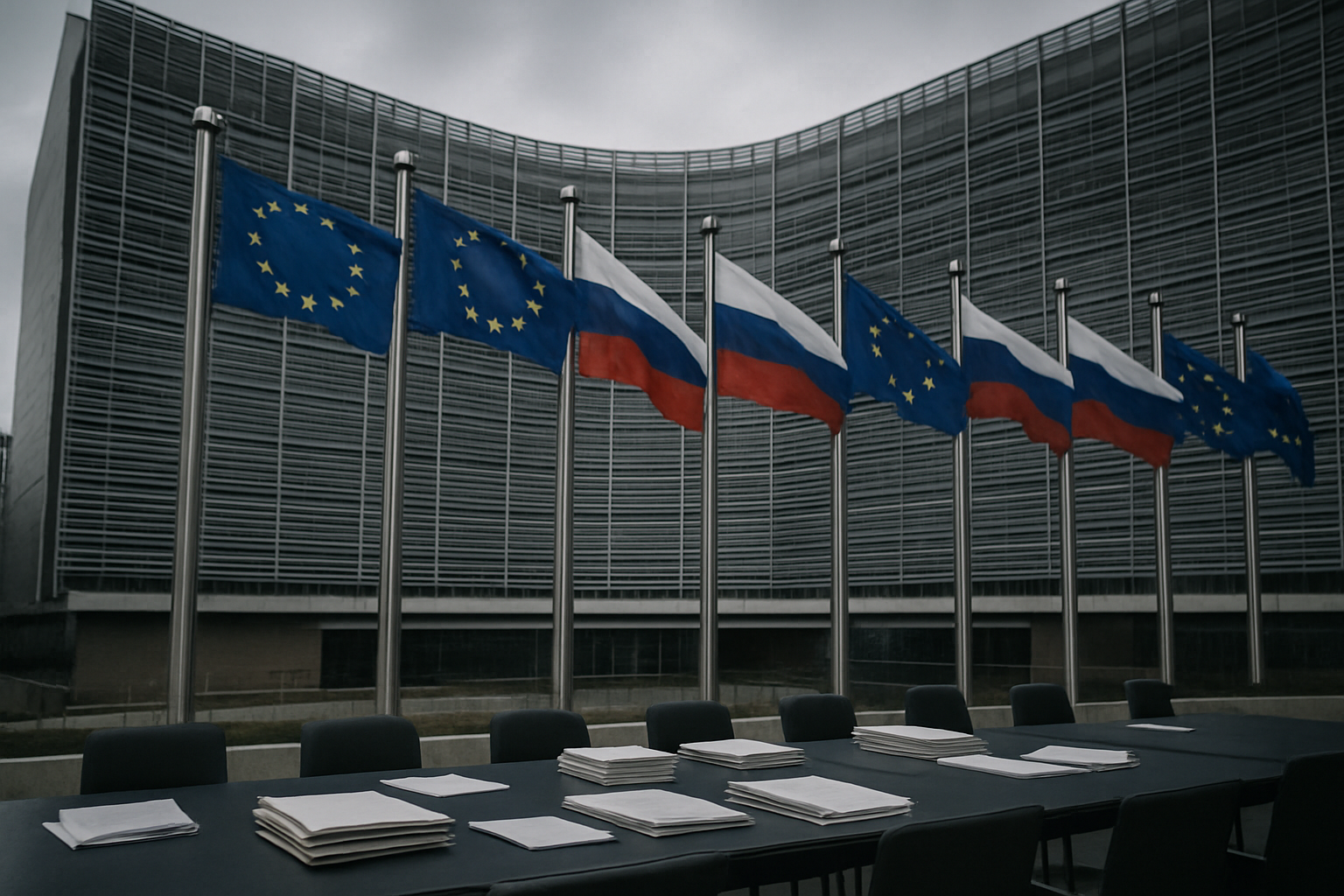
The European Union has unanimously agreed to extend sanctions against Russia for an additional six months, targeting over 2,600 individuals and entities until September 15, 2026, as the bloc maintains economic pressure amid the ongoing Ukraine conflict and ongoing diplomatic initiatives.
The EU Council's decision on March 14, 2026, represents a continuation of the comprehensive sanctions regime that has been in place since Russia's full-scale invasion of Ukraine began over four years ago. The extension comes at a critical juncture as diplomatic efforts, including recent trilateral peace talks, have shown both promise and setbacks.
Sanctions Scope and Impact
The extended sanctions package affects more than 2,600 Russian individuals and legal entities, according to Russian state media TASS. The measures target those deemed responsible for undermining Ukraine's territorial integrity, sovereignty, and independence. Among those remaining on the sanctions list are prominent Russian oligarchs, including Alischer Usmanow, who was decorated with the Order of Merit for the Fatherland by Vladimir Putin.
The sanctions regime includes asset freezes, travel bans, and prohibitions on making funds available to designated individuals and entities. The comprehensive nature of these measures reflects the EU's commitment to maintaining pressure on Russia's leadership and those supporting the military operation in Ukraine.
Oil Price Cap Maintained
Simultaneously with the sanctions extension, the EU has reaffirmed its commitment to maintaining the price cap on Russian crude oil exports. This comes despite the United States recently issuing a temporary exemption allowing transit of certain Russian oil shipments, highlighting subtle differences in approach between Western allies.
European officials emphasized that the EU has no intention of modifying the price cap mechanism, which was designed to limit Russia's energy revenues while maintaining global oil market stability. The policy represents part of the broader economic pressure campaign aimed at constraining Russia's ability to finance military operations.
Diplomatic Context and Timing
The sanctions extension occurs against a backdrop of complex diplomatic developments that have characterized early 2026. Recent months have seen unprecedented breakthroughs in Ukraine-Russia-US trilateral negotiations, including the restoration of military communications between Washington and Moscow after a four-year suspension and a historic prisoner exchange involving 314 individuals.
The Geneva peace talks in February achieved what US Special Envoy Steve Witkoff described as "significant progress" on ceasefire monitoring mechanisms, though fundamental territorial disputes remain unresolved. The Trump administration has established a June 2026 deadline for comprehensive peace negotiations, potentially at the presidential level in Washington.
Despite these diplomatic openings, the EU's decision to extend sanctions reflects the bloc's assessment that sustainable peace requires continued economic pressure until concrete political solutions are achieved. The extension maintains leverage while diplomatic processes continue to evolve.
European Unity Challenges
The unanimous approval masks ongoing tensions within the EU regarding Russia policy. Hungary and Slovakia have repeatedly challenged aspects of the sanctions regime, particularly measures affecting energy supplies through the Druzhba pipeline. Hungarian Prime Minister Viktor Orbán has previously threatened to veto sanctions packages over energy transit disputes.
However, Slovakia's recent decision to lift its opposition has enabled the current extension to proceed without obstruction. The resolution of internal EU disagreements demonstrates the bloc's continued commitment to collective action on Russia policy, despite occasional divisions over implementation details.
Economic and Energy Considerations
The sanctions extension maintains pressure on Russia's economy at a time when global energy markets face multiple disruptions. Recent developments in the Middle East have contributed to oil prices breaching $100 per barrel for the first time since 2022, creating complex dynamics for European energy security.
EU member states continue to reduce dependence on Russian energy supplies, though Hungary and Slovakia remain partially reliant on Russian oil imports under special exemptions. The bloc's energy diversification efforts have accelerated since 2022, reducing vulnerability to Russian energy manipulation.
The International Energy Agency recently conducted its largest strategic petroleum reserve release in 50 years, deploying 400 million barrels from 32 countries to stabilize markets amid global supply disruptions. This coordinated response demonstrates Western commitment to maintaining energy security while preserving sanctions pressure.
Shadow Fleet Operations
The EU's recent 20th sanctions package specifically targeted Russia's "shadow fleet" of oil tankers, with intelligence estimates suggesting over 600 vessels worldwide operate in sophisticated evasion networks using false documentation. The maritime services ban represents a significant expansion from previous measures, though enforcement remains challenging given the global nature of maritime commerce.
Military and Humanitarian Developments
The sanctions extension comes as military operations in Ukraine continue to intensify. Russian forces have accelerated territorial gains in recent months, capturing 481 square kilometers in January 2026 compared to 260 square kilometers in December 2025. This represents an 85% increase in the pace of territorial acquisition.
Ukrainian President Volodymyr Zelensky recently disclosed that 55,000 Ukrainian soldiers have been officially confirmed killed, with a "large number" missing. International estimates suggest actual casualties may be two to three times higher than official figures.
The humanitarian crisis continues to deepen, with systematic targeting of civilian infrastructure representing what Ukrainian officials term "energy terrorism." Over 1,170 buildings in Kyiv remain without heating following attacks on energy infrastructure, while Ukrainian nuclear plants have been forced to halt electricity production for the first time since the conflict began.
International Support
The EU's sanctions extension accompanies unprecedented international support for Ukraine, including a historic €90 billion loan package approved by the European Parliament. Nordic and Baltic countries have committed €12.5 billion in defense support plus €918 million for energy resilience.
Sweden and Denmark have pledged €246 million for air defense systems, while Germany has provided 35 Patriot missiles. Over 17.8 million Ukrainians are currently accessing winter support programs, highlighting the massive humanitarian scope of the conflict.
Nuclear Governance Crisis
The sanctions extension occurs amid an unprecedented nuclear governance crisis following the expiration of the New START treaty on February 5, 2026. For the first time in over 50 years, the United States and Russia operate without bilateral nuclear constraints, with both nations controlling approximately 80% of global nuclear weapons.
UN Secretary-General António Guterres has warned of a "grave turning point," stating that nuclear risks are at their "highest in decades." The restoration of US-Russia military communications through diplomatic channels represents the only remaining formal dialogue between the nuclear superpowers.
Looking Forward
The EU's decision to extend sanctions until September 15, 2026, provides continuity through the critical summer months when major diplomatic initiatives may reach decisive moments. The June deadline established by the Trump administration for comprehensive peace negotiations will test whether sustained diplomatic engagement can overcome the fundamental territorial disputes that have prevented breakthrough agreements.
European officials emphasize that sanctions remain a tool to support diplomatic efforts rather than an end in themselves. The extension preserves leverage while allowing space for the territorial compromise innovations that may be necessary to bridge the gap between Ukraine's territorial integrity position and Russia's demands for territorial recognition.
The success or failure of upcoming diplomatic initiatives will likely influence the EU's approach to future sanctions reviews. The bloc faces the challenge of maintaining unity while adapting to evolving diplomatic realities that could reshape the European security architecture for decades to come.
As the conflict approaches its fifth year, the EU's sanctions extension represents both continuity in Western resolve and recognition that economic pressure remains essential until sustainable political solutions can be achieved. The September deadline ensures that sanctions policy will remain under active review as diplomatic and military developments unfold throughout 2026.