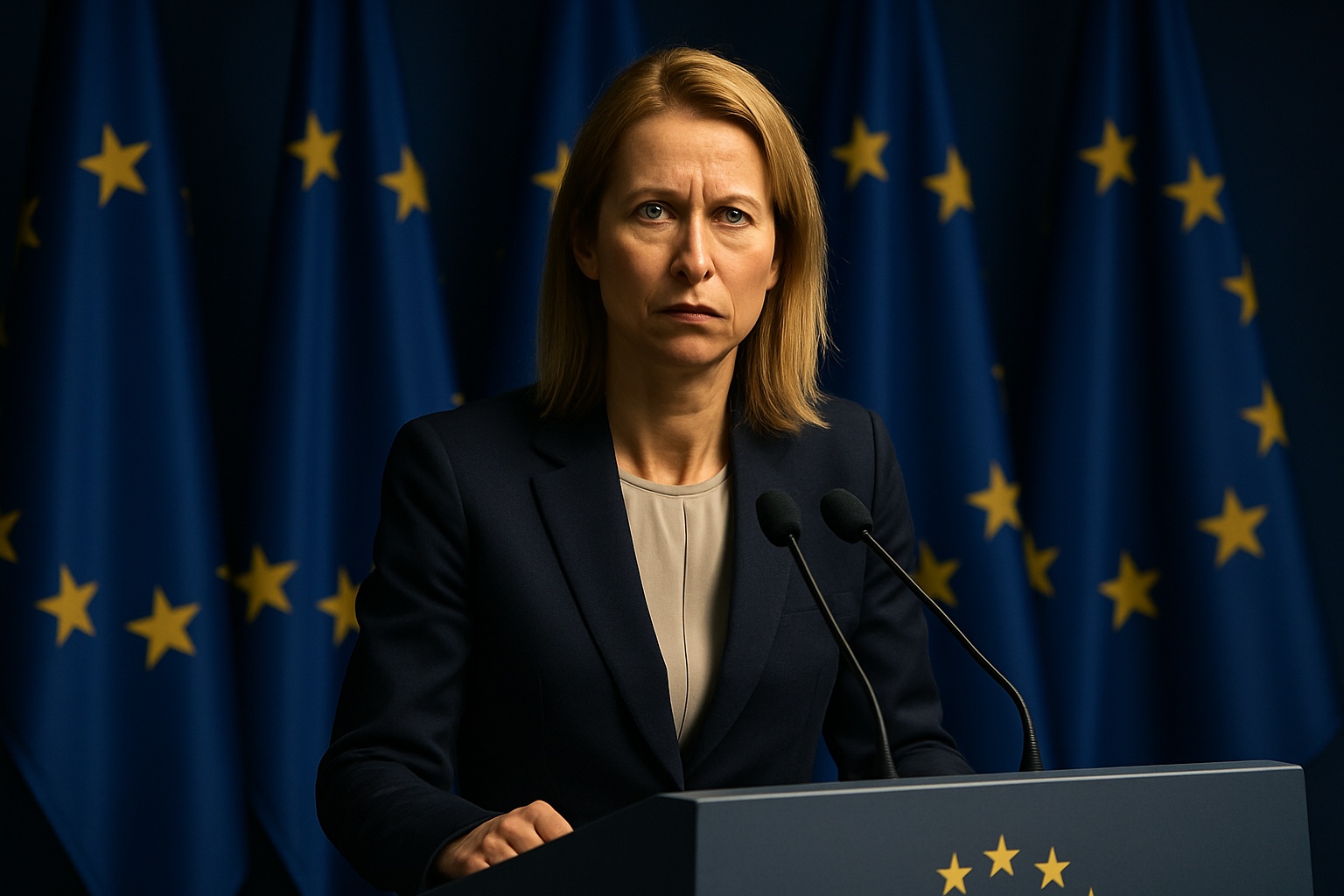
European Union foreign policy chief Kaja Kallas has delivered her most direct criticism yet of the United States, accusing Washington of actively seeking to "divide Europe" and demonstrating clear hostility toward the European Union as an institution, marking a dramatic escalation in transatlantic tensions under the Trump administration.
Speaking to the Financial Times in an interview published Friday, Kallas declared that "the U.S. has been very clear that they want to divide Europe. They don't like the European Union," representing the strongest public rebuke of American policy by a senior EU official since Donald Trump returned to the White House.
The Estonian diplomat's explosive comments come amid a year of mounting tensions between Brussels and Washington, characterized by Trump's repeated targeting of the European Union through punitive tariffs and diplomatic pressure campaigns that European leaders increasingly view as systematic attempts to undermine continental unity.
Strategic Fragmentation Campaign
According to the Norwegian source NRK, Kallas specifically criticized American tactics as resembling "methods used by opponents of the EU," suggesting the Trump administration has adopted strategies traditionally employed by hostile actors to weaken European cohesion. The foreign policy chief emphasized that EU member states must present a unified front rather than engaging with Washington through separate bilateral channels.
"Our answer should not be that we handle Trump bilaterally, but that we do it together," Kallas stated, warning that "they don't like that we stand together, because then we are equal powers."
The accusation represents a fundamental shift in how European leadership characterizes the transatlantic relationship, moving beyond traditional diplomatic disagreements to explicit allegations of deliberate sabotage of European integration efforts.
Mounting Evidence of American Pressure
Kallas's intervention follows a series of Trump administration actions that European officials have interpreted as calculated attempts to fracture EU unity. Recent developments include:
- Trump's repeated threats to impose comprehensive tariffs on European goods, following his Supreme Court defeat on global tariff authority
- Selective engagement with European leaders aligned with Trump's worldview, including Viktor Orbán and Robert Fico, while bypassing EU institutional frameworks
- Public criticism of traditional allies, including calling Spain a "terrible ally" after Madrid refused military base access for Iran operations
- Diplomatic isolation tactics targeting countries that resist American policy demands
Historical context from the extensive memory archive reveals this pattern began during Trump's first term and has intensified since his return to office, with European officials documenting systematic pressure campaigns designed to encourage bilateral rather than multilateral engagement.
Nuclear Deterrence Discussions Accelerate
The deteriorating relationship has prompted unprecedented discussions among European capitals about strategic autonomy, including the first serious conversations about expanding France's nuclear deterrent capabilities beyond national scope since the Cold War's end. German Chancellor Friedrich Merz confirmed direct negotiations with French President Emmanuel Macron about nuclear cooperation, with Poland and Finland engaging in preliminary extended deterrence arrangements.
These developments reflect deep European concerns about the reliability of American security guarantees under Trump's leadership, particularly following his threats against NATO members and suggestions that allies should "defend themselves" without American support.
Economic Warfare Through Trade Policy
Trump's trade policies have become a central battleground in the transatlantic conflict. Following the Supreme Court's devastating ruling against his global tariff program under the International Emergency Economic Powers Act, Trump immediately escalated to 15% worldwide tariffs using alternative legal authorities, creating the most serious executive-judicial confrontation since Watergate.
European officials view these measures as economic warfare designed to fragment EU solidarity by forcing individual member states to seek separate accommodations with Washington. The European Parliament has begun preparing to suspend the EU-US trade agreement for the first time due to what lawmakers characterize as institutional unreliability.
Diplomatic Isolation Tactics
The Trump administration's approach extends beyond economic pressure to diplomatic isolation tactics targeting European allies who resist American policy demands. Spain's experience following its refusal to provide military base access for Iran operations exemplifies this strategy, with Trump ordering Treasury Secretary Scott Bessent to "cut off all dealings" with Madrid.
Similar pressure campaigns have targeted other European capitals, with Trump administration officials explicitly linking policy cooperation to economic benefits and threatening retaliation against countries that maintain independent positions on international issues.
European Strategic Response
Kallas's public criticism signals a coordinated European response to American pressure tactics. EU leaders have increasingly emphasized strategic autonomy while maintaining alliance relationships, representing what analysts describe as a fundamental reassessment of Western alliance structures established since World War II.
Recent European initiatives include enhanced defense cooperation mechanisms, alternative financial frameworks bypassing American systems, and coordinated diplomatic positions challenging US unilateralism on issues ranging from Iran policy to climate action.
"What I think is actually important for everybody to understand is that the U.S. has been very clear that they want to divide Europe. They don't like the European Union."
— Kaja Kallas, EU Foreign Policy Chief
Implications for Global Governance
The escalating transatlantic tensions carry profound implications for international governance structures established after 1945. European officials increasingly question whether traditional alliance frameworks can accommodate contemporary sovereignty concerns while maintaining effective collective action capabilities.
The crisis coincides with multiple global challenges requiring coordinated responses, including the ongoing Ukraine conflict, nuclear governance questions following the New START treaty expiration, and climate security concerns that transcend national boundaries.
Historical Precedent and Future Trajectory
Kallas's accusations represent the most direct European challenge to American leadership since the Suez Crisis of 1956, but occur within a fundamentally different geopolitical context. Unlike previous transatlantic disputes focused on specific policy disagreements, current tensions involve fundamental questions about the nature of Western cooperation in a multipolar world.
European leaders face the challenge of maintaining beneficial relationships with the United States while preserving institutional integrity and democratic values that form the foundation of European integration. The success or failure of this balance will likely determine the trajectory of international relations for decades to come.
As 2026 progresses toward critical elections in multiple European countries and the US midterm elections, the stakes continue to rise. Whether European unity can withstand sustained American pressure while developing genuine strategic autonomy remains one of the most consequential questions facing democratic governance in the 21st century.