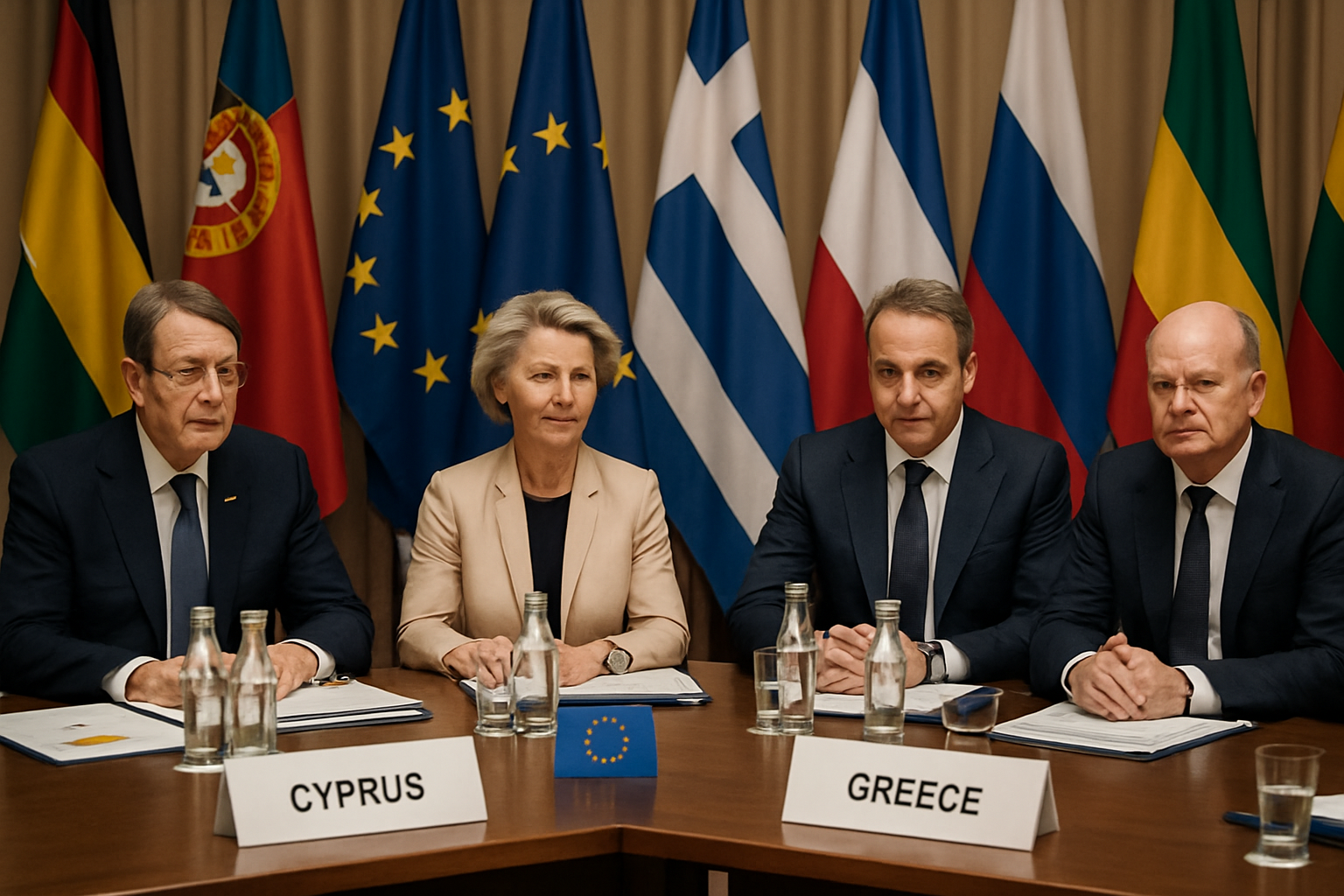
European Union leaders convened in Cyprus for a landmark informal summit, calling for enhanced European defense cooperation, accelerated energy independence, and deeper regional engagement as the bloc confronts evolving security challenges across the Eastern Mediterranean and broader Middle East region.
The high-level gathering, which brought together EU heads of state and government in Cyprus, marked a significant moment for European strategic discussions. European Council President António Costa emphasized the symbolic importance of Cyprus hosting the summit, noting it demonstrated the EU's unwavering support for member states most affected by regional instability.
"Cyprus is a vital anchor of cooperation and European engagement in the region," Costa declared during the summit's closing statements. His remarks underscored the island nation's strategic importance as a bridge between Europe, the Middle East, and North Africa.
Strategic Defense Cooperation Takes Center Stage
The summit's primary focus on defense cooperation reflects the EU's evolving approach to regional security challenges. President Nikos Christodoulides characterized the gathering as a "historic moment for Cyprus," highlighting the island's enhanced role in European security discussions.
Costa's statements revealed the EU's commitment to being "part of the solution" through diplomatic engagement, de-escalation efforts, and protection of freedom of navigation. While acknowledging recent regional ceasefires as welcome developments, he emphasized the need for all parties to engage constructively in good faith negotiations.
The timing of the summit coincides with broader European strategic autonomy discussions that have gained momentum following various regional crises. According to historical context from recent diplomatic developments, European leaders have demonstrated unprecedented coordination in territorial defense while maintaining selective engagement in regional conflicts.
Regional Engagement and Diplomatic Solutions
The Cyprus summit builds on a pattern of European diplomatic engagement that has evolved significantly over recent months. The EU's approach emphasizes diplomatic solutions while maintaining robust defensive capabilities, as evidenced by previous coordinated responses to regional threats.
Cyprus's strategic position has made it a focal point for European security considerations. The island's experience with crisis management, including the activation of emergency protocols, has enhanced its credibility as a venue for high-stakes diplomatic discussions.
"The EU was not part of the conflict, but would be part of the solution through support for diplomacy, de-escalation and freedom of navigation."
— António Costa, European Council President
Energy Security and Independence
The summit's emphasis on energy independence reflects broader European concerns about supply chain vulnerabilities and strategic dependencies. Recent global events have highlighted the critical importance of diversifying energy sources and reducing reliance on single suppliers or transit routes.
European leaders discussed accelerating the transition to renewable energy sources while securing alternative supply routes for traditional energy needs. This dual approach aims to enhance European resilience while supporting the bloc's climate objectives.
Mediterranean Regional Dynamics
The choice of Cyprus as the summit venue reflects the island's growing importance in European strategic calculations. The Eastern Mediterranean has become a critical region for European security considerations, with Cyprus serving as both a strategic outpost and a diplomatic bridge.
The informal nature of the summit allowed for more candid discussions away from the formal protocols of Brussels meetings. This setting facilitated deeper bilateral conversations between leaders on sensitive security and diplomatic matters.
French Leadership and Regional Partnerships
The summit also highlighted evolving partnerships within Europe, particularly the strengthening ties between France and Greece. Recent diplomatic engagements have demonstrated these nations' commitment to regional security cooperation, with French President Emmanuel Macron's approach emphasizing both diplomatic engagement and defensive preparedness.
Greek involvement in the summit reflects the country's strategic position in the Eastern Mediterranean and its role in broader European security architectures. The strengthening of Franco-Greek cooperation represents a template for enhanced bilateral partnerships within the EU framework.
Strategic Autonomy and Alliance Relations
The summit's discussions on European strategic autonomy reflect a nuanced approach to international partnerships. European leaders have demonstrated their commitment to maintaining strong alliance relationships while developing independent capabilities for regional challenges.
This approach has proven effective in recent crisis management scenarios, where European coordination has provided rapid response capabilities while maintaining diplomatic flexibility. The balance between alliance solidarity and strategic independence has become a defining characteristic of contemporary European foreign policy.
Future Implications for EU Policy
The Cyprus summit outcomes are expected to influence broader European policy frameworks for the coming months. The discussions on defense cooperation, energy security, and regional engagement provide a foundation for future EU initiatives in these critical areas.
The summit's emphasis on diplomatic solutions while maintaining defensive capabilities reflects the EU's evolving approach to global challenges. This balanced strategy aims to provide European leaders with multiple tools for crisis management and conflict prevention.
"Cyprus hosting the summit carried important symbolism, demonstrating the EU's support for member states most affected by conflicts in the Middle East."
— António Costa, European Council President
Looking Forward: Enhanced European Cooperation
The informal summit in Cyprus represents a significant step in European strategic development. The combination of defense cooperation discussions, energy security planning, and regional engagement strategies provides a comprehensive framework for addressing contemporary challenges.
As European leaders continue to navigate complex regional dynamics, the Cyprus summit's outcomes will likely serve as a reference point for future policy development. The emphasis on diplomatic solutions supported by defensive capabilities reflects the EU's maturing approach to international relations.
The summit's success in bringing together diverse European perspectives on security challenges demonstrates the EU's capacity for strategic coordination. This capability will prove essential as the bloc continues to address evolving regional and global challenges in the months ahead.
With Cyprus playing an increasingly important role in European strategic discussions, the island's position as a bridge between Europe and the broader Mediterranean region continues to enhance its diplomatic significance within the EU framework.