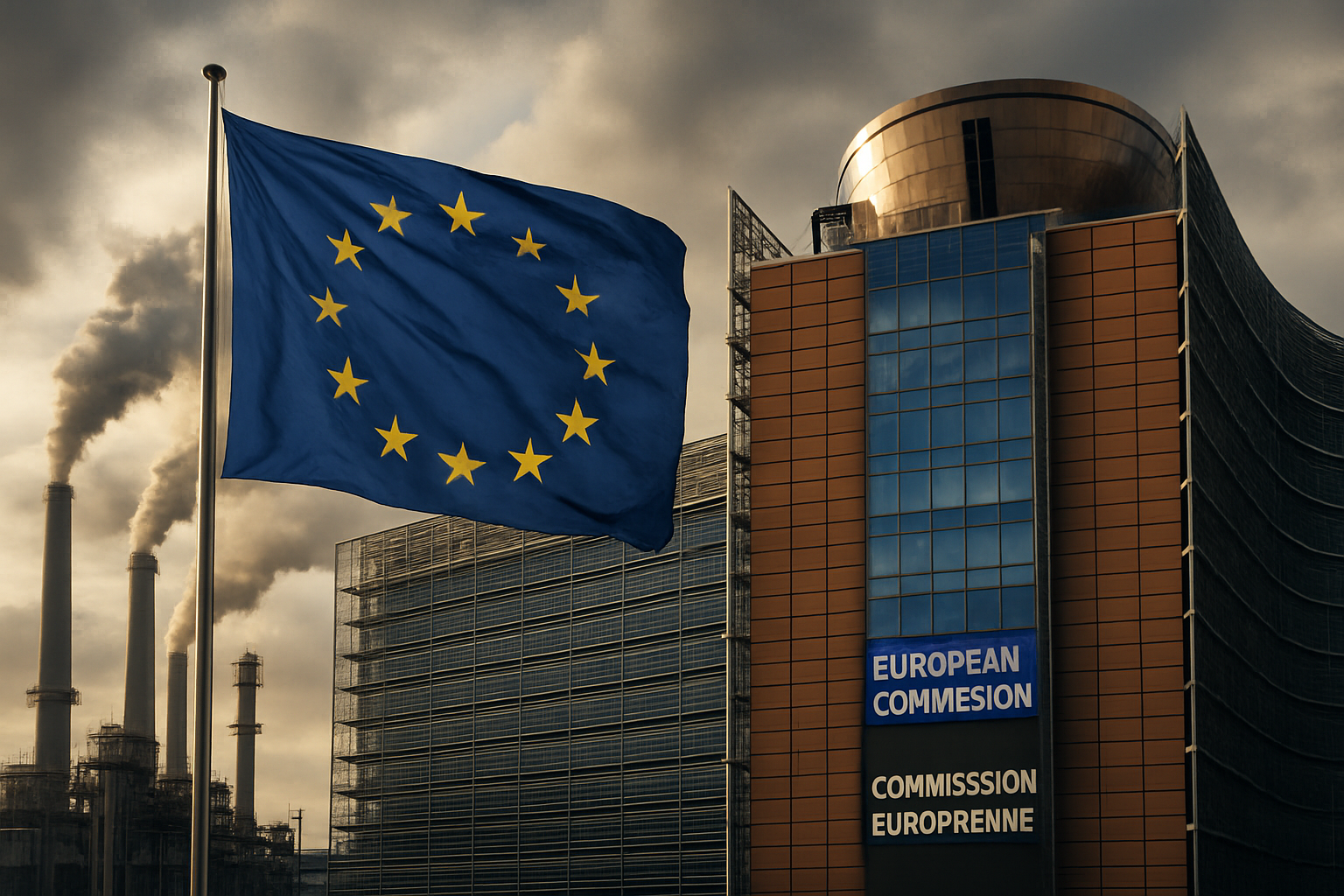
The European Commission unveiled sweeping "Made in Europe" regulations on Wednesday, marking a fundamental shift from traditional free-market policies to strategic industrial intervention designed to counter Chinese dominance and boost European manufacturing to 20% of GDP by 2035.
The comprehensive policy package, announced simultaneously across multiple EU capitals, requires European participation in strategic sectors including batteries, nuclear power, and green technologies while introducing "European preference" requirements in public procurement across member states.
Strategic Response to Chinese Dominance
The initiative directly addresses China's overwhelming control of critical supply chains, with Beijing maintaining 60% of global critical materials production and 90% of refining capacity—creating what EU officials describe as "kill switch" vulnerabilities for European infrastructure.
Industry leaders across Europe welcomed the policy shift as essential for competitiveness. In Austria, Economic Chamber spokesperson GS Danninger emphasized the need to "level competitive disadvantages through acceleration of approval procedures, public procurement, and direct investments as important levers."
"The strengthening and protection of European industry is the order of the day. We need to accelerate approval procedures and use public procurement as a strategic tool."
— GS Danninger, Austrian Economic Chamber
The policy represents a dramatic evolution from previous EU approaches, building on February's Alden Biesen competitiveness summit where leaders achieved unanimous agreement on comprehensive single market reforms and European champions creation.
Implementation Timeline and Scope
The ambitious March 2027 implementation timeline requires coordination across 27 member states and hundreds of billions of euros in investment. The policy mandates European content in government contracts for batteries and nuclear power, while extending strategic sector protection across the industrial base.
Finland's public broadcaster YLE confirmed that the Commission aims to increase industry's share of EU gross domestic product to the targeted 20% by 2035, representing a significant expansion from current levels. This aligns with broader European efforts to reduce dependency on single suppliers and strengthen strategic autonomy.
German Opposition and Economic Complexity
The policy faces notable resistance from Germany, reflecting the complexity of China-Europe economic relationships. Chancellor Friedrich Merz's recent Beijing visit, which secured 120 Airbus aircraft orders worth billions of euros, demonstrates the delicate balance between economic cooperation and strategic competition.
German officials have acknowledged China's transformation from "lucrative market to competitive threat" in high-tech manufacturing, with Chinese firms now competing directly with established European manufacturers in sophisticated products.
Addressing Supply Chain Vulnerabilities
The timing proves critical as Europe faces multiple supply chain crises. Global memory chip shortages have driven sixfold price increases affecting Samsung, SK Hynix, and Micron operations, with shortages expected until 2027 when new fabrication facilities come online.
These constraints underscore the urgency of reducing European dependence on vulnerable supply chains. The US-EU-Japan Critical Minerals Partnership, involving 55 countries and seven African suppliers, represents parallel efforts to diversify strategic materials sourcing.
Digital Sovereignty Integration
The "Made in Europe" initiative coordinates with ongoing digital sovereignty efforts, including Slovakia's €1.3 billion digital euro pilot and Spain's world-first criminal executive liability framework for tech platforms. These measures address concerns about US cloud service dependencies creating strategic vulnerabilities.
France has escalated enforcement through raids on social media companies and formal summons over AI violations, while the European Commission's TikTok investigation found Digital Services Act violations through "addictive design" features, potentially triggering penalties worth billions.
External Pressures Driving Change
The policy shift occurs against a backdrop of mounting external pressures. The Trump administration's bilateral trade deals—including Argentina's 1,600+ tariff eliminations and India's duty reductions from 50% to 18%—bypass EU multilateral frameworks, creating competitive disadvantages for European approaches.
Energy costs compound these challenges, with natural gas prices surging 24% across Europe and electricity costs undermining the EU's electrification strategy despite the Clean Industrial Deal launched in February 2025.
Public Support and Democratic Mandate
The initiative enjoys strong public backing, with Eurobarometer surveys showing 89% of Europeans demanding greater EU unity and 86% wanting a stronger global voice. This provides democratic legitimacy for the departure from traditional free-market approaches toward strategic economic planning.
"Europe must do more and be able to defend itself. We cannot depend on others for our fundamental economic security."
— Ursula von der Leyen, European Commission President
The policy represents a test case for whether democratic societies can maintain economic sovereignty while participating in global technological development, establishing Europe as a "third pole" in global competition rather than remaining subordinate to US-China technological dependence.
Enhanced Cooperation Mechanisms
Implementation will utilize enhanced cooperation mechanisms allowing willing member states to advance policies without unanimous consent—essential for navigating complex economic challenges while preserving European unity amid varying national priorities.
Romania's experience provides a template, having achieved 99.25% EU funding absorption success while advancing strategic projects. Estonia leads renewable development with 88% renewable electricity and continental Europe's largest battery storage facility serving 90,000 households.
Strategic Significance and Global Implications
The "Made in Europe" initiative represents the most significant shift in EU industrial policy since the single market's creation. Success could establish European technological and economic leadership templates worldwide, while failure risks subordination to US-China technological systems.
The policy's evolution from reactive crisis management to proactive strategic planning reflects broader recognition that traditional approaches prove insufficient for 21st-century competitive survival amid authoritarian technological competition.
Coming months will prove decisive as Europe attempts to balance competitiveness enhancement with internal cohesion, strategic autonomy with international cooperation, and democratic governance preservation while addressing unprecedented external pressures from multiple directions simultaneously.