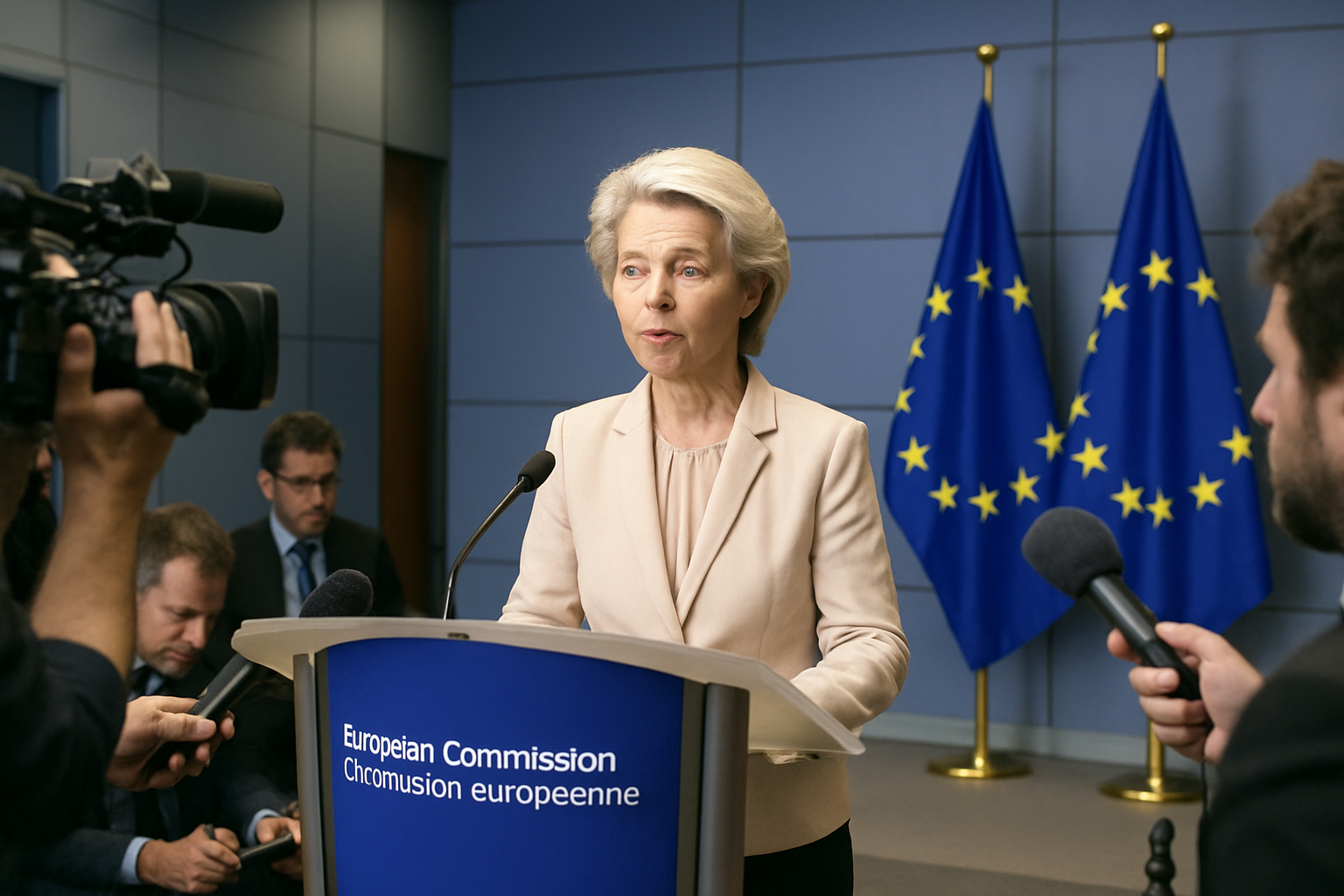
European Commission President Ursula von der Leyen announced Friday in Brussels that the European Union will proceed with provisional implementation of the controversial EU-Mercosur trade agreement, despite ongoing opposition from several member states and pending legal review by the European Court of Justice.
The announcement represents a significant breakthrough for the massive trade deal between the 27-member European Union and the four South American Mercosur countries: Brazil, Argentina, Uruguay, and Paraguay. The agreement, nearly two decades in the making, has faced intense scrutiny over environmental concerns, particularly regarding deforestation in the Amazon rainforest.
Commission's Strategic Decision
"We said it before, when we are ready, we are ready," von der Leyen declared during the Brussels announcement. "In recent weeks, we have conducted in-depth discussions on this matter, and we believe the time has come to move forward with provisional application."
The decision comes after recent ratifications by Uruguay and Argentina, which provided the necessary momentum for the Commission to act. According to sources familiar with the negotiations, the provisional implementation allows the trade components of the agreement to take effect while political and legal reviews continue.
Persistent Member State Opposition
The announcement faces significant resistance from key EU member states, with France leading the opposition alongside Ireland, Austria, and Poland. These countries have raised concerns about unfair competition for European farmers, potential environmental degradation, and insufficient safeguards for sustainable development.
French Agriculture Minister Marc Fesneau has been particularly vocal, arguing that the agreement would expose European farmers to "unfair competition" from South American agricultural producers operating under different environmental and labor standards.
Italian Prime Minister Giorgia Meloni has also expressed reservations, stating that while Italy supports free trade, any agreement must ensure "reciprocal standards" for environmental protection and food safety.
"This agreement represents a historic opportunity to strengthen ties between Europe and South America, but we must ensure it serves the interests of all parties while maintaining our high standards."
— Ursula von der Leyen, European Commission President
Economic Implications and Scope
The EU-Mercosur agreement would create one of the world's largest free trade zones, covering over 780 million people and representing approximately 25% of global GDP. The deal promises to eliminate tariffs on billions of euros worth of goods and services annually.
For European exporters, the agreement opens significant opportunities in South American markets, particularly for automobiles, machinery, chemicals, and pharmaceuticals. European car manufacturers like Volkswagen and Mercedes-Benz stand to benefit from reduced tariffs on vehicle exports to the region.
In return, South American countries would gain improved access to European markets for their agricultural products, including beef, soybeans, sugar, and poultry. However, these provisions have sparked fierce opposition from European farming communities who fear being undercut by lower-cost South American producers.
Environmental Concerns at the Forefront
Environmental protection remains the most contentious aspect of the agreement. Critics argue that increased trade with Mercosur countries could accelerate deforestation in the Amazon rainforest and other sensitive ecosystems as agricultural production expands to meet European demand.
The Commission has attempted to address these concerns by including sustainability chapters in the agreement, requiring adherence to the Paris Climate Agreement and implementation of measures to combat illegal deforestation. However, environmental groups argue these provisions lack sufficient enforcement mechanisms.
Greenpeace European Union Director Jordi Sebastià characterized the announcement as "a betrayal of the European Green Deal," warning that the agreement could undermine EU climate commitments.
Legal and Parliamentary Hurdles
Despite the Commission's announcement, the agreement still faces significant legal and political obstacles. The European Parliament must approve the deal, where it faces uncertain prospects given the environmental concerns raised by numerous MEPs.
Additionally, ratification by all 27 EU member states remains necessary for full implementation. Given the opposition from France and other member states, this process could take months or even years to complete.
The European Court of Justice review, which is currently ongoing, adds another layer of complexity. While provisional implementation can proceed, any adverse ruling could complicate the agreement's future.
South American Perspective
South American leaders have welcomed the Commission's announcement as validation of years of negotiations. Brazilian President Luiz Inácio Lula da Silva has positioned the agreement as crucial for his country's economic recovery and integration into global value chains.
Argentine Foreign Minister Diana Mondino described the provisional implementation as "a positive step forward" that would benefit both regions through increased trade and investment flows.
For Paraguay and Uruguay, the smaller Mercosur members, the agreement represents an opportunity to diversify their export markets beyond traditional regional partners and access European technology and investment.
Industry Reactions
European business groups have largely welcomed the announcement, viewing it as essential for maintaining competitiveness in global markets. BusinessEurope President Fredrik Persson stated that the agreement would "unlock significant opportunities for European companies while strengthening our strategic partnerships."
However, agricultural organizations remain divided. Copa-Cogeca, representing European farmers, has expressed concerns about market distortions and unfair competition, while food processing companies see opportunities in expanded raw material access and export markets.
Timing and Global Context
The announcement comes during a period of significant global trade realignment. With the United States under President Trump pursuing bilateral trade agreements and China expanding its Belt and Road Initiative, the EU faces pressure to secure its own strategic partnerships.
The EU-Mercosur agreement also represents part of Brussels' broader strategy to diversify supply chains and reduce dependence on single trading partners, particularly in light of recent geopolitical tensions and supply chain disruptions.
Implementation Timeline and Next Steps
Provisional implementation means that certain aspects of the agreement, particularly those related to trade in goods and some services, can begin while other components await full ratification. The Commission has indicated that a phased approach will be adopted, with priority given to measures with broad support.
The European Parliament is expected to debate the agreement in the coming months, with committee hearings scheduled to examine various aspects including environmental impact, economic effects, and compliance mechanisms.
Member states retain the right to challenge the provisional implementation through various legal and political channels, setting up potential conflicts between Brussels and national capitals in the months ahead.
Long-term Strategic Implications
Beyond immediate economic impacts, the EU-Mercosur agreement represents a test of the European Union's ability to pursue independent trade policy in an increasingly multipolar world. Success could pave the way for similar agreements with other regions, while failure might constrain EU trade ambitions.
The agreement also carries implications for global governance, as it includes provisions on digital trade, intellectual property, and sustainable development that could influence future international agreements.
For South America, closer integration with Europe offers an alternative to increasing dependence on Chinese markets and investment, potentially reshaping the continent's economic orientation.
As provisional implementation begins, all eyes will be on whether the European Commission can navigate member state opposition while delivering on promises of sustainable and mutually beneficial trade expansion. The coming months will prove crucial in determining whether this ambitious trade partnership can overcome its significant political and environmental challenges.