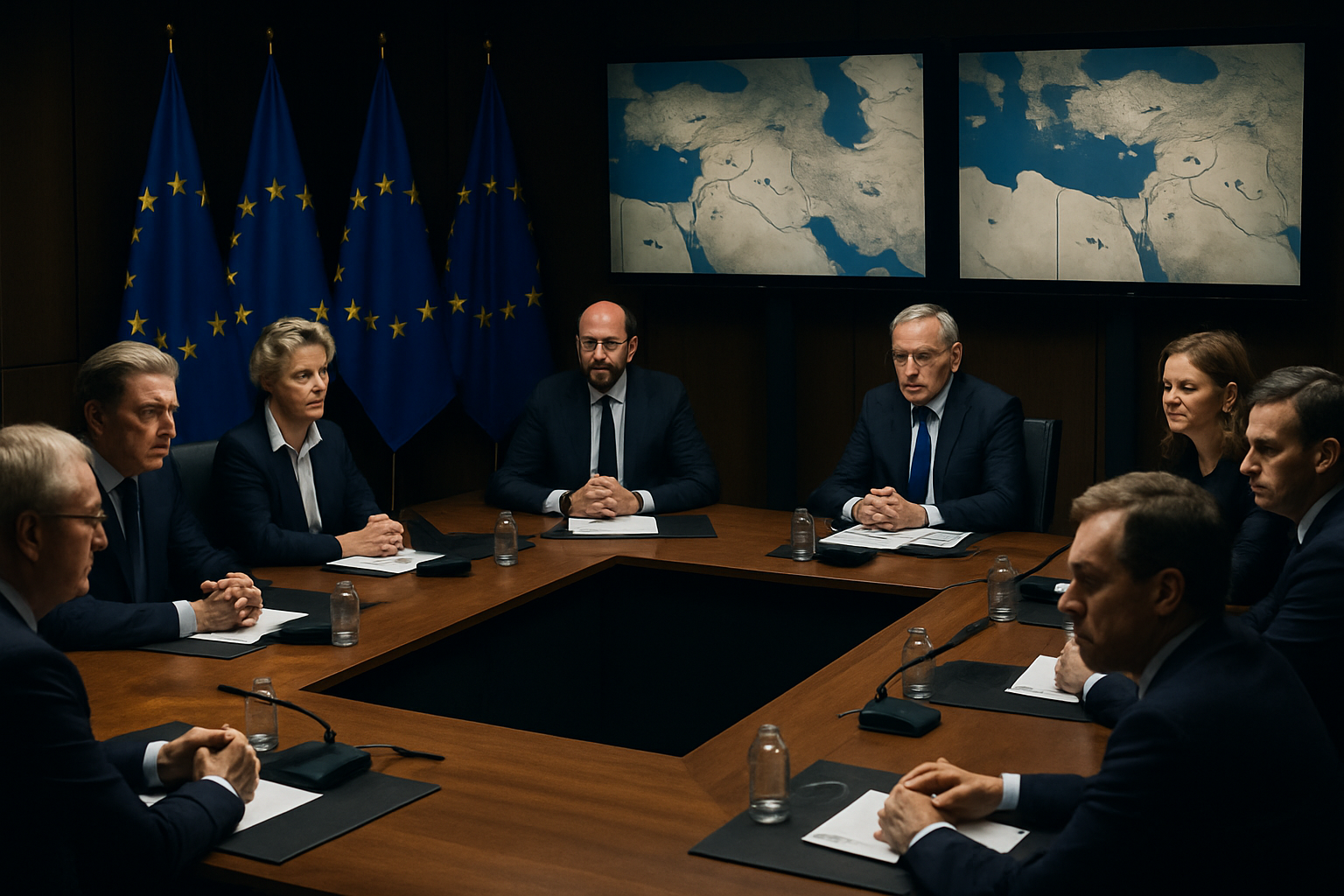
European Union leaders activated emergency protocols and launched urgent diplomatic initiatives Sunday as the most serious Middle East crisis in decades spiraled beyond diplomatic solutions, with Cyprus activating evacuation plans while EU foreign ministers demanded immediate de-escalation following the catastrophic breakdown of US-Iran nuclear negotiations.
The crisis reached a critical juncture following the collapse of Geneva nuclear talks that had achieved "broad agreement on guiding principles" - the most significant diplomatic progress since the JCPOA collapse in 2018. Despite this breakthrough, fundamental disagreements over Iran's ballistic missile program and regional proxy networks proved insurmountable, leading to the launch of "Operation Epic Fury" by US and Israeli forces.
Cyprus Activates Emergency Evacuation Protocol
Cyprus Foreign Minister Constantinos Kombos announced the activation of the national "ESTIA" plan during an emergency EU Foreign Affairs Council meeting on Sunday, marking the first time the evacuation protocol has been implemented for European and third-country nationals since the Middle East conflict escalated to unprecedented levels.
"Cyprus condemns the attacks against Bahrain, Iraq, Jordan, Kuwait, Qatar, Oman, Saudi Arabia, and the United Arab Emirates," the Ministry of Foreign Affairs stated, as Kombos briefed his counterparts on high-level regional contacts and expressed "full support" for Gulf partners affected by Iranian retaliatory strikes.
The ESTIA activation comes as multiple embassy evacuations proceeded across the region, with Sweden and Serbia ordering immediate citizen departures from Iran citing "extremely uncertain" security conditions. The US authorized non-essential embassy personnel to leave Israel, with Ambassador Mike Huckabee advising staff wanting to leave to "do so TODAY."
EU Leaders Call for Maximum Restraint
European Commission President Ursula von der Leyen and Council President António Costa issued a rare joint statement demanding "maximum restraint" from all parties while coordinating the EU's unified response to what officials describe as the most dangerous moment since the Cold War's end.
"The risk of escalation is real and threatens Europe's security architecture,"
— Ursula von der Leyen, European Commission President
The emergency response follows the confirmation of Iranian Supreme Leader Ali Khamenei's death during the US-Israeli strikes, creating a succession crisis in Tehran alongside the regional military escalation. Von der Leyen called for a "credible transition" in Iran while warning that the current trajectory could trigger "chain of events no one can control in the world's most unstable region."
Germany Demands Strategic Planning
German Chancellor Friedrich Merz emerged as a leading voice calling for coordinated transatlantic planning, demanding that European and American partners begin preparing for "the day after" in Iran and the broader region. While supporting non-proliferation objectives, Merz emphasized that conflict escalation remains "extremely risky" for global stability.
"Tehran deserves a better future after these attacks," Merz stated, calling for comprehensive planning to address the power vacuum created by the Iranian leadership crisis while maintaining focus on preventing nuclear weapons development.
Regional Security Implications for Europe
According to Swedish terrorism researcher Magnus Ranstorp, the strikes against Iran significantly increase retaliation threats against Western targets, particularly in Europe. His analysis suggests that Iran's weakened position may paradoxically lead to increased asymmetric attacks as the regime seeks to demonstrate continued capability.
EU High Representative for Foreign Affairs Kaja Kallas described Khamenei's death as a "turning point" in Iranian history, noting the uncertainty surrounding succession while acknowledging potential opportunities for a different Iran where "the people may have greater freedom in shaping it."
The crisis has exposed the EU's limited influence on Middle Eastern conflicts, with European leaders relegated to largely reactive roles despite extensive diplomatic investments in the nuclear negotiations framework.
Economic and Energy Security Concerns
Italian officials warned against any closure of the Strait of Hormuz, through which 40% of global oil transits, emphasizing the potential for "unpredictable outcomes" that could severely impact European energy security. Oil prices have already risen on the crisis, with natural gas prices increasing 24% in Europe.
The breakdown has particular significance for Europe's energy strategy, as the region had invested heavily in diplomatic solutions that could have opened Iranian energy markets while ensuring nuclear compliance. The collapse of negotiations threatens to extend Europe's energy diversification challenges amid ongoing global supply chain disruptions.
Diplomatic Coordination Challenges
The crisis tests European unity at a critical moment, with Cyprus coordinating evacuations while maintaining its role as a bridge between Europe and the Middle East. The ESTIA plan activation demonstrates the EU's preparedness for regional contingencies, though officials acknowledge the unprecedented scale of the current escalation.
Von der Leyen's discussions with Saudi Crown Prince Mohammed bin Salman highlight European efforts to maintain dialogue with regional partners who had supported the diplomatic process. The extraordinary coalition of Saudi Arabia, UAE, Qatar, and Egypt backing negotiations represented unprecedented Middle Eastern consensus that has now been severely strained.
Nuclear Governance Crisis
The collapse occurs against the backdrop of a broader nuclear governance crisis, with the New START treaty between the US and Russia having expired on February 5 - marking the first time in over 50 years without superpower nuclear constraints. UN Secretary-General António Guterres has warned that nuclear risks are at their "highest levels in decades."
European officials emphasize that the failure of diplomatic solutions in the Iran crisis could set dangerous precedents for other nuclear disputes, potentially undermining the credibility of negotiated agreements and encouraging military approaches to proliferation challenges.
Looking Ahead: Template for 21st Century Crises
The EU response represents a critical test of European crisis management capabilities in an era of multipolar competition. Success in containing the escalation while providing humanitarian assistance could demonstrate European relevance in global security affairs. Failure risks marginalizing European influence in future Middle Eastern developments.
As Kallas noted, "What comes next is uncertain" regarding Iran's future, but the European Union's coordinated response will likely influence how similar crises are managed in the coming decades. The activation of evacuation protocols, unified diplomatic messaging, and coordination with regional partners provides a framework that could prove essential as geopolitical tensions continue to escalate globally.
The coming days will determine whether European diplomatic efforts can contribute to containing a crisis that threatens to reshape Middle Eastern geopolitics for generations, with implications extending far beyond the immediate region to global energy security, nuclear governance, and the credibility of international law in the 21st century.