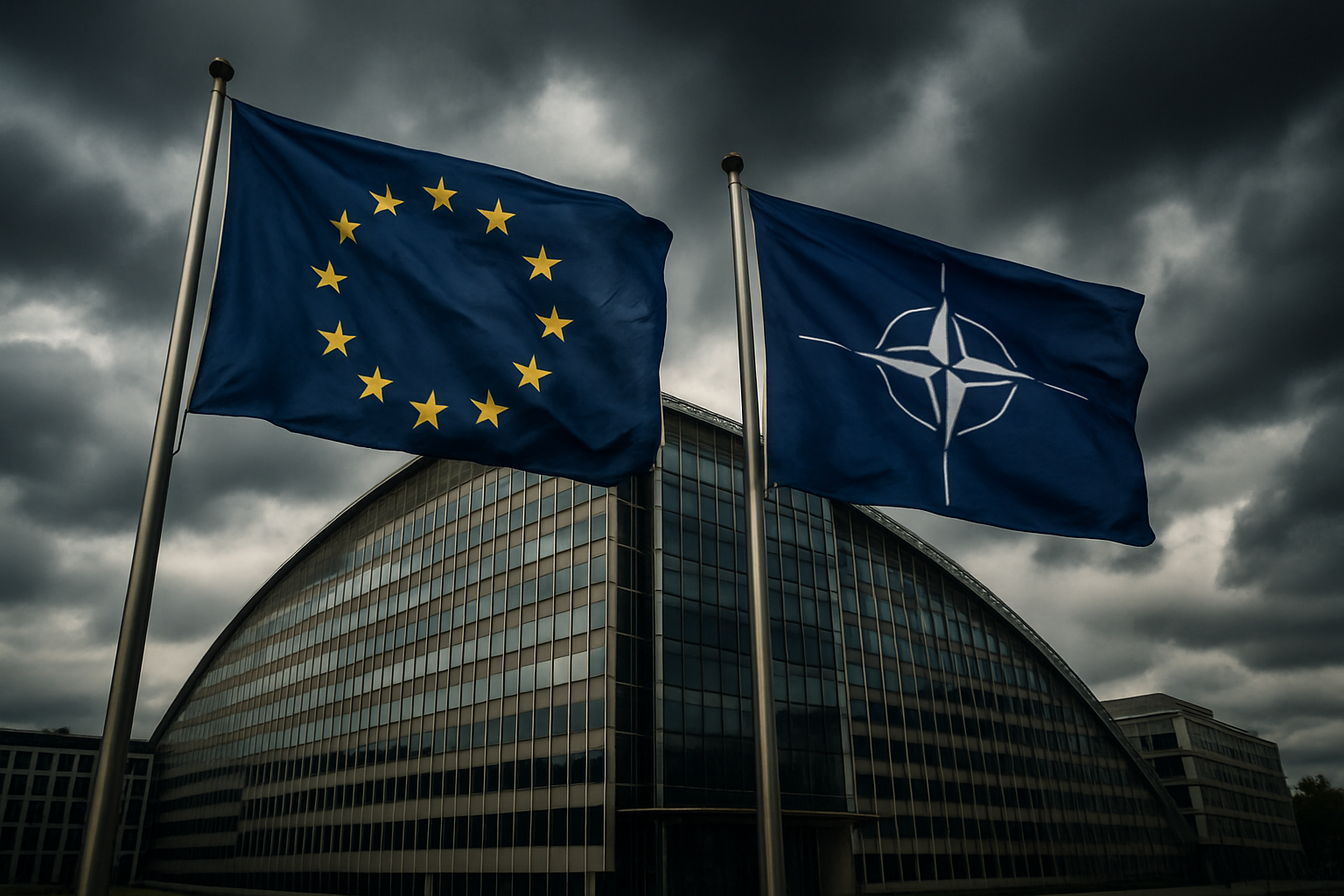
European security is facing its gravest challenge since the Cold War as multiple crises converge across the continent, from Estonia's dramatic shift in military priorities to explosive espionage allegations against Hungary, while President Trump escalates threats of NATO withdrawal.
Estonia Pivots to Modern Defense Priorities
In a significant strategic shift reflecting evolving security threats, Estonia announced Thursday it would suspend a planned €500 million infantry fighting vehicle procurement program. Instead, the Baltic nation will redirect these substantial funds toward strengthening drone defense systems, air defense capabilities, and situational awareness technologies.
This decision underscores the rapid transformation of European military thinking, where traditional heavy armor is giving way to cutting-edge technologies designed to counter 21st-century threats. Estonia's move comes amid a documented 23% increase in Russian reconnaissance activities since Finland and Sweden joined NATO, creating new security dynamics across the Baltic region.
NATO Under Unprecedented Pressure
The alliance faces its most serious existential crisis since its 1949 founding, with President Donald Trump escalating withdrawal threats following European rejection of military support for Iran operations. Latvian sources report Trump's expectation that NATO allies will undertake concrete commitments to secure the Strait of Hormuz, creating unprecedented tension over burden-sharing and alliance obligations.
Swedish media reports reveal NATO Secretary-General Mark Rutte has delivered what some characterize as a "Trump ultimatum" to the alliance regarding military deployments. European allies are questioning Rutte's perceived deference to American demands, with Bloomberg reporting concerns that his accommodating approach may have gone too far.
"NATO's future depends on whether we can balance American leadership with European autonomy,"
— Senior European Defense Official
The crisis comes despite NATO achieving its historic milestone of all 32 member nations reaching the 2% GDP defense spending target for the first time in the alliance's 75-year history. Combined spending has reached $1.4 trillion, representing a 6% increase from the previous year, yet Trump continues to demand a 5% GDP target that many European economists consider fiscally unfeasible.
Hungary Faces Espionage Allegations
The most explosive development involves allegations that Hungary has been sharing sensitive information from EU meetings with Russia. German media reports suggest intercepted communications indicate systematic intelligence sharing, prompting Brussels to elevate the matter to the highest political levels for investigation.
This revelation comes as Hungary maintains its blockade of the €90 billion Ukraine aid package over the Druzhba pipeline crisis, creating the deepest EU divisions since the conflict began. The European Commission has already frozen approximately €19 billion in Hungarian funding over rule of law concerns, representing one of the largest financial penalties ever imposed on an EU member state.
Viktor Orbán's government faces mounting pressure ahead of April 12 elections, with the opposition gaining unprecedented momentum. The convergence of alleged Russian intelligence cooperation and domestic political challenges creates a perfect storm for Hungarian politics.
Ukraine Membership Obstacles Identified
Adding to the complexity, NATO Secretary-General Mark Rutte has publicly identified four countries as obstacles to Ukraine's NATO accession. While the specific nations were not named in available reports, this unprecedented public acknowledgment highlights the divisions within the alliance over eastward expansion and the future security architecture of Europe.
The Ukraine membership question intersects with broader alliance challenges, including the ongoing peace negotiations that were suspended due to the Iran crisis. Previous diplomatic breakthroughs, including the historic 314-prisoner exchange and restoration of US-Russia military communications, have been overshadowed by escalating global tensions.
Nuclear Policy Transformations
The crisis is accelerating fundamental changes in European nuclear policy. Finland is moving to lift its comprehensive nuclear weapons ban, stating current legislation is inadequate for NATO membership requirements. Similarly, Sweden has indicated willingness to host nuclear weapons during wartime conditions, breaking an 80-year Nordic nuclear-free tradition.
These developments occur against the backdrop of the New START treaty expiration in February 2026, creating the first nuclear governance vacuum between superpowers in over 50 years. European leaders are increasingly discussing expanded French nuclear deterrence beyond national scope, with Germany, Poland, and Finland engaging in preliminary conversations about extended deterrence arrangements.
Strategic Autonomy Acceleration
The multiple crises are accelerating European strategic autonomy discussions. The NATO Arctic Sentry mission represents the first major European-led alliance operation, with the UK doubling Norway troop presence to 2,000, Sweden deploying Gripen jets for Greenland exercises, and Finland contributing operational planning expertise.
This European leadership in Arctic defense demonstrates the continent's growing capability and willingness to take primary responsibility for regional security, potentially reshaping the traditional American-led alliance structure.
Economic and Energy Vulnerabilities
Energy security remains a critical vulnerability, with natural gas prices rising 24% across Europe to reach €47.32/MWh, the highest since February 2025. The discovery of sophisticated explosive devices near Balkan Stream pipeline infrastructure in Serbia adds another layer of concern about energy weaponization tactics.
Estonia's technological leadership - with 88% renewable electricity and Europe's largest battery storage facility - exemplifies both opportunity and vulnerability in the modern security environment. The shift from traditional military hardware to advanced technological systems reflects broader European adaptation to hybrid warfare challenges.
Democratic Resilience Under Test
The convergence of security, economic, and political challenges represents the most comprehensive test of European democratic resilience since World War II. The documented pattern of foreign interference in democratic processes, combined with alliance strain and economic pressures, creates unprecedented challenges for institutional stability.
Yet European institutions have demonstrated fundamental resilience through credible elections, constitutional governance, and peaceful transitions despite external pressures. The EU's enhanced cooperation mechanisms, allowing willing member states to proceed without unanimity requirements, may represent institutional innovation necessary for effective governance in an era of increasing polarization.
Looking Ahead: Critical Decisions
The coming weeks will be decisive for European security architecture. Hungary's April 12 elections could determine whether EU unity can be restored or if enhanced cooperation mechanisms become the new norm. NATO's response to Trump's withdrawal threats will shape transatlantic relations for decades.
The stakes extend far beyond Europe. Success in managing these multiple crises while preserving democratic institutions would strengthen the European model globally. Failure could accelerate fragmentation and undermine the cooperation principles that have underpinned European success since 1945.
"Europe is writing the template for 21st-century crisis management, with the world watching whether democratic institutions can adapt while preserving European values,"
— Senior EU Official
As Estonia redirects military spending toward drone defense and Hungary faces espionage allegations, Europe confronts fundamental questions about sovereignty, alliance solidarity, and democratic governance. The answers will determine not only European security but the global trajectory of democratic resilience in an era of great power competition.