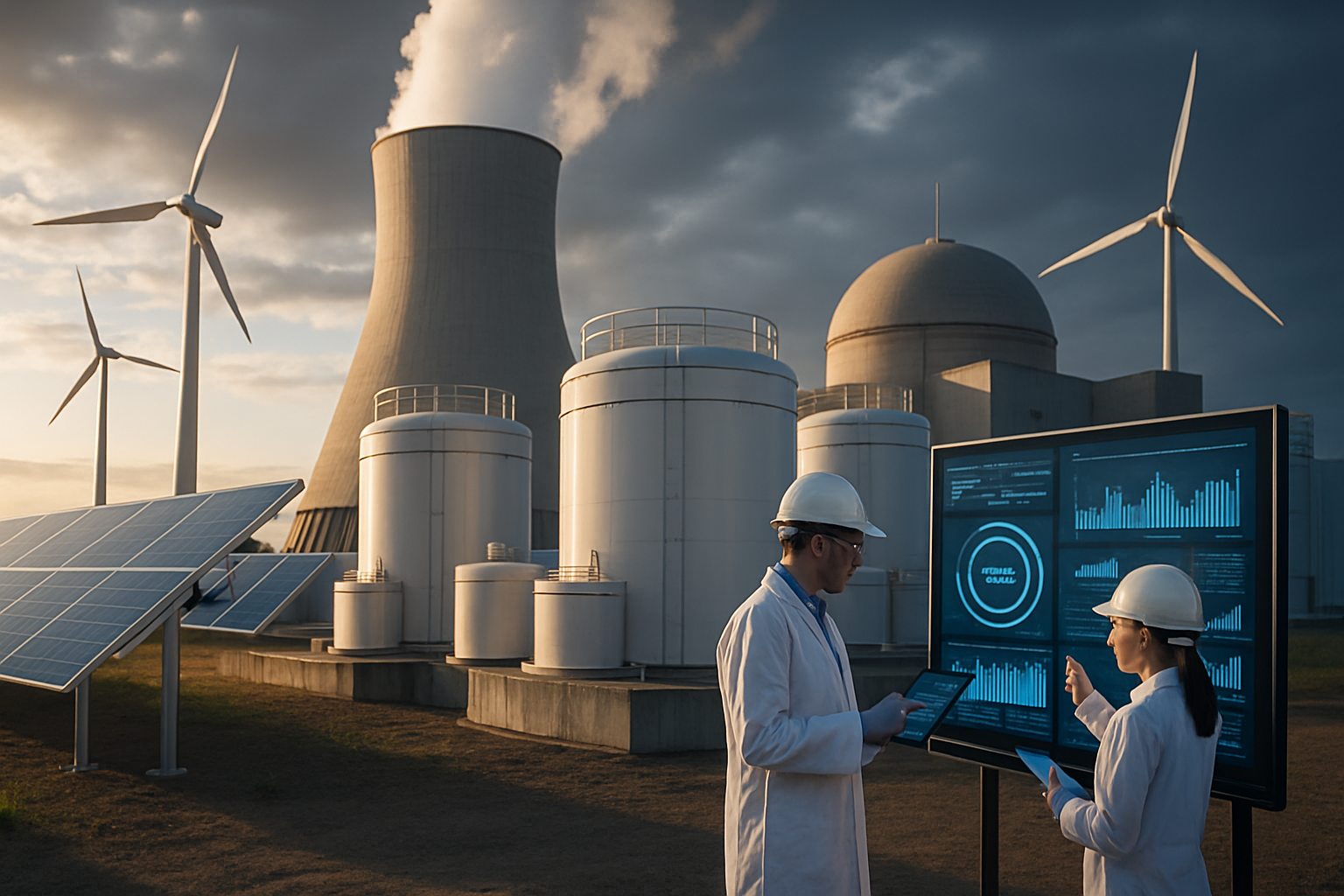
The European Commission has adopted an ambitious Work Programme for the 2026 and 2027 Euratom Research and Training Programme, injecting billions of euros into nuclear fusion energy and advanced reactor technologies as part of a broader strategy to strengthen energy independence and achieve carbon neutrality by 2050.
The comprehensive initiative, announced in March 2026, represents a decisive turning point in Europe's approach to nuclear technology, complementing the Horizon Europe framework while addressing critical energy security vulnerabilities exposed by ongoing global supply chain disruptions.
Strategic Nuclear Investment Programme
The Euratom programme provides substantial funding for nuclear research and innovation activities, aligning with key policy frameworks including the Community Nuclear Illustrative Programme, the Net Zero Industry Act, and the Clean Industrial Deal. The initiative gained momentum following the Nuclear Energy Summit in Paris on March 10, 2026, where Commission President Ursula von der Leyen declared reducing nuclear power share a "strategic mistake."
The programme encompasses a broad spectrum of nuclear technologies, from traditional reactor development to cutting-edge fusion research, with particular emphasis on small modular reactors (SMRs) that promise enhanced safety features and reduced construction costs through factory manufacturing and modular deployment.
"This programme will strengthen the EU's energy independence, competitiveness and technological leadership while advancing towards carbon neutrality by 2050."
— European Commission Statement
Continental Nuclear Renaissance Gathering Momentum
The EU initiative builds upon significant nuclear expansion projects across member states. Hungary's Paks II construction represents Europe's largest nuclear project, with €39.1 billion in Russian investment extending through the 22nd century and featuring advanced VVER reactor technology with digital monitoring and automated controls.
Romania is advancing small modular reactor technology at Deutschești with enhanced safety systems, while Greece has established a ministerial committee to explore SMR options under Prime Minister Mitsotakis' carbon neutrality framework. Slovakia positions nuclear energy as central to its climate goals, and Estonia, despite achieving 88% renewable electricity, considers nuclear baseload to complement its 90,000-household battery storage facility.
Denmark's recent elimination of atomic energy prohibition and Switzerland's parliament vote to overturn its 2017 nuclear ban demonstrate the changing political landscape across Europe regarding nuclear technology.
Semiconductor Surge Drives Energy Innovation
Parallel to nuclear developments, the global semiconductor market has surpassed $830 billion in 2025, marking the second consecutive year of over 20% annual revenue growth, according to market intelligence firm Omdia. This represents the first time since 2001 that the industry has recorded two consecutive years with such expansion, driven primarily by artificial intelligence-related technologies.
Unlike 2024, when automotive, consumer, and industrial segments declined, all major semiconductor application segments recorded revenue growth in 2025. This surge particularly benefits energy infrastructure, as advanced digital monitoring, smart grid management, and automated control systems become standard in both renewable and nuclear installations.
The semiconductor boom has significant implications for energy sector modernization, enabling sophisticated integration of nuclear baseload power with renewable sources through AI-powered optimization systems and predictive maintenance technologies.
Supply Chain Vulnerabilities Drive Policy Shifts
European nuclear expansion occurs amid critical supply chain challenges, with China controlling 60% of critical materials production and 90% of refining capacity for lithium, cobalt, and rare earth elements essential for renewable energy infrastructure. Memory chip shortages have driven semiconductor prices up sixfold, affecting renewable control systems until 2027 when new fabrication facilities come online.
The US-EU-Japan Critical Minerals Partnership, involving 55 countries and seven African suppliers, represents a coordinated response to reduce dependencies on Chinese-controlled supply chains. Nuclear power provides an energy independence pathway that avoids many of these geopolitical vulnerabilities.
Technology Integration and Innovation
Modern nuclear projects incorporate sophisticated technology integration featuring factory manufacturing, digital monitoring, automated controls, and passive safety systems that significantly reduce costs and construction timelines compared to traditional large facilities. These innovations address historical concerns about nuclear construction delays and cost overruns.
Small modular reactors represent a particular breakthrough, offering controlled environment manufacturing with on-site assembly, dramatically reducing the complexity that plagued previous nuclear construction projects. Enhanced safety systems prevent meltdowns without human intervention, while advanced fuel cycles minimize radioactive waste.
The technology provides weather-independent reliability versus wind and solar alternatives, addressing grid stability requirements as renewable penetration increases across European power systems. This baseload capability proves increasingly valuable during extreme weather events that affect renewable generation patterns.
Economic and Employment Benefits
Nuclear expansion creates substantial economic opportunities, generating thousands of specialized high-paying construction jobs and hundreds of permanent operational positions over century-plus facility lifetimes. Economic multiplier effects extend to research and development, advanced manufacturing, and supporting services around nuclear facilities.
Stable electricity pricing reduces energy market volatility while technology export potential establishes European leadership in next-generation nuclear systems, competing with US TerraPower Wyoming SMR developments and Japan's Kashiwazaki-Kariwa reactor restart at the world's largest facility.
Environmental Opposition and Policy Balance
The nuclear renaissance faces continued opposition from environmental groups and some member states. Austria's environment commissioner criticized the "dangerous path" of nuclear expansion, while Spain expressed reservations emphasizing international legality and environmental protection concerns.
Greenpeace has characterized nuclear expansion as a "betrayal of the European Green Deal," advocating instead for enhanced renewable energy focus and efficiency improvements. Critics emphasize nuclear waste storage challenges lasting thousands of years and reference catastrophic risks demonstrated by Chernobyl and Fukushima incidents.
Climate Integration Framework
Nuclear development integrates within broader climate strategies as carbon-free baseload electricity complementing renewable sources to achieve the European Parliament's 90% emissions reduction target by 2040. Weather-independent nuclear reliability addresses grid stability requirements as renewable penetration increases, while providing resilience during extreme weather events intensified by climate change.
The approach occurs during unprecedented climate urgency, with January 2026 marking the 19th consecutive month of global temperatures exceeding 1.5°C pre-industrial levels, demonstrating sustained human-induced warming that overrides natural climate variability.
Strategic Energy Architecture Implications
Commission President von der Leyen's acknowledgment of nuclear reduction as a "strategic mistake" represents a fundamental shift in European energy thinking toward strategic autonomy and reduced dependence on energy imports from geopolitically unstable regions.
The success or failure of these nuclear and semiconductor initiatives will determine European energy architecture for decades, affecting climate commitments, geopolitical independence, and economic competitiveness in global markets. The nuclear option provides a pathway for achieving both energy security and environmental objectives while maintaining democratic governance standards.
As Europe navigates the complex balance between climate commitments and security requirements, the nuclear renaissance represents a strategic pivot that could define continental energy policy for generations. The convergence of advanced nuclear technology, semiconductor innovation, and urgent climate action creates unprecedented opportunities for sustainable energy transformation during this decisive climate action decade.