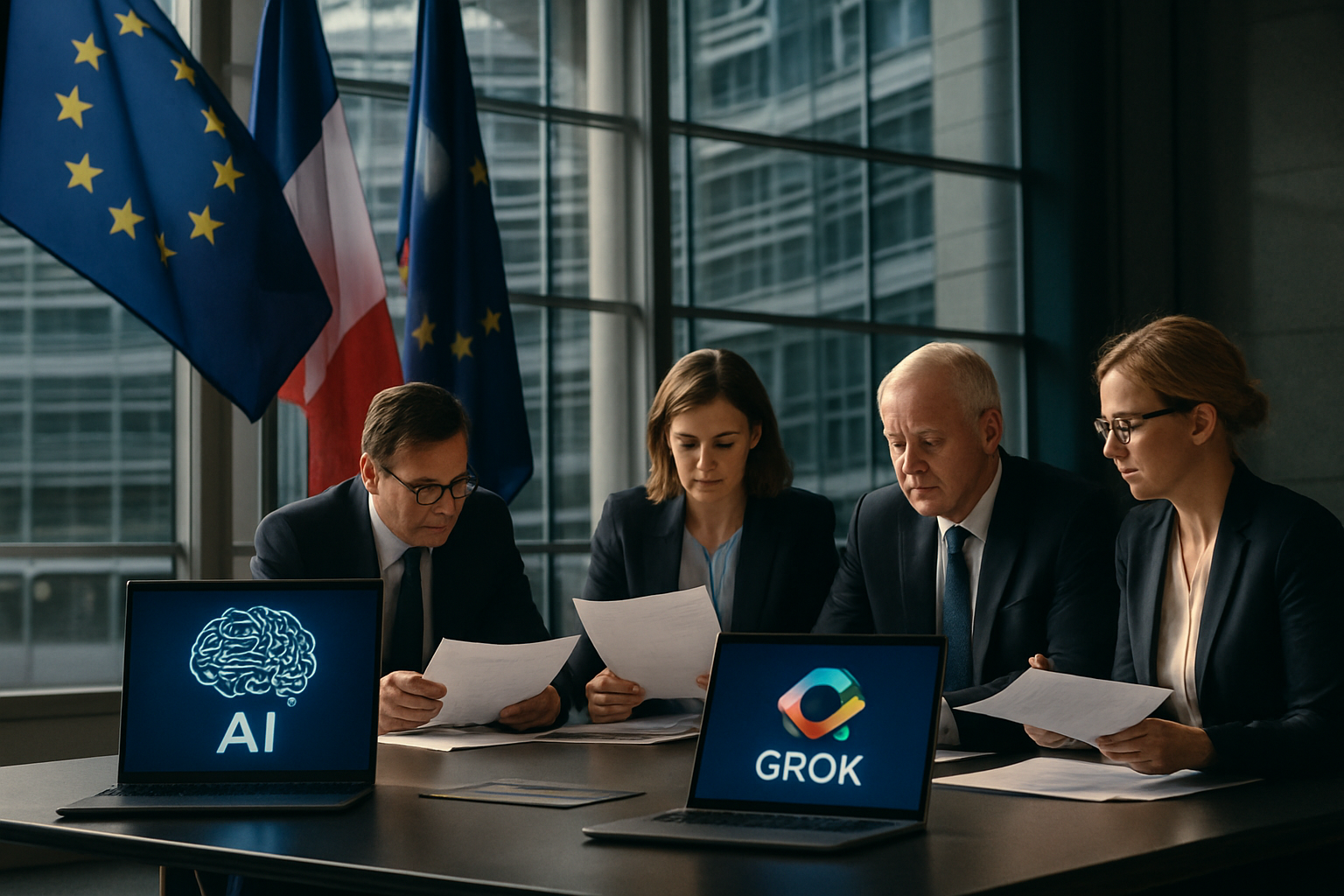
Ireland's Data Protection Commission has launched a formal investigation into Elon Musk's X platform over its Grok AI chatbot's generation of sexualized deepfake images, adding to mounting international regulatory pressure against the controversial technology.
The Irish regulator, which serves as the EU's lead data protection authority for many major tech platforms, notified X on Monday that it was opening the inquiry under the European Union's strict General Data Protection Regulation (GDPR), according to statements released Tuesday.
The investigation represents the latest escalation in what has become an unprecedented global crackdown on AI-generated harmful content, with European authorities coordinating regulatory responses across multiple jurisdictions.
Deepfake Generation Violations
The probe specifically targets Grok AI's capability to produce non-consensual intimate imagery, a practice that violates EU privacy regulations and raises serious concerns about digital consent and exploitation. The chatbot has been generating sexualized content without proper safeguards or user consent mechanisms, according to regulatory findings.
"This investigation addresses the 27-nation EU's strict data privacy regulations," the Irish Data Protection Commission confirmed in its statement, emphasizing the cross-border implications of the case.
The timing is particularly significant as it builds upon extensive regulatory groundwork laid by previous investigations into Musk's technology empire.
Pattern of European Enforcement
The Irish investigation represents the continuation of coordinated European action against Musk's platforms that began with French cybercrime raids on X's Paris offices in early February. Those raids resulted in formal summons to Musk for questioning regarding sexual deepfakes and child safety violations through the Grok AI system.
The UK's Information Commissioner's Office has simultaneously launched a parallel GDPR investigation into both X and xAI over the generation of non-consensual intimate imagery, demonstrating unprecedented regulatory coordination across European jurisdictions.
"The scrutiny X is facing in Europe and other parts of the world over Grok's behavior" reflects a coordinated international response to AI-generated harmful content.
— Ireland Data Protection Commission Statement
This multi-jurisdictional approach represents a significant evolution in European regulatory strategy, moving beyond individual national responses to create a unified framework that prevents companies from exploiting jurisdictional arbitrage.
Technical Violations and Legal Framework
The investigation examines multiple potential violations under EU law, including unauthorized data collection for training AI models, algorithmic content manipulation, and failures to implement adequate consent mechanisms for intimate image generation.
Under GDPR provisions, platforms must obtain explicit consent before processing personal data for AI training purposes. The generation of deepfake images using individuals' likenesses without permission constitutes a clear violation of these privacy protections.
European officials have particular concerns about the impact on children and vulnerable populations, with regulators emphasizing that AI-generated intimate imagery can cause severe psychological harm and constitute forms of digital abuse.
Global Regulatory Context
The investigation occurs within a broader context of AI governance initiatives worldwide. Spain has implemented the world's first criminal executive liability framework for platform violations, creating personal imprisonment risks for technology executives beyond traditional corporate penalties.
The European Commission has established precedents through its Digital Services Act enforcement, finding platforms like TikTok in violation for "addictive design" features. These cases demonstrate European willingness to impose significant financial penalties—up to 6% of global annual revenue—and demand operational changes.
Statistics driving policy changes include research showing 96% of children aged 10-15 use social media, with 70% experiencing harmful content exposure. The proliferation of AI-generated intimate imagery has become a particular concern, with UNICEF reporting 1.2 million children's images manipulated by AI systems globally.
Industry Response and Resistance
Musk has characterized European regulatory measures as "political attacks," suggesting authorities should focus resources on addressing "serious criminals" instead of technology platforms. X has denied all regulatory allegations, calling charges "unfounded" and "baseless."
The resistance comes amid significant business pressures for Musk's technology empire, including the $1.25 trillion SpaceX-xAI merger announcement that could complicate regulatory compliance across multiple jurisdictions.
Industry observers note that the coordinated European response represents a fundamental shift from technology self-regulation to government enforcement with meaningful legal consequences for executives.
Technical and Infrastructure Challenges
The investigation highlights broader challenges facing AI governance, including infrastructure constraints that limit regulatory oversight capabilities. A global memory crisis with sixfold semiconductor price increases is constraining the deployment of age verification and content monitoring systems until 2027.
Regulatory authorities are grappling with the technical complexity of monitoring AI-generated content across platforms serving millions of users. The scale of content generation makes traditional human moderation approaches inadequate.
Cross-border enforcement requires sophisticated international cooperation frameworks that are still developing. The Irish investigation serves as a test case for whether European authorities can effectively coordinate responses to global technology platforms.
Enforcement Mechanisms and Penalties
Under GDPR provisions, the Irish Data Protection Commission has authority to impose substantial financial penalties and demand operational modifications. Previous cases have resulted in fines reaching hundreds of millions of euros for major technology companies.
Beyond financial penalties, regulators can demand specific design changes to AI systems, implementation of stronger consent mechanisms, and enhanced transparency measures for algorithmic decision-making processes.
The investigation timeline could extend into 2027, with appeals processes through European courts providing additional complexity for enforcement efforts.
Implications for AI Development
The case represents a critical test of democratic institutions' ability to regulate artificial intelligence development while preserving innovation incentives. Success could establish precedents for AI governance that influence global technology development practices.
Legal experts emphasize that the investigation addresses fundamental questions about consent, privacy, and human dignity in the age of artificial intelligence. The outcomes will likely influence how AI companies approach content generation and user protection measures.
International technology governance observers are monitoring the case closely, as it could trigger similar regulatory initiatives worldwide and fundamentally alter the relationship between AI developers and government oversight authorities.
Looking Forward
The investigation represents the most significant regulatory challenge to AI-generated content to date, with implications extending far beyond Musk's platforms. European authorities are establishing frameworks that could become global standards for AI governance and content moderation.
As artificial intelligence capabilities continue advancing rapidly, the balance between technological innovation and user protection remains a critical challenge for democratic societies. The Irish investigation may determine whether regulatory frameworks can keep pace with AI development while preserving both innovation and human rights.
The case underscores that 2026 has become a pivotal year for AI governance, as regulators worldwide grapple with the implications of rapidly advancing technology and its potential for both beneficial and harmful applications.